Lonicera, Genus, canadensis, Species,
- Genus & species
American fly-honeysuckle
Northeastern and north-central North America
Overview
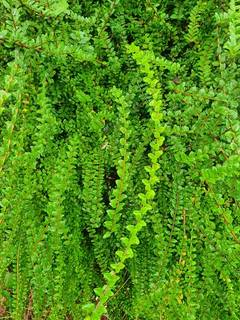
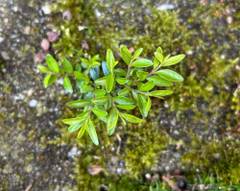
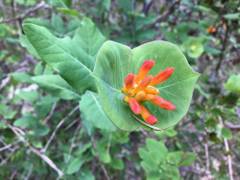
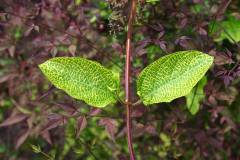
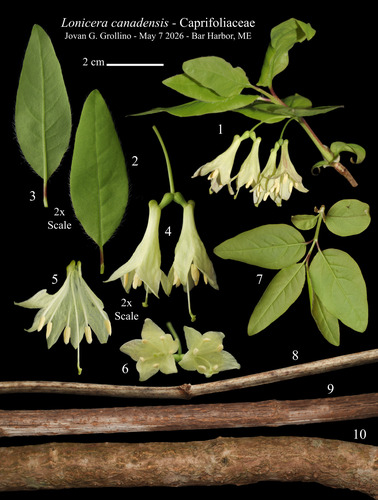
Lonicera canadensis is a deciduous shrub in the Caprifoliaceae, with a loose, open, often straggling form 3-5 feet (0.9-1.5 m) tall and wide. Unlike many honeysuckles it is not a vine but a self-supporting shrub with thin, arching branches. The oval to oblong leaves are 1-3.5 inches (2.5-9 cm) long, opposite, soft green, and fringed with tiny hairs along the edges. In spring, as the leaves expand, it bears nodding pairs of slender, funnel-shaped flowers about 0.6-0.8 inch (15-20 mm) long, pale greenish-yellow and sometimes tinged red. Each pair of flowers gives rise to a pair of egg-shaped red berries that ripen in summer and are eaten by birds. It is native to cool, moist woodlands and forest edges of northeastern and north-central North America, growing in the shade of conifers and hardwoods on acidic, humus-rich soil. The open habit and pale flowers are easy to overlook. Plants need cool, moist conditions and shade; they grow poorly in heat, drought, or full sun, which limits their use in warm regions.
Native Range
Native to northeastern and north-central North America, from Newfoundland and Quebec west to Saskatchewan and south through New England to the Appalachians. It grows in cool, moist woods, forest edges, and shaded slopes.Suggested Uses
Lonicera canadensis is used in woodland gardens, native and wildlife plantings, and naturalized areas under trees in cool climates. Its early flowers support spring pollinators and its berries feed birds. The open habit suits informal, shaded settings rather than formal borders or hedges.How to Identify
Appearance
Size & Dimensions
Height3' - 5'
Width/Spread3' - 5'
Bloom Information
Paired pale greenish-yellow flowers open in spring, usually April to May, as the leaves unfold. Bloom lasts one to two weeks. The flowers are followed by twin red berries that ripen in early to midsummer.
Detailed Descriptions
Foliage Description
greenGrowing Conditions
Sun Requirements
Requires 2-6 hours of direct sunlight daily
• Full Sun: 6+ hours of direct sunlight
• Partial Shade: 3-6 hours of direct sunlight
• Full Shade: Less than 3 hours of direct sunlight