Lonicera, Genus, nitida, Species,
- Genus & species
boxleaf honeysuckle
Native to western China — Yunnan and Sichuan provinces — in montane scrubland and at forest margins; collected by Ernest Henry Wilson on behalf of the Veitch nursery firm in 1908 and introduced to British and European horticulture through the Veitch nursery distribution network
Overview
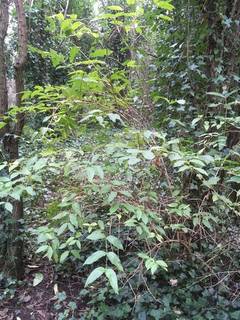
Lonicera nitida is boxleaf honeysuckle (also called Wilson's honeysuckle), an evergreen shrub in the honeysuckle family Caprifoliaceae growing 4-6 feet (1.2-1.8 m) tall and 4-5 feet (1.2-1.5 m) wide in cultivation across a 2-3 year rapid establishment to ornamental size. The species name nitida is from Latin nitidus meaning shining or glossy and records the reflective surface of the tiny dark green oval leaves 0.25-0.5 inch (6-12 mm) long that are densely packed in opposite pairs along the arching stems. The species was collected from montane scrubland in Yunnan and Sichuan provinces of western China in 1908 by Ernest Henry Wilson (the plant explorer known as Chinese Wilson because of his extensive Chinese collections) on behalf of the Veitch nursery firm and was introduced to British and European horticulture through the Veitch nursery distribution network. The dense glossy small-leaved foliage surface clips cleanly under shearing, and the species has long served as a substitute for boxwood (Buxus) in formal hedging and topiary — the species is not susceptible to boxwood blight (Calonectria pseudonaviculata), making it a blight-free alternative where the disease is present in the landscape. The primary trade-off compared with boxwood is the clipping frequency: the species grows fast (18-24 inches / 45-60 cm per year on established plants in the growing season) and calls for 2-3 clippings per growing season (May, July, and September) to maintain a tight formal shape, compared with the 1-2 annual clippings that sustain a boxwood hedge — without regular clipping, the species becomes open and untidy within a single growing season. Tiny cream-white lightly fragrant tubular flowers approximately 0.2 inch (5 mm) are carried in axillary pairs along the stems in mid-spring (April through May) across a 2-week bloom, but the flowers are hidden within the dense foliage and are largely inconspicuous at garden-viewing distance. Small translucent purple berries follow in late summer through fall and are eaten by small birds. The cultivar 'Baggesen's Gold' carries golden-yellow foliage year-round and is the most frequently planted cultivar in the European nursery trade; the cultivar 'Lemon Beauty' carries cream-and-green variegated foliage. Limitation: the 2-3 clippings per growing season maintenance requirement is the primary horticultural commitment, and the species is unsuitable for low-maintenance positions where annual-only pruning is the target management regime. The species has no significant pest or disease concerns in cultivation beyond the maintenance frequency. Non-toxic. Deer-resistant. Drought-tolerant once established.
Native Range
Native to western China — Yunnan and Sichuan provinces — in montane scrubland and at forest margins. Collected by Ernest Henry Wilson (Chinese Wilson) on behalf of the Veitch nursery firm in 1908 and introduced to British and European horticulture through the Veitch nursery distribution network. The species name nitida is from Latin nitidus meaning shining or glossy and records the reflective surface of the tiny dark green leaves.Suggested Uses
Used as a formal low to medium hedge at 18-24 inch (45-60 cm) spacing, as a topiary and knot-garden subject in formal garden positions that would otherwise call for boxwood (Buxus) but where boxwood blight (Calonectria pseudonaviculata) is present in the landscape, and in containers of at least 5 gallons (19 L) as a clipped topiary form in USDA zones 7 through 9. The dense glossy tiny dark green foliage that clips cleanly for formal hedging and topiary, the freedom from boxwood blight susceptibility, the fast growth that allows rapid hedge establishment (2-3 years to a solid hedge surface), the tolerance of hard renovation pruning, and the availability of the golden-foliaged 'Baggesen's Gold' cultivar for golden hedging and topiary combine to make Lonicera nitida a foundation boxwood-substitute hedging shrub for formal and topiary applications in mild-winter regions. Low-maintenance positions where 2-3 annual clippings are not feasible are unsuitable because the species becomes open and untidy without the clipping commitment. Cold-winter positions in zones 6 and below carry winter dieback and semi-evergreen to deciduous behavior that compromises the year-round formal surface.How to Identify
Appearance
Size & Dimensions
Height4' - 6'
Width/Spread4' - 5'
Bloom Information
Mid-spring (April through May) across a 2-week bloom period. Tiny cream-white lightly fragrant tubular flowers approximately 0.2 inch (5 mm) in axillary pairs along the stems — the flowers are hidden within the dense foliage and are largely inconspicuous at garden-viewing distance. Small translucent purple berries follow in late summer through fall and are eaten by small birds. The dense glossy small-leaved evergreen foliage surface is the year-round ornamental feature rather than the bloom.
Detailed Descriptions
Flower Description
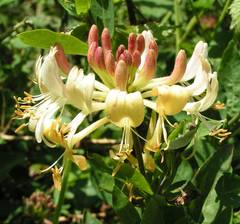
cream-white, tiny, tubular, approximately 0.2 inch (5 mm) long, lightly fragrant, carried in axillary pairs along the stems in mid-spring (April through May) across a 2-week bloom period — the flowers are hidden within the dense foliage and are largely inconspicuous from the garden-viewing distanceFoliage Description
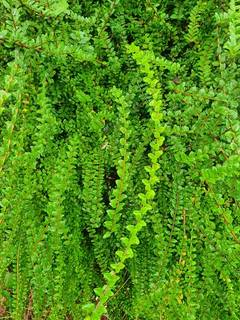
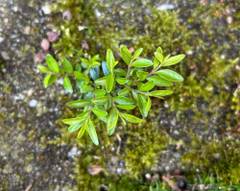
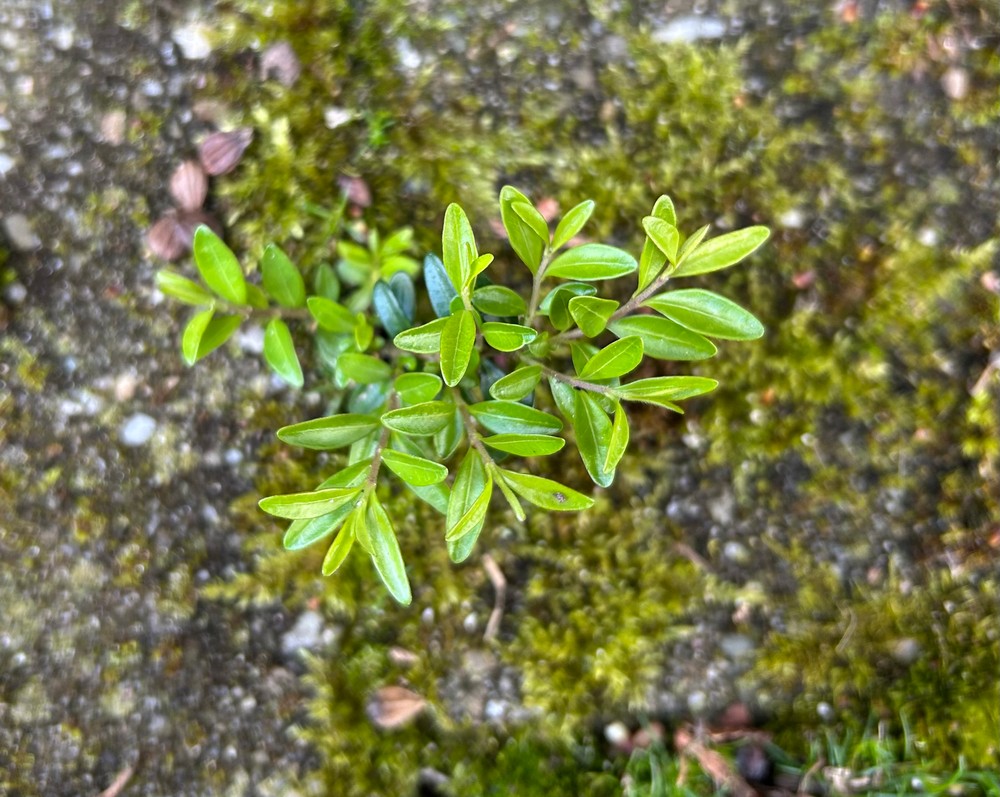
dark green, glossy, tiny, oval, 0.25-0.5 inch (6-12 mm), in opposite pairs densely packed along arching stems, and the dense glossy small-leaved surface clips cleanly under shearing and has long served as a substitute for boxwood (Buxus) in formal hedging and topiary in regions where boxwood blight (Calonectria pseudonaviculata) is present; cultivar 'Baggesen's Gold' carries golden-yellow foliage year-round and is the most frequently planted cultivar in the European nursery trade; cultivar 'Lemon Beauty' carries cream-and-green variegated foliage; evergreen year-round in zones 7-9, semi-evergreen in the coldest parts of zone 7Growing Conditions
Sun Requirements
Requires 3-8 hours of direct sunlight daily
• Full Sun: 6+ hours of direct sunlight
• Partial Shade: 3-6 hours of direct sunlight
• Full Shade: Less than 3 hours of direct sunlight
Care & Maintenance
Care Guide
Site in part sun to full sun with 3-8 hours of direct sun per day in well-drained loam or clay soil with a pH of 5.5-7.5. Water weekly during the first growing season to establish the root system; established plants tolerate moderate drought. The species grows fast (18-24 inches / 45-60 cm per year on established plants) and calls for 2-3 clippings per growing season (May, July, and September) to maintain a tight formal shape — without regular clipping, the species becomes open and untidy within a single growing season. The 2-3 clipping frequency is the primary trade-off compared with boxwood (Buxus), which maintains a formal shape with 1-2 annual clippings. The species tolerates hard renovation pruning to restore overgrown or neglected specimens — stems cut back to 6-12 inches (15-30 cm) above the ground regenerate within 1-2 growing seasons. The species has no significant pest or disease concerns in cultivation. Non-toxic. Deer-resistant. Hardy in USDA zones 7-9.Pruning
Clip 2-3 times per growing season (May, July, and September) to maintain a tight formal shape — the species grows fast (18-24 inches / 45-60 cm per year) and becomes open and untidy without regular clipping within a single growing season. The 2-3 annual clipping frequency is the primary horticultural commitment and the species is suited only to positions where the gardener commits to the clipping schedule. Hand shears or powered hedge trimmers produce a clean dense surface. The species tolerates hard renovation pruning — neglected or overgrown specimens can be cut back to 6-12 inches (15-30 cm) above the ground and will regenerate from the base stems within 1-2 growing seasons. The species is well-suited to formal hedging, topiary, and knot-garden applications in the same positions as boxwood (Buxus) but without boxwood blight susceptibility.Pruning Schedule
Prune: May, July & September
springsummerfall
Container Growing
Suitable for container growing
Minimum container size: 5 gallons