Lonicera, Genus, sempervirens, Species,
- Genus & species
coral honeysuckle
Eastern North America (from Connecticut south to Florida and west to Texas); woodland edges, fence rows, stream banks, and open thickets across the eastern continental range.
Overview
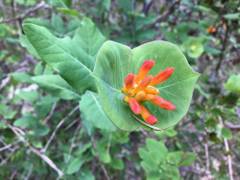
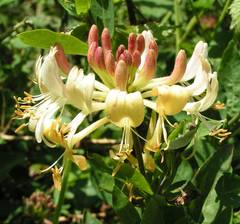
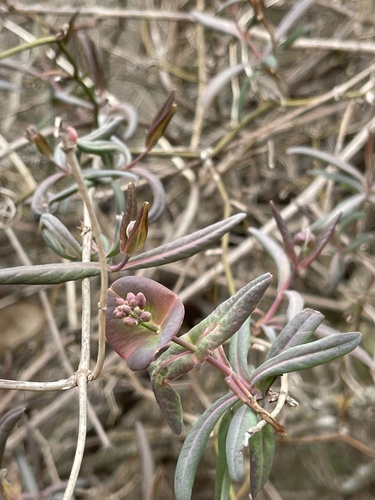
Lonicera sempervirens is coral honeysuckle (also called trumpet honeysuckle), a native eastern North American twining vine in the honeysuckle family (Caprifoliaceae) climbing 8-16 feet (240-480 cm) when supported on a trellis, fence, arbor, or mailbox post. The species name 'sempervirens' is Latin for 'always green' and references the species' semi-evergreen foliage habit in mild winter climates (zones 7-9), where the blue-green leaves hold through winter rather than dropping completely as the leaves do in colder zones. The species is the native non-invasive North American honeysuckle and is the principal field-and-garden alternative to the invasive Asian honeysuckle (Lonicera japonica, Japanese honeysuckle), which has naturalized aggressively across the eastern United States and is now classified as a noxious invasive species in many states. The two species are easy to distinguish: L. sempervirens carries coral-red to scarlet tubular trumpet flowers without fragrance and stays where it is planted with a moderate growth rate, while L. japonica carries white-to-yellow strongly fragrant tubular flowers and spreads aggressively by seed and stem rooting to smother native vegetation across woodland edges and disturbed-habitat margins. Choosing L. sempervirens (or any of its named cultivars including Major Wheeler, Alabama Crimson, John Clayton) over L. japonica avoids contributing to the ongoing invasive-species spread and supports native ecosystem function. Coral-red to scarlet tubular trumpet-shaped two-lipped flowers 1.5-2 inches (4-5 cm) long with yellow-orange interior throat coloration appear in dense terminal whorled clusters from May through September across a 16-week active flowering window — the long bloom is the species' principal selling point and runs longer than nearly any other native flowering vine in commercial cultivation. The long tubular flower form is morphologically suited to hummingbird pollination: the corolla tube length matches ruby-throated hummingbird bill length, the bicolor coral-and-yellow color is the recognized hummingbird-attractor color combination, and the absence of fragrance is consistent with bird-pollinated rather than insect-pollinated flowers (insect-pollinated flowers depend on scent for attraction, while bird-pollinated flowers depend on color and form). The species is one of the principal hummingbird-supporting native vines for the eastern North American garden, and the 16-week bloom window gives ruby-throated hummingbirds a reliable nectar source from spring migration arrival through fall departure. Blue-green oval opposite leaves arrange along the twining stems with the uppermost leaf pair fused around the stem to form a perfoliate disc-shaped structure that is the species' principal field-identification character within the genus. Red berries in clusters develop where the flowers stood and persist into fall and early winter, supplying forage to songbirds (American robin, eastern bluebird, hermit thrush, gray catbird) across the dormant-season transition; the berries are mildly toxic if ingested in quantity by humans and pets, but the bird-attractor function makes the berry persistence a wildlife-garden asset rather than a cultivation concern. Deer avoid the foliage. The genus Lonicera is in the honeysuckle family (Caprifoliaceae) alongside Symphoricarpos (snowberry), Diervilla (bush honeysuckle), and other genera that share family-level vegetative and floral characters.
Native Range
Lonicera sempervirens is native to eastern North America with a continuous native range from southern Connecticut and southern New York south through the eastern United States to Florida and west to eastern Texas and Oklahoma. The species occurs in woodland edges, fence rows, stream banks, open thickets, and hedgerows across the native range, with the species' physiological adaptation to full-sun-to-partial-shade exposure and average soil conditions reflecting the open-edge native habitat where most populations occur. The species is grown in native-plant gardens, hummingbird gardens, and wildlife-garden plantings across the continental United States and into southern Canada (zones 4-9) as a principal native-vine cultivation choice that supports native ecosystem function rather than the invasive L. japonica that has historically dominated the commercial honeysuckle trade.Suggested Uses
Used on trellises, fences, arbors, pergolas, mailbox posts, lamp posts, and other vertical garden structures where the climbing twining vine habit can be supported. The species is the principal native hummingbird-supporting vine for the eastern North American garden and is a recurring choice for dedicated hummingbird gardens, wildlife gardens, native-plant gardens, and pollinator-supporting ornamental plantings. The 16-week May-through-September bloom window supplies hummingbird food from spring migration arrival through fall departure, and the red berries that follow the flowers add fall-into-winter songbird forage value. Named cultivars are widely available in the commercial garden trade — Major Wheeler (heavier bloom), Alabama Crimson (deeper red color), John Clayton (yellow flower form rather than coral-red) — and any of the named cultivars suit the same garden applications as the wild-type species. The species is not suited to container culture in long-term plantings because the woody vine root system needs more soil volume than typical containers supply.How to Identify
Appearance
Size & Dimensions
Height8' - 16'
Width/Spread3' - 6'
Colors
Bloom Information
Coral-red to scarlet tubular trumpet-shaped two-lipped flowers 1.5-2 inches (4-5 cm) long with yellow-orange interior throat coloration open in dense terminal whorled clusters from May through September across a 16-week active flowering window, with the bloom continuing without significant gap from late spring through early fall. Pollination is by ruby-throated hummingbirds that work the long tubular flowers and the bicolor coral-and-yellow color throughout the eastern North American summer range, with the species being one of the principal native nectar sources supporting hummingbird populations from spring migration arrival through fall departure. Bumblebees and large butterflies (skippers, swallowtails) work the flowers as secondary pollinators by forcing entry into the corolla throat or by accessing the nectar through the flower mouth.
Detailed Descriptions
Flower Description
Coral-red to scarlet on the outer surface with yellow-orange to golden-yellow interior throat coloration, in long tubular trumpet-shaped two-lipped flowers 1.5-2 inches (4-5 cm) long carried in dense terminal whorled clusters at the stem tips; the bicolor outer-coral and inner-yellow architecture combines with the long tubular trumpet form to create a flower morphology that is one of the principal hummingbird-pollinated flower forms in the eastern North American native floraFoliage Description
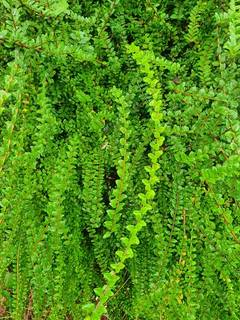
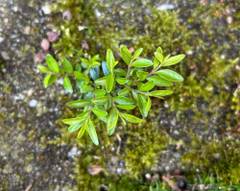
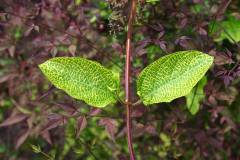
Blue-green to glaucous green; oval to oblong opposite leaves arranged along the twining stems, with the uppermost leaf pair fused around the stem to form a single perfoliate disc-shaped structure that is the species' principal field-identification character — the perfoliate upper leaf pair is restricted to L. sempervirens among the commonly grown North American honeysuckle species and confirms identification at the species levelGrowing Conditions
Sun Requirements
Requires 4-10 hours of direct sunlight daily
• Full Sun: 6+ hours of direct sunlight
• Partial Shade: 3-6 hours of direct sunlight
• Full Shade: Less than 3 hours of direct sunlight
Care & Maintenance
Care Guide
Plant in full sun to partial shade with 4-10 hours of direct light. Any well-drained soil texture (clay, sand, loam) at pH 5.5-7.5 supports the species; the species' broad soil tolerance and its woodland-edge native habitat mean cultivation is forgiving across most temperate-climate planting positions. A trellis, fence, arbor, mailbox post, or other vertical support is needed for the climbing twining habit; without support, the vine sprawls across the ground as a poor ground-cover substitute and does not flower well in the prostrate position. Watering is during establishment and through extended summer drought, with the species being moderately drought-tolerant once the woody vine root system develops. Pruning is in late winter (February-March) before new spring growth emerges; the cuts shape the vine, control overall size, and remove crossing or damaged stems. The species flowers on both new and old wood, so light pruning does not reduce bloom and heavy pruning that removes a substantial fraction of the older wood can be done if the vine has outgrown its support without sacrificing the season's flowers. The species is not aggressive and stays where it is planted — gardeners do not need to manage spread or worry about the species naturalizing into surrounding landscape positions, and the species is the principal recommended native alternative to the invasive Lonicera japonica.Pruning
Prune to shape, control size, and remove crossing or damaged stems in late winter (February-March) before new spring growth emerges. The species flowers on both new and old wood, so light pruning does not reduce bloom and the gardener can prune more aggressively without sacrificing the season's flowers. No deadheading is needed because the species blooms continuously from May through September and the spent flowers drop on their own; the red berries that follow the flowers add fall and early-winter ornamental value and supply songbird forage.Pruning Schedule
Prune: February–March
early spring