Lonicera, Genus, hispidula, Species,
- Genus & species
pink honeysuckle
Pacific Coast (British Columbia to California)
Overview
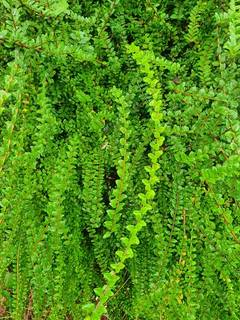
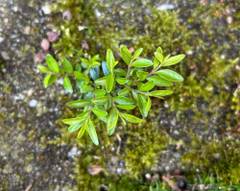
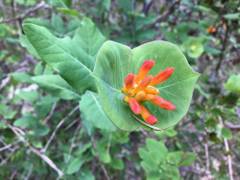
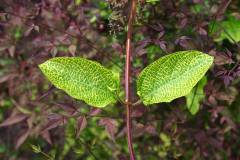
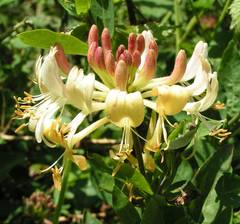
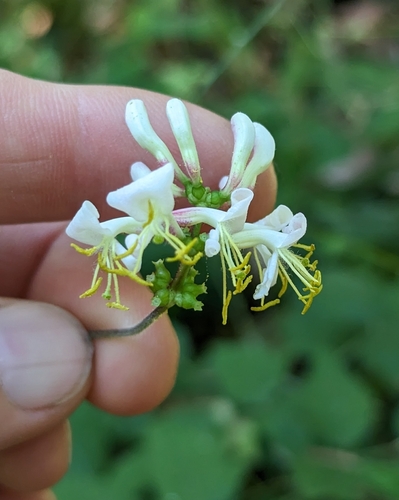
Lonicera hispidula is a deciduous climbing or scrambling woody vine reaching 6-20 feet (1.8-6 m) long when supported and 3-6 feet (90-180 cm) tall when growing as a sprawling shrub without support. Stems slender, hollow, often hispid (bristly-hairy) when young, smooth and reddish-brown with maturity. Leaves opposite, oval to elliptic, 1.5-4 inches (4-10 cm) long, blue-green above and pale green below; the upper 1-2 leaf pairs below the inflorescence are fused at the base into a perfoliate cup typical of Lonicera. Flowers pink to purplish-pink, two-lipped, 0.5-0.75 inch (12-19 mm) long, borne in interrupted whorled spikes from May through July. Fruit a translucent red berry 0.25-0.4 inch (6-10 mm) across, ripening August through September. Berries are mildly toxic to humans and cause vomiting and diarrhea if eaten in quantity, though birds consume them without harm. Climbing growth requires support; without trellising plants form a tangled scrambling mound.
Native Range
Native to dry to mesic open woodlands, forest edges, riparian thickets, and chaparral in western North America from southwestern British Columbia south through Washington and Oregon to southern California, west of the Cascade-Sierra crest at elevations from sea level to 6,000 feet (1,830 m).Suggested Uses
Trained on trellises, fences, and arbors at 4-6 foot (120-180 cm) spacing in zones 6-9. Used in PNW native plant gardens and woodland edge plantings to attract hummingbirds and native pollinators. Allowed to scramble across stumps or rock outcrops in naturalistic plantings without support. Containers require at least 7-10 gallons (26-38 L) and a sturdy trellis; plants in smaller pots are short-lived (2-3 years).How to Identify
Appearance
Size & Dimensions
Height6' - 20'
Width/Spread3' - 6'
Bloom Information
May through July across the species range, with peak bloom in June. Bloom begins in late April at low elevations in coastal California and may extend into August at higher elevations in the Cascades. Individual flower whorls open over 1-2 weeks; total stand bloom lasts 6-8 weeks. Bloom is reduced 30-50% in deeply shaded sites with less than 4 hours of direct sun.
Detailed Descriptions
Flower Description
Pink to purplish-pinkFoliage Description
Blue-green above, pale green belowGrowing Conditions
Sun Requirements
Requires 4-8 hours of direct sunlight daily
• Full Sun: 6+ hours of direct sunlight
• Partial Shade: 3-6 hours of direct sunlight
• Full Shade: Less than 3 hours of direct sunlight
Care & Maintenance
Care Guide
Establishes within one season from container stock with weekly water through the first summer. Mature plants tolerate 4-6 weeks of summer drought once roots reach 18-24 inches (45-60 cm) deep but bloom and berry production decrease in dry years. Aphids and powdery mildew may affect young growth in shaded humid sites; both are cosmetic and resolve as foliage hardens. Verticillium wilt occurs on stressed plants in heavy clay soil. Vine roots tend to layer where stems contact moist soil; layered runners can be severed and lifted in spring to start new plants. Root weevil larvae occasionally damage roots in container culture.Pruning
Remove deadwood and crossing stems in late winter before bud break. Tangled growth can be cut back by one-third to a healthy outward bud to renew form; the plant blooms on second-year wood, so heavy pruning reduces flowering for one season. Layered runners that have rooted are cut from the parent in early spring and lifted with attached roots.Pruning Schedule
Prune: February–March
winterearly spring
Container Growing
Minimum container size: 7 gallons