Lonicera, Genus, ×, Hybrid, bella, Species,
- Genus & species
- Hybrid
showy fly honeysuckle
Garden origin; naturalized in temperate North America; parents from East and central Asia
Overview
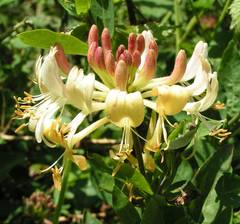
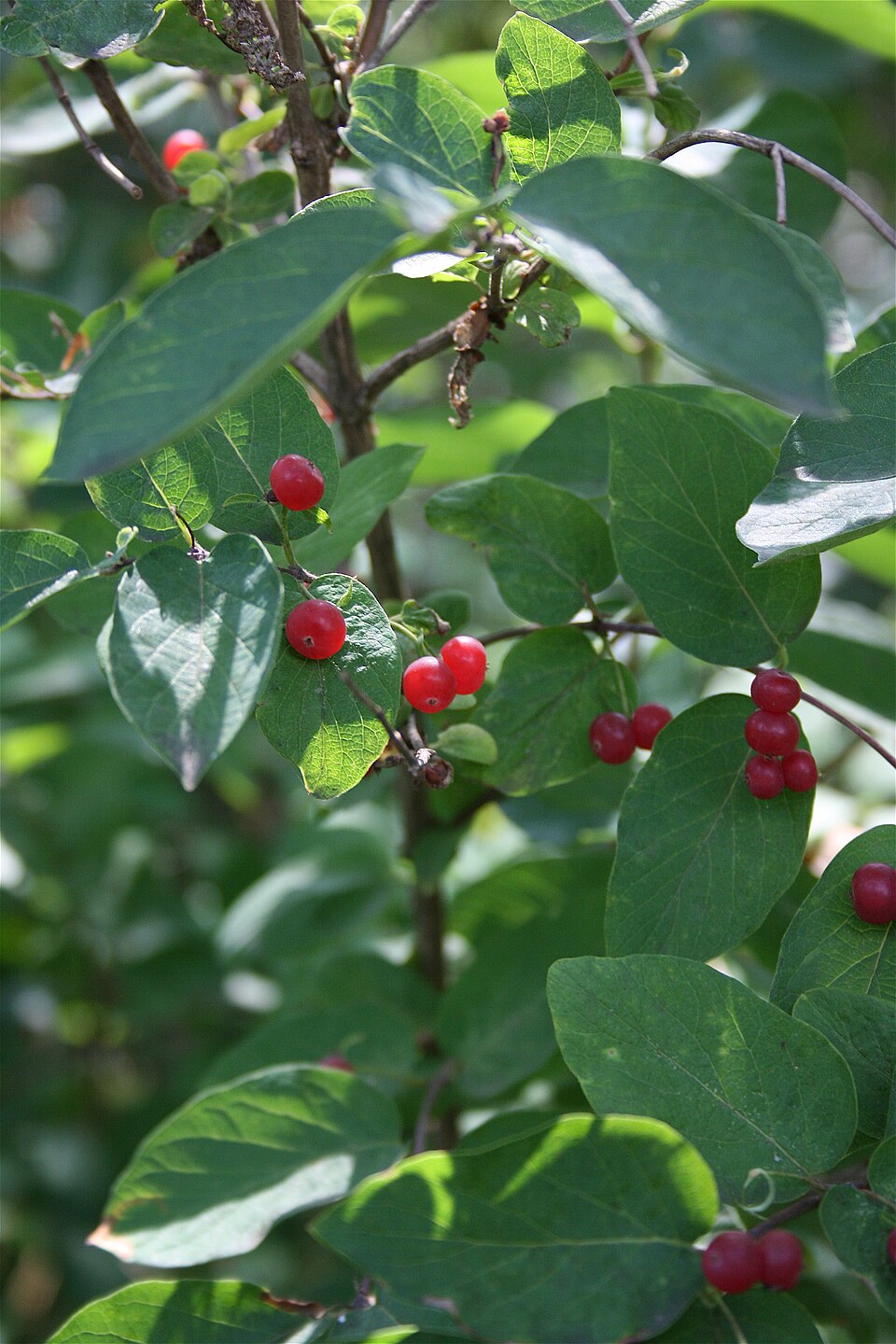
Lonicera × bella is a deciduous shrub reaching 6–20 feet (1.8–6 m) tall and 6–12 feet (1.8–3.7 m) wide, a hybrid between Lonicera morrowii and Lonicera tatarica. Arching, hollow-stemmed branches carry oval blue-green leaves 1–2.5 inches (2.5–6 cm) long in opposite pairs. Paired tubular flowers 0.5–0.75 inch (1.3–2 cm) long open in late spring, pink fading to yellow-white, followed by paired red berries that ripen in summer. Birds eat the berries and spread the seed widely, and the shrub forms dense thickets that shade out native ground flora. It leafs out earlier in spring and holds leaves later in fall than most native shrubs, lengthening its growing season. Lonicera × bella is listed as invasive or noxious across the northeastern and midwestern United States, and its sale and movement are restricted under several state nursery laws. It grows in sun or partial shade across a wide range of soils, from moist bottomlands to dry uplands. Stems resprout strongly after cutting, and the shallow root system spreads laterally.
Native Range
Lonicera × bella is a hybrid of garden origin first raised in the 19th century, now naturalized across much of temperate North America. Its parent species, Lonicera morrowii from Japan and Lonicera tatarica from Russia and central Asia, were introduced as ornamentals. The hybrid escaped cultivation and spreads through woodlands, fencerows, and old fields.Suggested Uses
Historically planted as a hedge, screen, and wildlife shrub, and still found in older landscapes, spaced 6–10 feet (1.8–3 m) apart. Current use is limited by invasive-species restrictions across much of its naturalized range. In areas without restrictions it is occasionally grown for its late-spring flowers and bird-attracting berries.How to Identify
Appearance
Size & Dimensions
Height6' - 20'
Width/Spread6' - 12'
Bloom Information
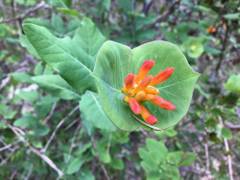
Flowering occurs in late spring, typically May to June, with paired tubular flowers borne in the leaf axils. Blooms open pink and fade to yellowish-white, so a plant often shows both shades at once. Bees and other insects visit the flowers. Red berries follow through summer and persist into fall, feeding the birds that disperse the seed.
Detailed Descriptions
Flower Description
pink fading to whiteFoliage Description
blue-greenGrowing Conditions
Sun Requirements
Requires 4-8 hours of direct sunlight daily
• Full Sun: 6+ hours of direct sunlight
• Partial Shade: 3-6 hours of direct sunlight
• Full Shade: Less than 3 hours of direct sunlight
Care & Maintenance
Care Guide
The shrub grows in full sun to partial shade and tolerates a soil pH of 5.5–7.5 across clay, loam, and sandy soils. It withstands both moist and dry conditions and establishes quickly without supplemental care. Because it is invasive, new plantings are discouraged in regions where it has naturalized, and existing stands are managed by cutting and stump treatment. The plant is hardy in USDA zones 3–8 and unharmed by hard winter cold. Birds carry seed into surrounding land, so even isolated plants contribute to wider spread. Cut stems resprout unless the root crown is removed or treated.Pruning
Cutting stems to the ground in summer lowers stored root reserves but prompts dense resprouting unless the stumps are treated. Repeated mowing or cutting over several seasons gradually weakens the root crown. On managed ornamental plants, thinning the oldest stems in late winter opens the canopy.Pruning Schedule
Prune: February & July
wintersummer