Lonicera, Genus, spp., Multiple species,
- Genus
- Multiple species
honeysuckles
Overview
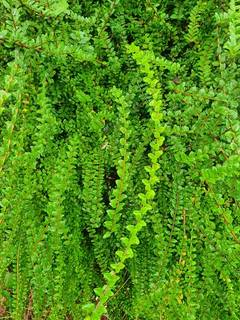
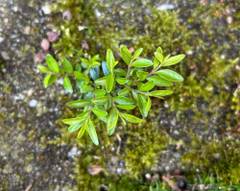
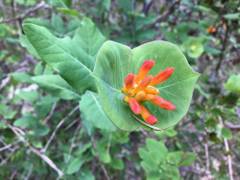
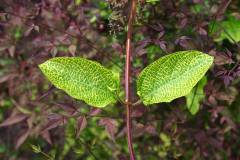
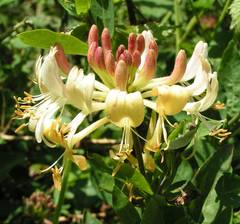
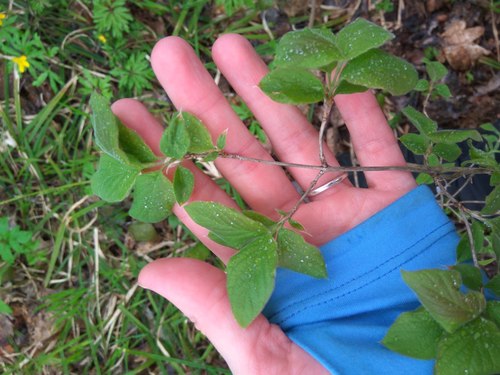
Lonicera is a genus of about 180 species of deciduous and evergreen shrubs and twining woody vines in the family Caprifoliaceae, native across the Northern Hemisphere. Climbing species reach 3–10 m (10–33 ft) by twining around supports, while shrubby species form rounded bushes 1–5 m (3–16 ft) tall. Leaves are opposite, simple, and oval, 2–10 cm (0.8–4 in) long, with the uppermost pairs of some climbing species fused around the stem. Flowers are tubular or two-lipped, 1–5 cm (0.4–2 in) long, in white, cream, yellow, pink, or red, and many are fragrant, especially in the evening. The flowers hold nectar at the base of a long tube and are visited by long-tongued bees, moths, and hummingbirds. Paired berries follow in red, orange, black, or translucent blue, 5–10 mm (0.2–0.4 in) across. The berries of many species contain saponins and other compounds that cause stomach upset if eaten in quantity by people. Several Asian species, including L. japonica and L. maackii, have escaped cultivation and are listed as invasive across much of eastern North America, where they crowd out native vegetation.
Native Range
The genus is native throughout the temperate Northern Hemisphere, with the richest diversity in China and additional species across Europe, North America, and the rest of Asia. Lonicera is absent as a native from most of the Southern Hemisphere.Suggested Uses
Climbing species are grown on trellises, arbors, and fences for their fragrant flowers, while shrubby species are used as informal hedges and screens. Nectar-rich flowers draw hummingbirds and moths, and the berries feed birds. The invasive tendencies of certain Asian species restrict their planting in many regions.How to Identify
Appearance
Size & Dimensions
Height3' - 33'
Width/Spread3' - 12'
Bloom Information
Flowering ranges from late spring through summer, broadly May to August, with some species producing scattered flowers into autumn. Many species release fragrance most strongly in the evening to attract moths. Berries ripen from midsummer through fall and are taken by birds, which spread the seeds.
Detailed Descriptions
Flower Description
white, cream, yellow, pink, or redFoliage Description
greenGrowing Conditions
Sun Requirements
Requires 4-8 hours of direct sunlight daily
• Full Sun: 6+ hours of direct sunlight
• Partial Shade: 3-6 hours of direct sunlight
• Full Shade: Less than 3 hours of direct sunlight
Care & Maintenance
Care Guide
Most species grow in full sun to part shade, flowering most heavily in sun while tolerating light shade at the roots. They accept a wide range of soils across a pH of 5.5 to 8.0 where drainage is reasonable, and prefer moderate, steady moisture. Climbing species need a trellis, fence, or other support to twine onto. Hardiness spans USDA zones 4–9 across the genus, with individual species more narrowly adapted. Powdery mildew and aphids affect some species, particularly in crowded or dry sites. Several Asian species spread by seed and runners and are regulated as invasive in parts of North America.Pruning
Climbing species can be thinned after flowering to remove tangled or dead stems and keep growth within bounds. Shrubby species tolerate hard renewal pruning in late winter, which removes old wood and stimulates fresh shoots. Cutting back invasive species before berries ripen reduces their spread by seed.Pruning Schedule
Prune: February & July
wintersummer