Juniperus, Genus, monosperma, Species,
- Genus & species
one-seed juniper
Southwestern United States and northern Mexico
Overview
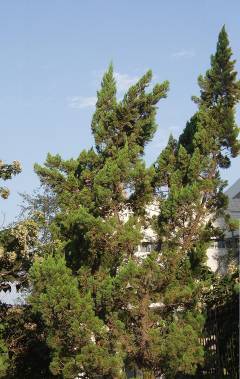
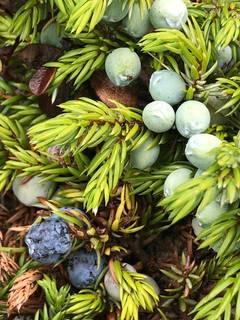
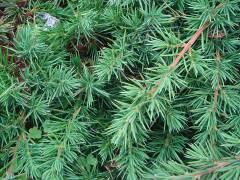
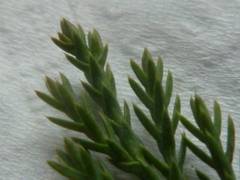
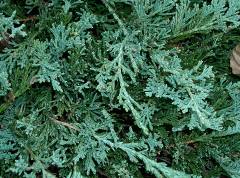
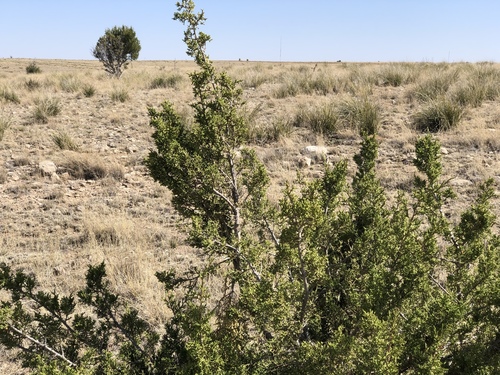
Juniperus monosperma is an evergreen conifer that grows as a small tree or large shrub 10-40 feet (3-12 m) tall, often branching at or near the ground into several trunks with shaggy gray-brown bark that peels in strips. The foliage is made of tiny, scale-like blue-green leaves pressed against the twigs, giving the branchlets a rounded, cord-like texture; juvenile needles are sharp. The species is mostly dioecious, with pollen cones and seed cones on separate plants. Female plants bear fleshy, berry-like cones 0.2-0.3 inch (5-7 mm) across that ripen dark blue to copper-brown in one season and usually hold a single seed, the trait behind the common name. Growth is slow, and trees are long-lived, often reaching 300-700 years. A deep, wide root system lets it hold dry, rocky ground, but the same roots compete strongly with nearby plants for water. Foliage and cones release pollen and volatile oils that can trigger allergies.
Native Range
Native to the southwestern United States and northern Mexico, from Colorado and Utah south through Arizona, New Mexico, and western Texas into Chihuahua. Grows on dry mesas, foothills, and rocky slopes in pinyon-juniper woodland and grassland at 3,000-7,000 feet (900-2,100 m).Suggested Uses
Planted in dryland and native landscapes, windbreaks, and erosion control on dry slopes in arid regions, spaced 8-15 feet (2.4-4.6 m) apart. The cones feed birds and mammals, and the dense foliage gives nesting sites and cover. Heavy late-winter pollen and a deep, water-drawing root system make it less suited to small gardens or sites near allergy-sensitive areas.How to Identify
Appearance
Size & Dimensions
Height10' - 40'
Width/Spread10' - 25'
Colors
Bloom Information
Detailed Descriptions
Foliage Description
blue-greenGrowing Conditions
Sun Requirements
Requires 6-12 hours of direct sunlight daily
• Full Sun: 6+ hours of direct sunlight
• Partial Shade: 3-6 hours of direct sunlight
• Full Shade: Less than 3 hours of direct sunlight
Care & Maintenance
Care Guide
Grows in full sun on dry, sharp-draining rocky, sandy, or gravelly soils and tolerates heat, wind, drought, and alkaline ground. Once established it needs no irrigation and is prone to root rot in wet or heavy soils. Young plants grow slowly and take occasional deep watering in the first two seasons. The tree casts dense shade and its roots draw heavily on soil moisture, limiting what grows beneath it. Juniper twig blight, cedar-apple rust, and bark beetles affect it in some areas, and prolonged drought causes branch dieback. Trees are long-lived but slow to replace once removed.Pruning
Prune in late winter to remove dead, broken, or crossing branches; cutting into bare old wood produces no new growth, as the species does not resprout from leafless stems. Lower limbs can be removed to expose the trunk and bark. The open, irregular habit does not hold a sheared formal shape.Pruning Schedule
Prune: February
winter