Juniperus, Genus, grandis, Species,
- Genus & species
Sierra juniper
Western United States mountains (Sierra Nevada)
Overview
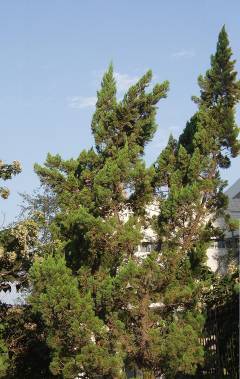
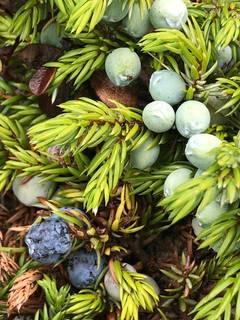
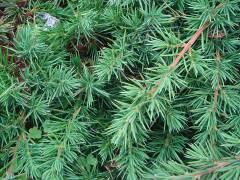
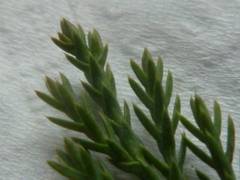
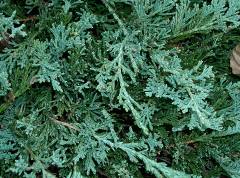
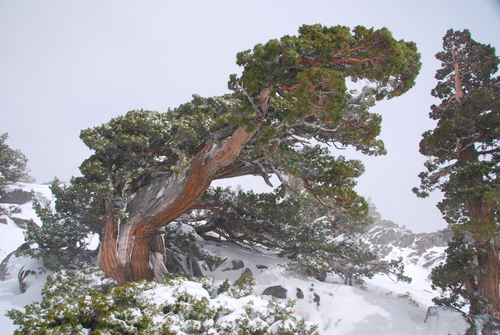
Juniperus grandis is an evergreen coniferous tree in the cypress family, growing 16–50 feet (5–15 m) tall with a stout, often single trunk that becomes thick, fluted, and reddish-brown to grey with age. The crown is broad and irregular, becoming gnarled and open in old, exposed specimens. The foliage consists of tiny scale-like grey-green leaves 0.04–0.08 inch (1–2 mm) long pressed against the twigs. It is dioecious, with pollen cones and seed cones on separate trees; the female cones are berry-like, 0.2–0.4 inch (5–10 mm) wide, blue-black with a waxy bloom, ripening over two seasons. It grows on dry, rocky slopes, granite outcrops, and high ridges of the Sierra Nevada and adjacent ranges, generally between 4,000 and 10,000 feet (1,200–3,050 m). Trees are slow-growing and can live well over a thousand years. It withstands intense sun, cold, wind, drought, and shallow rocky soils, but grows slowly and does not tolerate wet or poorly drained ground.
Native Range
Juniperus grandis is native to the mountains of the western United States, chiefly the Sierra Nevada of California and adjacent ranges in Nevada and Oregon.Suggested Uses
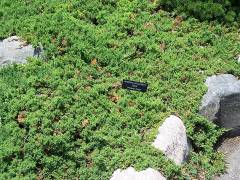
It is used as a specimen tree in large dry-climate and rock gardens, in high-elevation and native conifer plantings, and for erosion control on rocky slopes. It is planted where its eventual size and slow growth suit an open, unirrigated site.How to Identify
Appearance
Size & Dimensions
Height16' - 50'
Width/Spread10' - 30'
Colors
Bloom Information
Pollen is shed from small cones in spring, typically March to May. Female cones develop on separate trees and ripen to blue-black over two seasons. The tree produces no true flowers, reproducing through wind-pollinated cones.
Detailed Descriptions
Foliage Description
grey-greenGrowing Conditions
Sun Requirements
Requires 6-12 hours of direct sunlight daily
• Full Sun: 6+ hours of direct sunlight
• Partial Shade: 3-6 hours of direct sunlight
• Full Shade: Less than 3 hours of direct sunlight