Juniperus, Genus, chinensis, Species,
- Genus & species
Chinese juniper
Overview
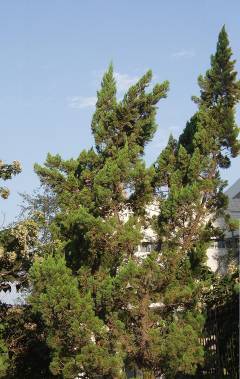
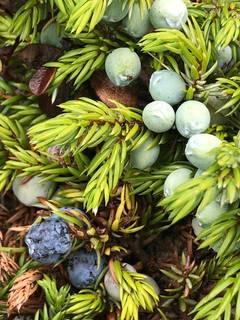
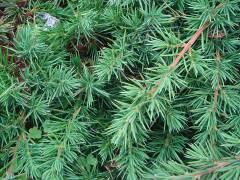
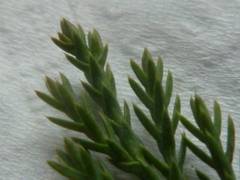
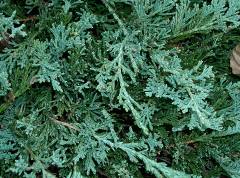
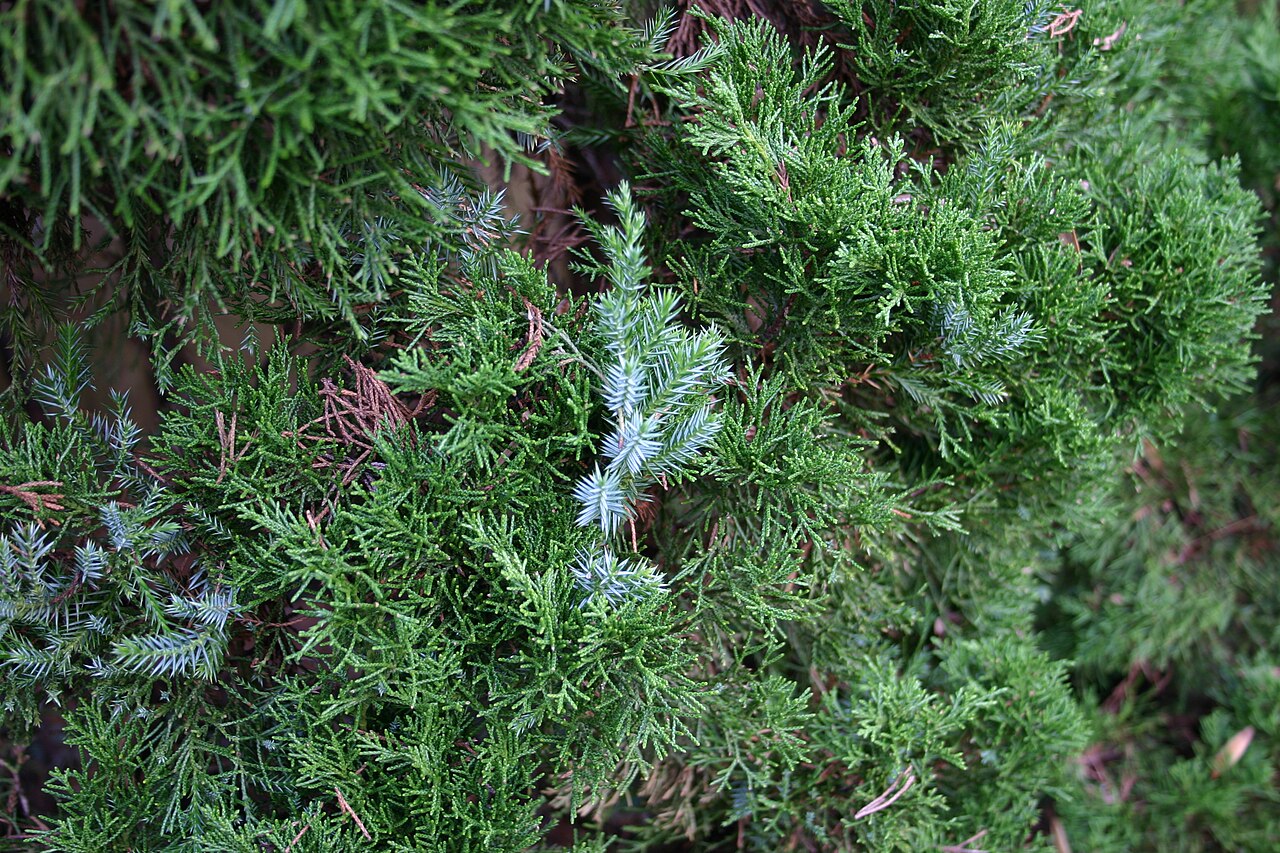
Juniperus chinensis is an evergreen conifer in the Cupressaceae, reaching 15–60 feet (4.5–18 m) tall and 10–20 feet (3–6 m) wide as a tree, though many plants in cultivation remain shrubby under 10 feet (3 m). Bark is grey-brown and peels in narrow vertical strips on trunks over about 4 inches (10 cm) across. Foliage is dimorphic: juvenile shoots carry needle-like awl leaves 0.2–0.5 inch (5–12 mm) long in whorls of three, while mature shoots carry appressed scale leaves about 0.06 inch (1.5 mm) long, so a single plant frequently shows both leaf forms at once. Crushed foliage releases a resinous scent. Plants are usually dioecious. Seed cones are berry-like, 0.2–0.5 inch (5–12 mm) across, glaucous blue-white ripening to dark brown over roughly 18 months, each containing 2–4 seeds. Annual growth runs 6–12 inches (15–30 cm) in full sun and slows to under 4 inches (10 cm) in partial shade. Branches cut back into leafless brown interior wood do not resprout. The species is an alternate host for cedar-apple rust (Gymnosporangium species), producing orange gelatinous galls on juniper stems that release spores to apples and crabapples within about 2 miles (3 km).
Native Range
Juniperus chinensis is native to eastern Asia, spanning northeastern and central China, Mongolia, the Russian Far East, the Korean Peninsula, and Japan. It occupies rocky slopes, dry hillsides, and open forest margins from near sea level to about 7,500 feet (2,300 m). Long cultivation has led to naturalized populations in parts of the eastern United States.Suggested Uses
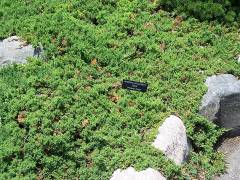
Grown as a screen, windbreak, and clipped hedge, spaced 6–10 feet (1.8–3 m) apart for tree forms and 3–4 feet (0.9–1.2 m) apart for shrubby ones. Also used as a container and bonsai subject, where root confinement holds height under 3 feet (90 cm). Planting near commercial apple orchards is restricted in some jurisdictions because of the cedar-apple rust cycle.How to Identify
Appearance
Size & Dimensions
Height15' - 60'
Width/Spread10' - 20'
Colors
Foliage Colors
Fall Foliage Colors
Bloom Information
Juniperus chinensis produces cones rather than flowers. Pollen cones on male plants are yellow-brown and about 0.1 inch (3 mm) long, shedding pollen from late February through April depending on latitude. Ovulate cones on female plants swell through summer, turn glaucous blue-white by autumn, and ripen dark brown in the second year, roughly 18 months after pollination. Pollen is wind-carried and is a documented seasonal allergen in urban plantings.
Detailed Descriptions
Foliage Description
Green to blue-green in both awl and scale formsGrowing Conditions
Sun Requirements
Requires 6-12 hours of direct sunlight daily
• Full Sun: 6+ hours of direct sunlight
• Partial Shade: 3-6 hours of direct sunlight
• Full Shade: Less than 3 hours of direct sunlight
Care & Maintenance
Care Guide
Six or more hours of direct sun daily maintains dense foliage; below about 4 hours the interior thins and lower branches die back. Free-draining soil with a pH of 5.0 to 7.5 supports growth across sand, loam, and gravelly substrates, while soils that stay saturated more than a few days lead to Phytophthora root rot. Weekly irrigation through the first two growing seasons establishes the root system, after which plants tolerate 6–8 weeks without rain in most temperate climates. The species is hardy in USDA zones 4–9 and withstands winter lows near -30°F (-34°C). Fertilizer is seldom required, and on depleted soils a single spring application of 1 pound of 10-10-10 per 100 square feet (0.5 kg per 9 m²) is typical. Phomopsis and Kabatina tip blights kill shoot tips during wet springs, and juniper scale, bagworm, and spider mites build up on plants grown in still, hot air.Pruning
Pruning is carried out in late winter or early spring before growth resumes, with light shaping continuing into early summer. Cuts made into leafless brown interior wood do not resprout, so shortening is confined to shoots still carrying green scale foliage. Removal of more than about one third of the canopy in a single season leaves gaps that persist for years. Blighted tips are cut back into healthy wood, and tools are cleaned between cuts during wet weather to limit spread of Phomopsis.Pruning Schedule
Prune: March–April & June
early springsummer
Container Growing
Suitable for container growing
Minimum container size: 10 gallons