Image 1 of 10
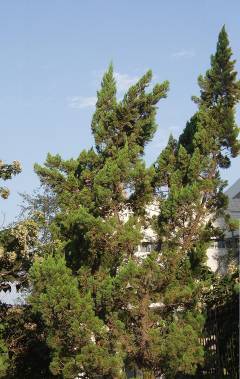
© Miguel Vieira from Walnut Creek, CA, USA, some rights reserved (CC-BY) · Wikimedia Commons
1 / 10
Juniperus, Genus, virginiana, Species,
- Genus & species
Eastern red cedar
Overview
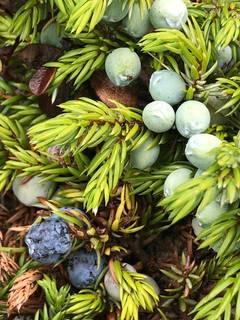
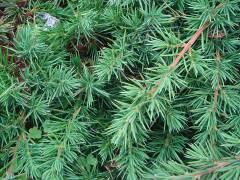
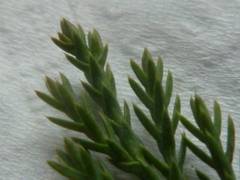
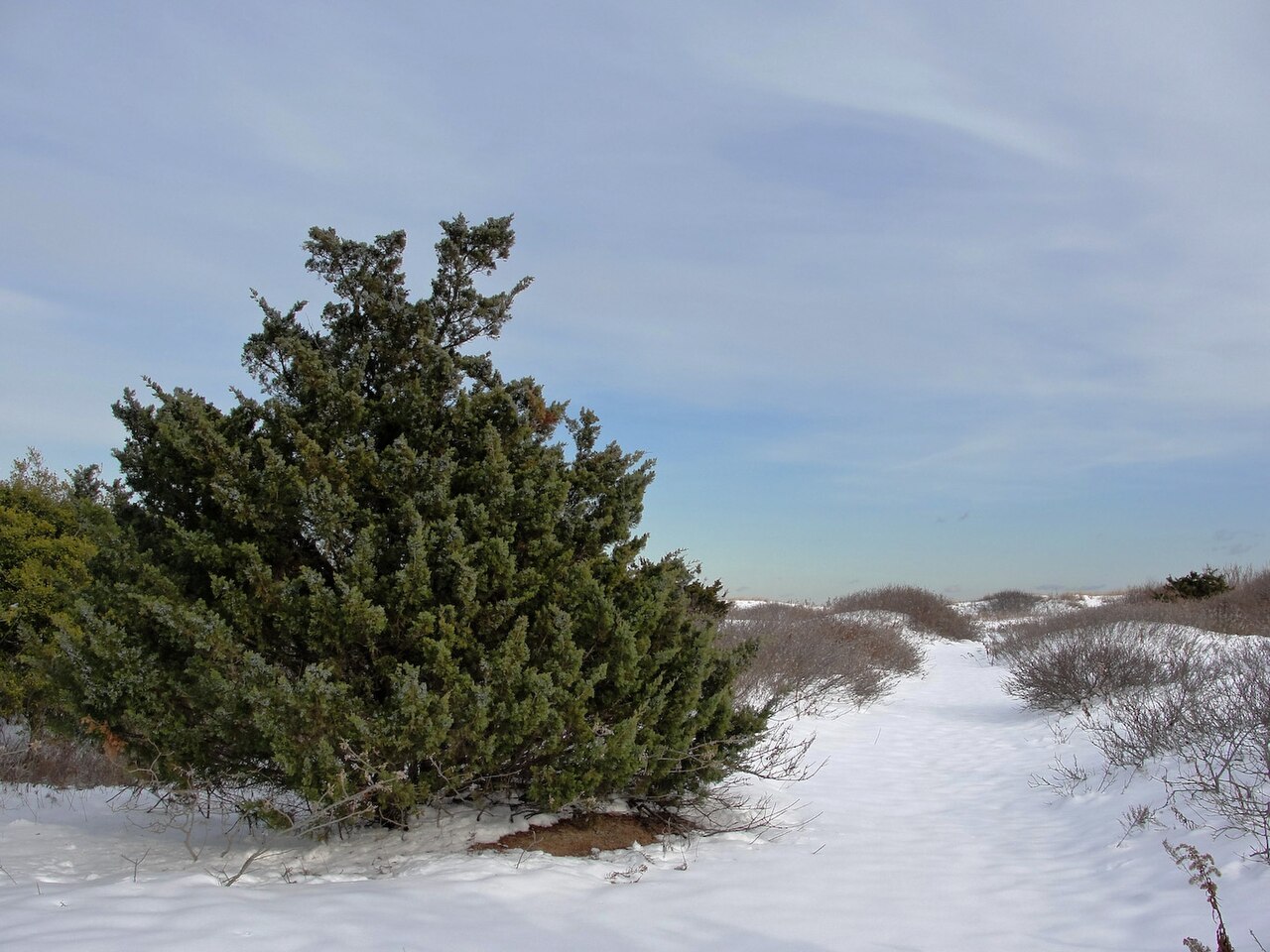
Juniperus virginiana is an evergreen conifer reaching 30-50 feet (9-15 m) tall and 8-20 feet (2.4-6 m) wide, narrowly conical for the first 20-30 years and broadening to an irregular open crown with age. Two leaf forms occur on the same tree: sharp awl-shaped juvenile needles 0.2-0.3 inch (5-8 mm) long on young growth and shaded interior shoots, and overlapping scale leaves 0.06-0.1 inch (1.5-3 mm) long on mature branchlets. Foliage is dark green through summer and turns purple-brown between December and March in zones 3-6. Bark is reddish-brown and fibrous, peeling in long vertical strips. Trees are dioecious, and female plants carry rounded fleshy cones 0.2-0.3 inch (5-8 mm) across, blue under a gray waxy bloom, ripening in a single season from September and holding into winter. Heartwood is aromatic and red-brown. Growth averages 12-24 inches (30-60 cm) per year on open ground and slows after 30 years, with trees living 150-300 years. The species is the alternate host for cedar-apple rust, Gymnosporangium juniperi-virginianae, which forms brown galls 0.5-2 inches (1.3-5 cm) across on the branches and carries to apples and crabapples within 1-2 miles (1.6-3.2 km).
Native Range
Native to eastern and central North America from Maine and southern Ontario south to Florida and west to North Dakota, Kansas, and central Texas. Grows on limestone glades, old fields, fence lines, dry ridges, and coastal dunes from sea level to 3,900 feet (1,200 m). It colonizes abandoned farmland and unburned grassland and has expanded across parts of the Great Plains where fire has been suppressed.Suggested Uses
Planted in windbreaks and shelterbelts at 8-12 foot (2.4-3.7 m) spacing, on dry banks and reclaimed ground, and as a screen on soil too poor or dry for other conifers. Timber is cut for fence posts, cedar chests, and pencil stock. Its role as alternate host for cedar-apple rust rules it out near orchards, and self-sown seedlings colonize unmanaged grassland at high density.How to Identify
Appearance
Size & Dimensions
Height30' - 50'
Width/Spread8' - 20'
Colors
Foliage Colors
Fall Foliage Colors
Bloom Information
Pollen cones on male trees shed from late February through April, with peak release over 10-14 days; this pollen is a recorded allergen across the eastern United States. Female cones set in spring and ripen from green to blue within a single season, coloring in September and October. Cones hold on the tree into February and are eaten by cedar waxwings, eastern bluebirds, and American robins. Heavy cone crops fall every 2-3 years.
Detailed Descriptions
Foliage Description
Dark green, purple-brown in winterGrowing Conditions
Sun Requirements
Requires 6-10 hours of direct sunlight daily
• Full Sun: 6+ hours of direct sunlight
• Partial Shade: 3-6 hours of direct sunlight
• Full Shade: Less than 3 hours of direct sunlight
Care & Maintenance
Care Guide
Water through the first two seasons; established trees hold through 8-10 weeks of drought without leaf loss. Growth continues on soil from pH 4.7 to 8.0, including shallow limestone ground and coastal sand, though roots die where soil stays saturated more than 7 days. Bagworm larvae build cases 1-2 inches (2.5-5 cm) long on the foliage from June and can strip a young tree in one season. Cedar-apple rust raises gelatinous orange horns on branch galls after spring rain and returns each year without killing the tree, while apple and crabapple plantings within 1-2 miles (1.6-3.2 km) carry leaf and fruit lesions as a result. Trees transplant poorly once trunk diameter passes 2 inches (5 cm), owing to a deep taproot. Deer browse the foliage lightly compared with Thuja occidentalis.Pruning
Dead, damaged, and crossing branches are cut between late winter and early spring, before new growth extends. Cuts made into bare brown wood produce no regrowth, since dormant buds are absent behind the green foliage. Cutting out branch galls in winter lowers the cedar-apple rust spore load the following spring, though reinfection follows from untreated trees nearby.Pruning Schedule
Prune: February–March
winterearly spring