Juniperus, Genus, ashei, Species,
- Genus & species
Ashe juniper
South-central United States and northern Mexico
Overview
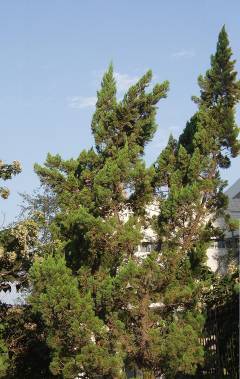
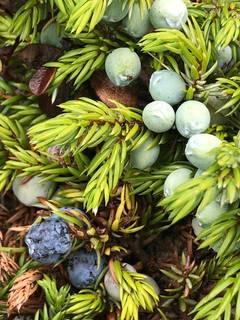
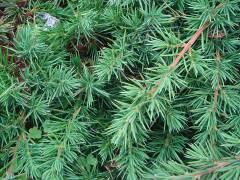
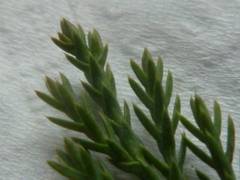
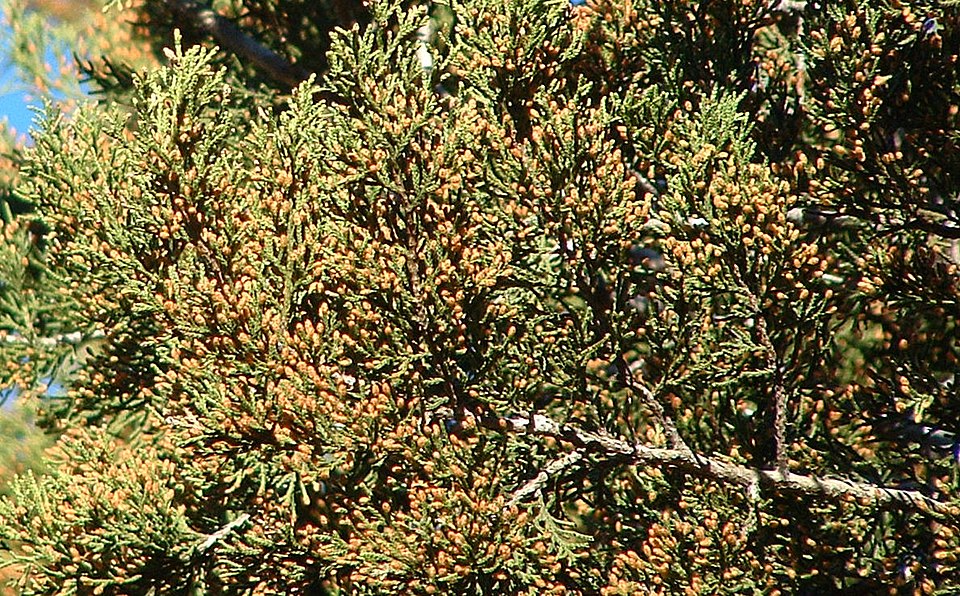
Juniperus ashei is an evergreen tree or large shrub of the south-central United States and northern Mexico, reaching 10-30 feet (3-9 m) tall with a rounded to irregular crown and often several trunks from the base. The scale-like blue-green leaves clothe slender twigs, and the shaggy bark peels in gray-brown strips. The species is dioecious, with separate male and female plants. Male trees release large clouds of yellow pollen from December to February, a well-known cause of winter hay fever in central Texas. Female trees bear round blue-black berry-like cones 0.25 inch (6 mm) across, coated in a waxy bloom and ripening in one season. The tree grows on dry limestone hills and rocky slopes, withstanding heat, drought, and thin alkaline soils. It spreads readily into grassland and is treated as invasive of rangeland in parts of its range. Dense stands draw heavily on soil water.
Native Range
Native to the south-central United States and northern Mexico, centered on the Edwards Plateau of central Texas and extending into Oklahoma, Arkansas, Missouri, and Coahuila.Suggested Uses
Used as an evergreen screen, windbreak, and erosion cover on dry alkaline sites. The dense foliage shelters nesting birds, including the golden-cheeked warbler, which uses the bark strips for nests. It suits unirrigated plantings on rocky ground.How to Identify
Appearance
Size & Dimensions
Height10' - 30'
Width/Spread10' - 20'
Colors
Bloom Information
Pollen is shed from male trees from December to February, often in visible clouds on dry, windy days. Female cones are wind-pollinated and ripen to blue-black within the same year. The trees do not produce petaled flowers.
Detailed Descriptions
Flower Description
yellow-brown male pollen cones; blue-black female conesFoliage Description
blue-greenGrowing Conditions
Sun Requirements
Requires 6-12 hours of direct sunlight daily
• Full Sun: 6+ hours of direct sunlight
• Partial Shade: 3-6 hours of direct sunlight
• Full Shade: Less than 3 hours of direct sunlight
Care & Maintenance
Care Guide
Grows in full sun in dry, rocky, alkaline soils, including shallow limestone, with a pH of 7.0-8.5. Established trees are drought hardy and need no supplemental water. The species tolerates heat and poor soils but not prolonged wet ground. Seedlings spread into open grassland, and control by cutting is common on managed range. Hardy in USDA zones 7-9. Bagworms and twig blight occur but seldom threaten established trees.Pruning
Lower limbs are removed to raise the canopy where a single-trunk form is wanted. Dead or storm-damaged wood is thinned at any season. The tree does not resprout from old wood, so cuts into bare stems do not regrow.Pruning Schedule
Prune: February
winter