Juncus, Genus, patens, Species,
- Genus & species
spreading rush
Overview
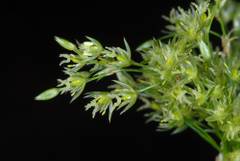
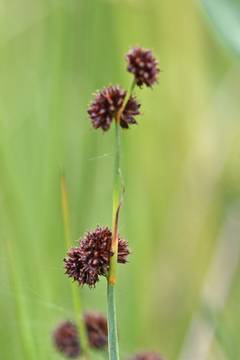
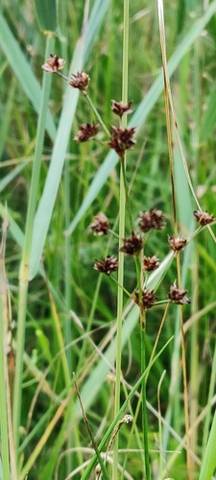
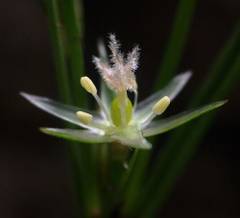
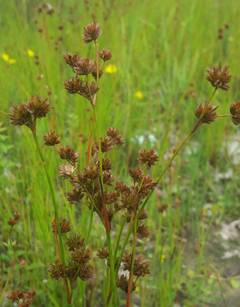
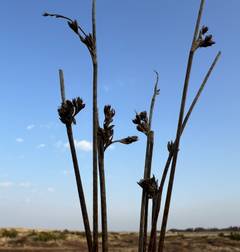
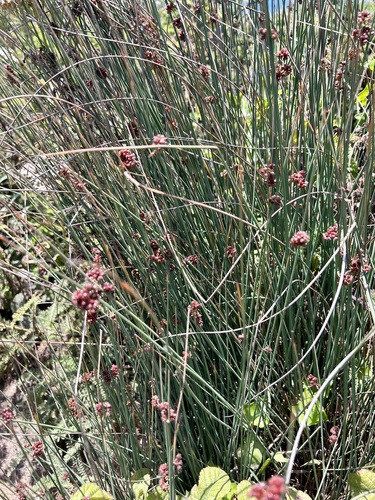
Juncus patens is a clump-forming perennial rush reaching 18-30 inches (45-75 cm) tall and 18-24 inches (45-60 cm) wide. Stems (culms) are erect, slender, cylindrical, smooth, and gray-green to blue-gray, 0.04-0.08 inch (1-2 mm) thick, and rise from short rhizomatous bases. Leaves are reduced to bladeless basal sheaths surrounding the stem base. Inflorescences are lateral pseudo-compound clusters appearing 2-5 inches (5-13 cm) below the apparent stem tip, with 20-50 small brown flowers in loose clusters; a single bract continues the stem line above the inflorescence. Bloom occurs from June through August. Fruits are 3-celled capsules 0.08-0.13 inch (2-3.5 mm) long. Plants form dense rounded tufts that maintain shape through winter. Foliage holds gray-green color year-round in zones 8-10 and partially browns in colder areas. Plants persist 8-15 years on suitable moist sites and tolerate seasonal dryness better than most native rushes. The species was formerly classified as Juncus effusus var. brunneus and is now retained as a separate species.
Native Range
Native to the Pacific Coast of North America from southern British Columbia south through Washington, Oregon, and California to northern Baja California, with disjunct populations in southern California desert oases. Found in seasonally moist to wet meadows, stream margins, oak savanna swales, and coastal scrub seeps at sea level to 5,000 feet (0-1,500 m) elevation.Suggested Uses
Used in rain gardens, pond margins, mixed perennial borders with consistent moisture, and contemporary landscape plantings at 18-24 inch (45-60 cm) spacing. Suited to sustainable landscape designs and to wetland edge restoration in coastal climates. Performs poorly in deep shade, hot inland summer climates without irrigation, and containers smaller than 3 gallons (11 L).How to Identify
Appearance
Size & Dimensions
Height1'6" - 2'6"
Width/Spread1'6" - 2'
Bloom Information
Flowers open from June through August across most of the range, with peak bloom in July. Individual inflorescences ripen 4-6 weeks after emergence; total reproductive period extends 8-10 weeks per plant. Capsules ripen brown and persist on stems through fall and winter, releasing seed gradually. Bloom is reduced in unirrigated plantings during severe summer drought.
Detailed Descriptions
Foliage Description
stems gray-green to blue-gray; leaves reduced to basal sheathsGrowing Conditions
Sun Requirements
Requires 4-12 hours of direct sunlight daily
• Full Sun: 6+ hours of direct sunlight
• Partial Shade: 3-6 hours of direct sunlight
• Full Shade: Less than 3 hours of direct sunlight
Care & Maintenance
Care Guide
Water deeply weekly during the first growing season; established plants tolerate 4-6 weeks without rain in regions receiving at least 20 inches (50 cm) of annual precipitation. Plants in continuously irrigated borders develop crown rot but fare better than J. balticus on intermittently moist sites. Aphids occasionally cluster on flower stems; populations remain low. Plants self-sow modestly on bare moist soil, producing 30-100 seedlings per parent annually under garden conditions. Replace senescent crowns by digging and dividing every 5-8 years. No fertilizer is required in established plantings.Pruning
Cut all dead stems to 2-4 inches (5-10 cm) above the crown in late winter or early spring before new growth emerges. The dense rounded form may be sheared lightly in summer to remove damaged tips, but heavy mid-season cutbacks reduce plant vigor and bloom. Remove damaged or rust-affected stems during the growing season as needed.Pruning Schedule
Prune: February–March
winterearly spring
Container Growing
Suitable for container growing
Minimum container size: 3 gallons