Hosta, Genus, ventricosa, Species,
- Genus & species
Blue plantain lily
Overview
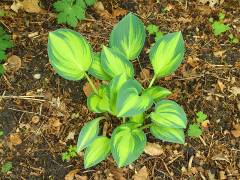
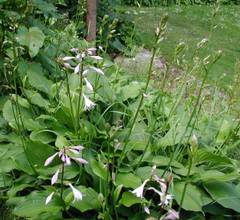
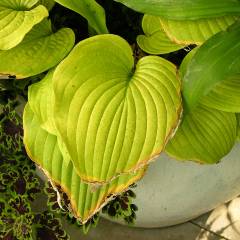
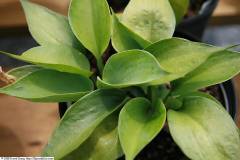
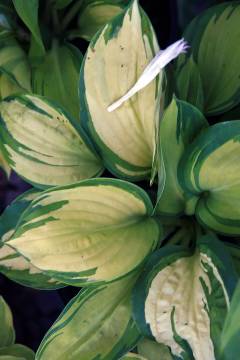
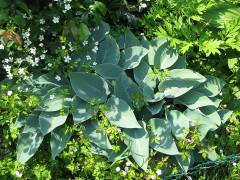
Hosta ventricosa is a clump-forming herbaceous perennial that forms a mound of foliage 18–24 inches (45–60 cm) tall and 24–36 inches (60–90 cm) wide, with flower scapes reaching 30–40 inches (75–100 cm). Leaves are broadly ovate to heart-shaped, 3–7 inches (8–19 cm) long and 2–6.5 inches (4.5–17 cm) wide, with an abruptly pointed tip, a glossy dark green upper surface, and a wavy margin. Bell-shaped, dark purple flowers 1.5–2.4 inches (4–6 cm) long open in July–August along upright scapes and are followed by capsules that release black seeds. Seed develops without fertilization (apomixis), so seedlings resemble the parent plant. Foliage turns yellow after frost and collapses in fall, and plants resprout in spring from a crown with thick, fleshy roots. Growth rate is moderate, and clumps reach full width in 4–5 years. Slugs and snails chew holes in leaves, and deer browse foliage and flower scapes. Leaves scorch at the margins in full sun and dry soil. Hardy in USDA zones 3–9; plants in zones 8–9 may show reduced vigor in hot summers.
Native Range
Native to China, where it grows in forests, thickets, and grassy slopes at low to mid elevations.Suggested Uses
Grown in shaded borders, woodland gardens, and containers. Planted in groups spaced 24–36 inches (60–90 cm) apart as ground cover under deciduous trees. Flower scapes are used as cut stems in arrangements.How to Identify
Appearance
Size & Dimensions
Height1'6" - 3'4"
Width/Spread2' - 3'
Bloom Information
Flowers open from July to August in zones 3–9. Individual flowers last 1–2 days, and each scape opens flowers over 2–3 weeks. Hot weather shortens the bloom period, and the bell-shaped flowers are visited by bees.
Detailed Descriptions
Foliage Description
Glossy dark green, yellow after frostGrowing Conditions
Sun Requirements
Requires 2-4 hours of direct sunlight daily
• Full Sun: 6+ hours of direct sunlight
• Partial Shade: 3-6 hours of direct sunlight
• Full Shade: Less than 3 hours of direct sunlight
Care & Maintenance
Care Guide
Grows in moist, well-drained, humus-rich soil in part shade to full shade; leaves scorch in full sun in hot climates. Newly planted clumps need 1 inch (2.5 cm) of water weekly, and established clumps tolerate short dry periods. Mulch 2–3 inches (5–8 cm) deep conserves soil moisture. Slugs and snails chew holes in leaves in wet weather, and deer browse foliage and flower scapes. Clumps are divided every 4–8 years in early spring or late summer. Collapsed foliage is cut to the ground in fall.Pruning
No structural pruning is needed. Flower scapes are cut at the base after blooming to prevent seed formation. Collapsed foliage is removed in late fall or late winter, which reduces sites for overwintering slug eggs.Pruning Schedule
Prune: October–November
fall
Container Growing
Suitable for container growing