Image 1 of 5
1 / 5
© peganum from Small Dole, England, some rights reserved (CC-BY-SA) · Wikimedia Commons
Hosta, Genus, ×, Hybrid, 'Halcyon', Cultivar,
- Genus
- Hybrid
- Cultivar
halcyon hosta
Garden hybrid; bred by Eric Smith in England as part of the Tardiana Group (Hosta sieboldiana Elegans crossed with Hosta tardiflora). The parent Hosta species are native to Japan, Korea, and northeastern China.
Overview
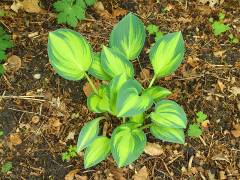
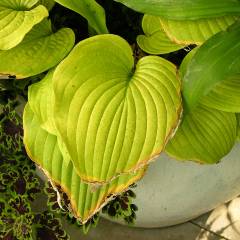
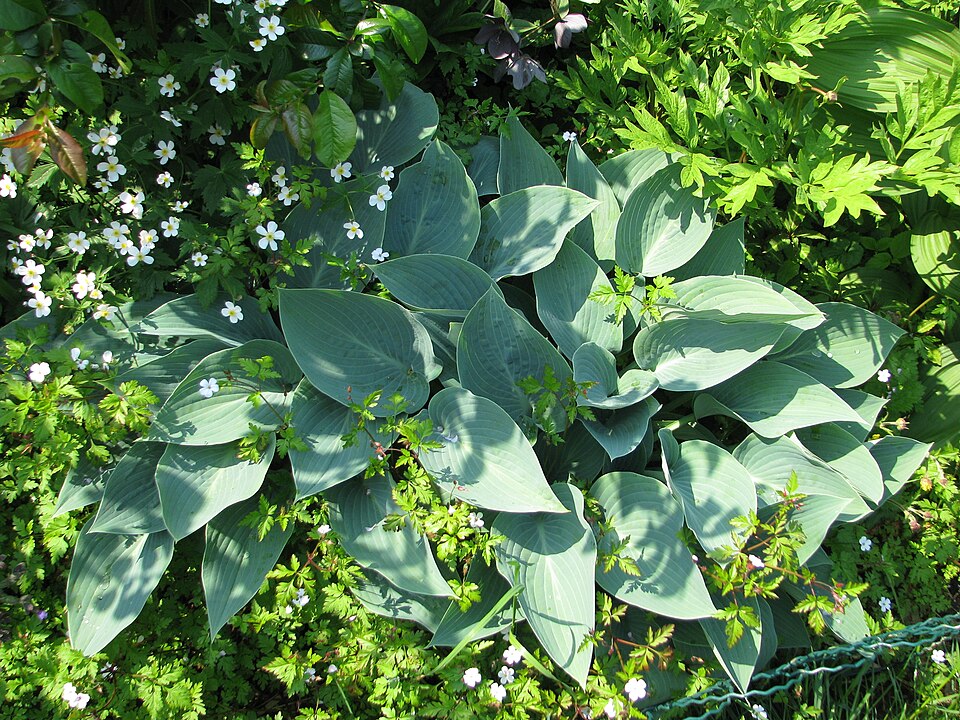
Hosta × Halcyon is the benchmark blue Hosta cultivar — the cultivar against which the steel-blue color of other commercial blue hostas is commonly measured in the trade. Plants grow 14-18 inches (35-45 cm) tall and 30-40 inches (75-100 cm) wide at maturity, falling in the medium-size range of the genus. Smooth thick heart-shaped leaves coated with a heavy blue-gray waxy bloom (the cuticular epicuticular wax that gives blue hostas their color) carry the most consistent and saturated steel-blue color in commercial Hosta cultivars, with the smooth leaf surface (no corrugation, no puckering) producing a uniform unbroken blue rather than the mottled blue of corrugated cultivars like Abiqua Drinking Gourd or Sieboldiana Elegans. The blue waxy bloom is preserved longest in full shade because direct sunlight, overhead irrigation, and physical contact gradually remove the bloom across the season, greening the leaves as the underlying chlorophyll-bearing tissue becomes visible through the worn-down wax layer; positions in deep shade keep the blue color intact through fall, while morning-sun positions show some greening by late summer. Halcyon was bred by Eric Smith in England in the 1960s-70s as part of the Tardiana Group, a series of blue hostas produced by crossing Hosta sieboldiana Elegans (a heavily-blue corrugated species cultivar) with Hosta tardiflora (a smaller, smoother, later-blooming Japanese species). The Tardiana crosses combined the blue color and thick leaf substance of Elegans with the smaller compact habit and the smooth leaf surface of tardiflora, producing the medium-sized smooth blue hostas that the modern blue-Hosta cultivar group derives from. The thick leaf substance gives the cultivar moderate slug resistance because slugs prefer thinner, softer Hosta leaves; thick-leaved cultivars including Halcyon, Krossa Regal, and Big Daddy are the slug-defense reference points within the genus. Lavender to grayish-lavender bell-shaped flowers on dense racemes appear in July and August, but the flowers are secondary to the foliage display in this and most blue Hosta cultivars. The medium plant size makes the cultivar versatile across multiple garden positions: large enough to anchor a shade planting as a specimen, small enough to combine with companion hostas in mixed groupings, and sized correctly for container plantings of 7 gallons or larger. All Hosta plant parts contain saponin glycoside compounds (the same family-shared compound class found in Asparagus, the genus Hosta shares its family with), and ingestion produces gastrointestinal upset, vomiting, and diarrhea in dogs and cats; the dose required for serious toxicity is large but the plant should not be planted in dog-and-cat-accessible positions where chewing the foliage is likely. Deer browse Hosta foliage heavily across most of the cultivated range, and gardens with deer pressure typically need physical barriers (fencing, repellent applications) to maintain the plants; the cultivar is not deer-resistant despite the saponin chemistry that makes it toxic to companion animals.
Native Range
Hosta × Halcyon is a garden hybrid bred by Eric Smith in England in the 1960s-70s as part of the Tardiana Group breeding program. The parents are Hosta sieboldiana Elegans (itself a cultivar of Hosta sieboldiana, native to Honshu, Japan) and Hosta tardiflora (native to Honshu, Japan). The genus Hosta as a whole is native to Japan, Korea, and northeastern China, with most cultivated species and cultivars derived from Japanese natives. The Tardiana Group breeding work in England combined Japanese-species genetic material in new combinations not found in nature, producing the medium-sized smooth blue cultivars that modern shade-garden Hosta plantings rely on.Suggested Uses
Used as the reference blue Hosta in shade gardens, as a specimen plant in shade plantings where the steel-blue foliage anchors the surrounding planting, in mass plantings of 5-7 plants for a continuous blue-foliage sweep, and in container plantings of 7 gallons (26 liters) or larger where the medium plant size suits the confined root volume of a pot. The intense blue color pairs with gold-leaved companions (gold Heuchera cultivars, golden Hakonechloa macra Aureola) and chartreuse-leaved companions (chartreuse Heuchera, chartreuse hostas like Sum and Substance) for the strongest color contrast, and pairs with variegated hostas (Patriot, Frances Williams, Wide Brim) for textural variety in mixed-Hosta plantings. The smooth leaf surface and the uniform color saturation make the cultivar the most photographed blue Hosta in published garden photography, with the steel-blue color reading well in both natural light and artificial light photography.How to Identify
Appearance
Size & Dimensions
Height1'2" - 1'6"
Width/Spread2'6" - 3'4"
Colors
Bloom Information
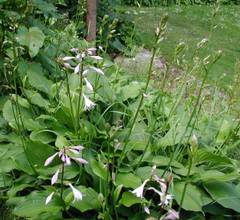
Lavender to grayish-lavender bell-shaped flowers open on dense racemes carried on scapes 24-30 inches (60-75 cm) tall above the foliage in July and August across a 3-week active flowering window. The flowers are secondary to the foliage display in this and most blue Hosta cultivars; the foliage carries the visual interest from spring leaf emergence through fall foliage color, and the brief mid-summer flower display adds a vertical accent without dominating the foliage-driven planting. Pollination is by hummingbirds and large bumblebees that work the bell-shaped flower architecture and the lavender flower color.
Detailed Descriptions
Flower Description
Lavender to grayish-lavender bell-shaped flowers carried in dense racemes on scapes 24-30 inches (60-75 cm) tall, with the pale lavender flower color being secondary to the foliage displayFoliage Description
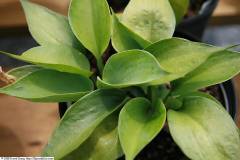
Intense steel-blue with a heavy waxy bloom; smooth thick heart-shaped leaves carrying the most consistent and saturated steel-blue color in commercial Hosta cultivars, with the smooth leaf surface (no corrugation, no puckering) producing a uniform unbroken blue rather than the mottled blue of corrugated cultivarsGrowing Conditions
Sun Requirements
Requires 2-4 hours of direct sunlight daily
• Full Sun: 6+ hours of direct sunlight
• Partial Shade: 3-6 hours of direct sunlight
• Full Shade: Less than 3 hours of direct sunlight
Care & Maintenance
Care Guide
Plant in partial shade to full shade with 2-4 hours of filtered or dappled light; the cultivar handles deeper shade than most Hosta cultivars and the blue color is preserved longest in deep shade where sunlight does not gradually remove the waxy epicuticular bloom. Moist humus-rich soil at pH 6.0-7.0 supports the cultivar across loam and amended clay substrates; the species prefers consistently moist conditions with adequate organic matter in the soil profile. Watering is regular through dry spells, with base-of-plant irrigation rather than overhead irrigation because overhead water gradually removes the blue waxy bloom from the leaf surfaces. Mulching the root zone with 2-3 inches of organic mulch retains soil moisture and reduces summer leaf scorch. The plant takes 3-4 years to reach the published full mature size from a young division, and the foliage display improves in density and color saturation each year as the crown matures. Spent flower scapes are removed at the base after bloom completes, and all browned foliage is cut to ground level in late fall after frost. Households with dogs or cats should know that the saponin compounds in the foliage cause gastrointestinal upset, vomiting, and diarrhea in companion animals if ingested; positioning the plant outside dog-and-cat-accessible areas is the simplest control. Deer pressure typically requires physical barriers (fencing, repellent applications) because the saponin chemistry that makes the plant toxic to companion animals does not deter deer.Pruning
Spent flower scapes are removed at the base after the mid-summer bloom completes. All browned foliage is cut to ground level in late fall after frost terminates the above-ground growth, and the cut foliage is removed from the planting area to reduce slug habitat for the following spring. No other seasonal pruning is needed.Pruning Schedule
Prune: March & November
fallearly spring
Container Growing
Suitable for container growing
Minimum container size: 7 gallons