Hosta, Genus, ×, Hybrid, 'Great Expectations', Cultivar,
- Genus
- Hybrid
- Cultivar
great expectations hosta
Genus Hosta native to East Asia (Japan, Korea, China); 'Great Expectations' is a variegated sport of Hosta 'Sieboldiana Elegans' (a blue-leaved cultivar of H. sieboldiana); commercially grown across temperate North America and Europe
Overview
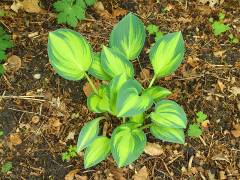
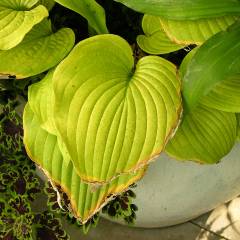
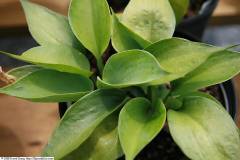
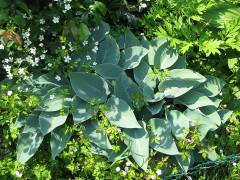
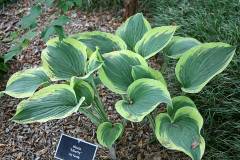
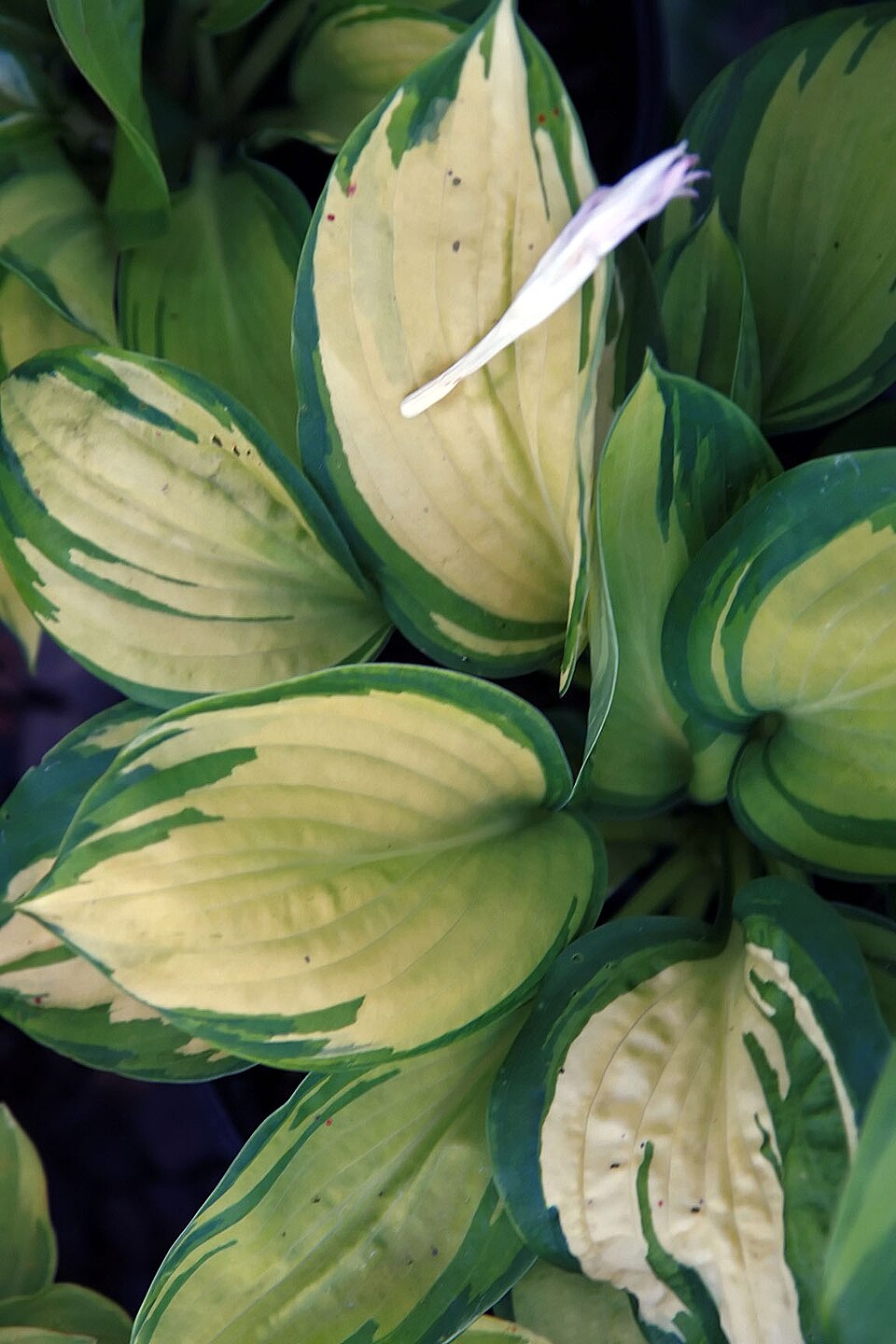
Hosta × 'Great Expectations' is a variegated sport of the blue-leaved H. 'Sieboldiana Elegans' in the Asparagaceae family, reaching 18–22 inches (45–55 cm) tall and 30–36 inches (75–90 cm) wide at maturity. Each large thick corrugated leaf carries a creamy-yellow to gold center surrounded by an irregular blue-green margin with streaked transition zones between the two colors. The two-toned blue-and-gold variegation pattern is uncommon among hostas — most variegated hostas carry green-with-white or green-with-yellow patterns rather than the simultaneous blue-margin-and-gold-center combination. The center color emerges creamy-white in spring, warms to gold by midsummer, and may shift toward creamy-white again by late summer depending on light levels. The blue-green margin holds the blue waxy bloom longest in shade. The corrugated thick leaf substance inherited from the 'Sieboldiana Elegans' parent contributes slug resistance — slugs prefer thin smooth leaves and tend to avoid the bumpy thick-substanced texture. 'Great Expectations' runs slow to establish, requiring 4–6 years to reach full size from a small division — the principal cultivation limitation. The plant may look sparse in the first 2–3 years, and patience is essential during the establishment period. Once mature, the large corrugated variegated leaves give a strong centerpiece to mixed shade plantings. The creamy center is susceptible to sunburn in direct sun; morning light only or dappled shade through the day suits the cultivar most reliably. In too much shade, the center may remain creamy-white without warming to the gold tone. Pale lavender to near-white flowers on short scapes appear in June and July — secondary to the foliage display. Deer eat hosta foliage. Toxic to dogs and cats if ingested.
Native Range
Hosta species are native to East Asia (Japan, Korea, China), where wild populations occur in moist forest understory, stream banks, and mountain meadow habitats across temperate East Asian climates. The 'Great Expectations' cultivar is a variegated sport of Hosta 'Sieboldiana Elegans' (a blue-leaved cultivar of the species H. sieboldiana) and is grown commercially across temperate North America and Europe.Suggested Uses
Used as a specimen hosta in shade gardens where the blue-and-gold variegated corrugated leaves anchor the foliage composition. Container culture works in pots of 10 gallons (38 liters) or more. Pairs with solid blue or solid green hostas for a variegated centerpiece effect against monochrome companions. The slow growth rate makes the cultivar a collector plant — position where the leaves can be viewed at close range and where the plant will not be crowded by faster-growing neighbors during the 4–6 year establishment period. The cultivar requires patience; gardeners seeking immediate visual impact should select faster-establishing variegated hostas such as 'Patriot' or 'Francee' instead.How to Identify
Appearance
Size & Dimensions
Height1'6" - 1'10"
Width/Spread2'6" - 3'
Bloom Information
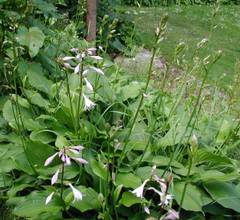
Flowering in June and July across approximately 3 weeks. Pale lavender to near-white bell-shaped flowers on short scapes barely above the foliage. The variegated foliage runs as the principal display with the flowers as a secondary feature. Flowers attract bumblebees during the brief bloom window.
Detailed Descriptions
Flower Description
Pale lavender to near-white; bell-shaped on short scapes barely above the foliageFoliage Description
Creamy-yellow to gold center with irregular blue-green margins and streaked transition zones; corrugated thick leaf substanceGrowing Conditions
Sun Requirements
Requires 2-4 hours of direct sunlight daily
• Full Sun: 6+ hours of direct sunlight
• Partial Shade: 3-6 hours of direct sunlight
• Full Shade: Less than 3 hours of direct sunlight
Care & Maintenance
Care Guide
Plant in partial to full shade with 2–4 hours of filtered light. Morning light warms the center to gold; afternoon sun burns the creamy-yellow center tissue. Moist humus-rich well-drained soil suits the cultivar. Water at the base — overhead irrigation washes the blue waxy bloom from the marginal blue-green tissue and accelerates the blue-to-green color shift on the leaf margins. Mulch with 2–3 inches (5–8 cm) of organic material to retain soil moisture and to suppress weeds. Allow 4–6 years for the clump to reach full size from a small division — do not judge the plant by the sparse appearance of the first 2–3 years. Remove spent flower scapes after bloom. Cut all browned foliage to ground level after frost in late fall. The cultivar is toxic to dogs and cats if ingested; deer eat the foliage and may need protection in deer-heavy areas.Pruning
Remove spent flower scapes at the base after bloom. Cut all browned foliage to ground level in late fall after frost has killed the leaves. No other seasonal pruning is needed during the active growing season.Pruning Schedule
Prune: November
fall
Container Growing
Suitable for container growing
Minimum container size: 10 gallons