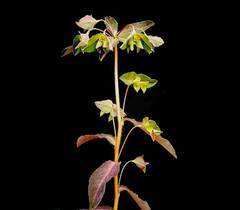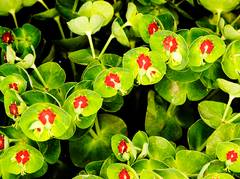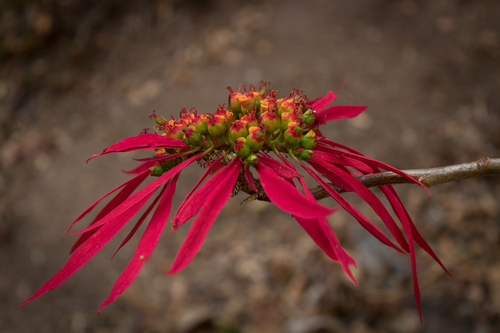
Euphorbia, Genus, pulcherrima, Species,
- Genus & species
poinsettia
Overview
Euphorbia pulcherrima is the poinsettia, growing 12–24 inches (30–60 cm) in retail pots (60–180 inches / 150–450 cm outdoors in frost-free zones). The red, pink, white, or cream structures are colored bracts (modified leaves), not flower petals — the true flowers are small yellow-green cyathia (cup-shaped structures) 0.2 inch (5 mm) in the center of the bract cluster. The bract coloring is triggered by photoperiodism: 14+ hours of uninterrupted darkness per night for 6–8 weeks initiates the color change — even brief light exposure (a few seconds from a streetlight or room light) during the dark period disrupts the process. To rebloom a poinsettia from the previous year, provide 14 hours of complete darkness nightly starting in early October. Native to Mexico and Central America, where it grows as a large shrub. Named after Joel Roberts Poinsett, the first US ambassador to Mexico, who introduced the plant to the United States in 1825. All parts exude a milky white latex that causes skin irritation in sensitive individuals and mild gastrointestinal upset if ingested — the toxicity is often overstated (not fatal to children or pets at typical exposure levels, but still an irritant). Mildly toxic to cats and dogs. Frost-tender: leaf drop below 50°F (10°C). Bright indirect light. Avoid drafts and temperature extremes. Whitefly is the primary pest. Root rot in waterlogged soil. Growth rate is moderate.
Native Range
Native to Mexico (Guerrero and Oaxaca) and Central America, where it grows as a large deciduous shrub in seasonal dry forests. Introduced to the US by Joel Roberts Poinsett in 1825.Suggested Uses
Grown as a seasonal potted plant in containers of 1–3 gallons (4–12 liters) in bright indirect light. Outdoors year-round in zones 9–11. The short-day photoperiod requirement makes reblooming indoors a multi-step process. Milky latex irritates skin. Mildly toxic to pets.How to Identify
Appearance
Size & Dimensions
Height1' - 2'
Width/Spread1' - 2'
Bloom Information
Colored bracts appear in winter (November–February) in response to short-day photoperiod — 14+ hours of uninterrupted darkness per night for 6–8 weeks triggers bract coloring. The bracts persist 6–8 weeks. True flowers are small yellow-green cyathia in the center of the bract cluster.
Detailed Descriptions
Flower Description
True flowers are small yellow-green cyathia; showy structures are colored bractsFoliage Description
Dark green; bracts red, pink, white, or cream depending on cultivarGrowing Conditions
Sun Requirements
Requires 4-6 hours of direct sunlight daily
• Full Sun: 6+ hours of direct sunlight
• Partial Shade: 3-6 hours of direct sunlight
• Full Shade: Less than 3 hours of direct sunlight
Care & Maintenance
Care Guide
Bright indirect light. Avoid drafts and temperatures below 50°F (10°C) — leaf drop results. Well-draining soil. Keep evenly moist — not waterlogged. To rebloom: 14 hours of uninterrupted darkness nightly for 6–8 weeks starting early October. Milky latex irritates skin. Mildly toxic to pets. Whitefly. Root rot in wet soil.Pruning
After bracts fade, cut back stems to 6 inches (15 cm) in early spring. New growth emerges from the cut points. Pinch growing tips in June and July for branching and a compact form — stop pinching by mid-August to allow bud set for winter bract coloring.Container Growing
Suitable for container growing
Minimum container size: 1 gallons