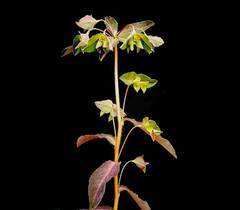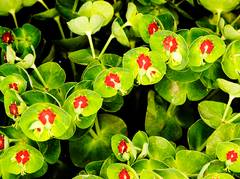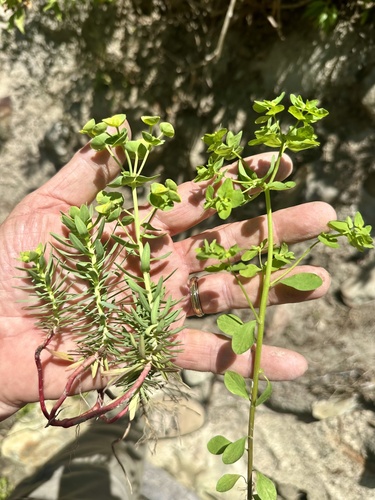
Euphorbia, Genus, peplus, Species,
- Genus & species
petty spurge
Europe, western Asia, northern Africa
SunPart Shade – Full Sun
WaterMedium
Overview
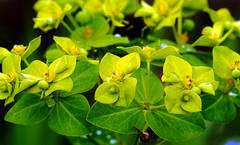
Euphorbia peplus is a small, erect annual in the spurge family (Euphorbiaceae) reaching 4-12 inches (10-30 cm) tall with a 4-10 inch (10-25 cm) spread. Stems are smooth, erect, branching from the base and at the inflorescence, exuding milky white latex when broken. Lower leaves are alternate, oval to obovate, 0.4-0.8 inch (10-20 mm) long, bright green, thin, with entire margins and short petioles. Leaves below the inflorescence are arranged in a whorl of three. The inflorescence is a cyathium — the specialized flower structure specific to Euphorbia — with crescent-shaped nectar glands bearing two slender horns. Fruit is a smooth, three-lobed capsule 0.08 inch (2 mm) in diameter, each lobe containing one seed. The capsule dehisces explosively, projecting seeds up to 5 feet (1.5 m) from the parent plant. A single plant produces 200-1,000 seeds. Seeds germinate year-round in the Pacific Northwest when soil moisture is adequate, producing overlapping generations. The milky latex contains ingenol mebutate, a diterpene ester used in pharmaceutical treatment of actinic keratosis (precancerous skin lesions). Latex causes skin irritation, eye inflammation, and gastrointestinal distress if ingested. The species ranks among the more common garden and nursery weeds in mild temperate climates.
Native Range
Euphorbia peplus is native to Europe, western Asia, and northern Africa, occurring in gardens, cultivated ground, shaded pathways, and waste areas from sea level to approximately 3,500 feet (1,100 m). Widely naturalized in North America, particularly along the Pacific coast from British Columbia to California and in the southeastern United States.Suggested Uses
Used in weed identification courses for teaching Euphorbia cyathium morphology and the explosive capsule dehiscence mechanism. The latex-derived compound ingenol mebutate has pharmaceutical significance in dermatology. Studied in nursery weed management as a model container weed. Included in Euphorbiaceae morphology exercises.How to Identify
Appearance
Size & Dimensions
Height4" - 1'
Width/Spread4" - 10"
Bloom Information
Flowers appear March through October, with continuous production of new cyathia as branches elongate. Individual cyathia mature over 5-7 days. In the Pacific Northwest, flowering occurs nearly year-round in mild winters. Capsules dehisce explosively 2-3 weeks after pollination. The species is self-pollinating.
Detailed Descriptions
Flower Description
Green cyathia with crescent-shaped nectar glands bearing two slender hornsFoliage Description
Bright green, thin, oval to obovate, entire margins, alternate below and whorled below the inflorescenceGrowing Conditions
Sun Requirements
Requires 3-8 hours of direct sunlight daily
• Full Sun: 6+ hours of direct sunlight
• Partial Shade: 3-6 hours of direct sunlight
• Full Shade: Less than 3 hours of direct sunlight