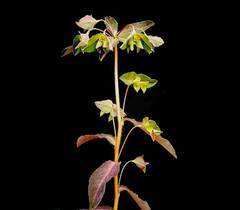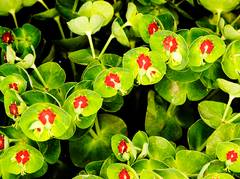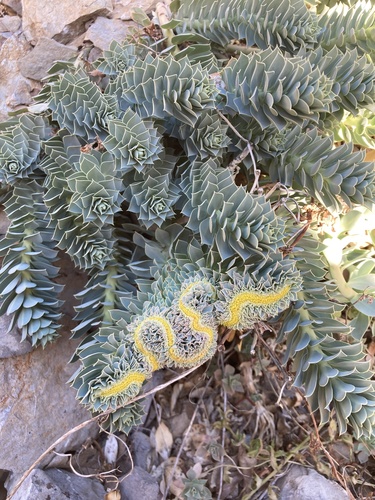
Euphorbia, Genus, myrsinites, Species,
- Genus & species
myrtle spurge
Mediterranean basin (Spain to Turkey and the Caucasus; rocky limestone slopes, scree, garigue at 1,000-6,000 feet)
Overview
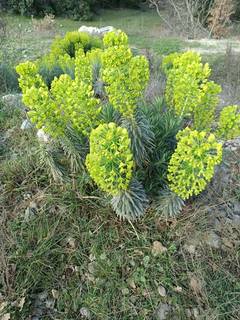
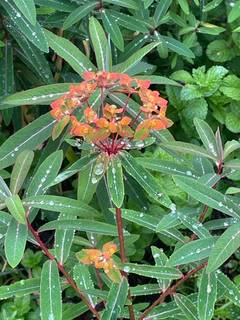
Euphorbia myrsinites is a low trailing to spreading evergreen perennial in the spurge family (Euphorbiaceae) reaching 4–8 inches (10–20 cm) tall with a spread of 12–18 inches (30–45 cm). This Mediterranean alpine species carries a prostrate ground-hugging habit with trailing stems radiating outward from a central crown, which separates the species visually from every other cultivated euphorbia by its growth form alone. Leaves are thick fleshy succulent, oval to rounded, 0.5–1 inch (1–2.5 cm) long, blue-gray with a waxy bloom, densely spiraling around the trailing stems in a geometric arrangement that gives each stem a caterpillar-like or chain-link appearance unmatched elsewhere in the genus. Flower heads are terminal clusters of bright chartreuse-yellow cyathia that open at the tips of the trailing stems in March–May. Growth rate is slow. The plant develops a deep taproot that anchors it in rocky crevices and steep slopes. The species has been documented as invasive in parts of western North America (Colorado, Utah, Oregon) through seed dispersal, and regulatory restrictions exist in several western states where the plant has naturalized into native habitats. All parts of the plant exude a milky white latex that is a skin and eye irritant. Hardy to zone 5.
Native Range
Euphorbia myrsinites is native to southern Europe and western Asia (the Mediterranean basin from Spain to Turkey and the Caucasus), where it occurs in rocky limestone slopes, scree fields, and garigue scrubland at 1,000–6,000 feet (300–1,800 m).Suggested Uses
Grown in rock gardens, stone wall plantings, raised beds, and gravel gardens where the trailing succulent stems can drape over walls and edges at close viewing range. The plant functions in alpine troughs and container culture in 1 gallon (4 L) or larger pots. The blue-gray succulent foliage carries year-round texture that few other perennials can match in a rock-garden context. Gardens in Colorado, Utah, Oregon, and adjacent western states where the species is regulated as a noxious weed are not suitable; gardeners in those regions often substitute native alternatives such as Sedum cultivars or native Penstemon species that provide comparable rock-garden function without the regulatory concerns. Wet soils, shaded positions, and rich fertile conditions are also not suitable given the cultural preferences.How to Identify
Appearance
Size & Dimensions
Height4" - 8"
Width/Spread1' - 1'6"
Bloom Information
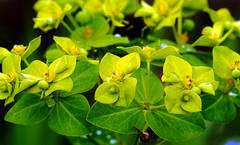
Terminal clusters of bright chartreuse-yellow cyathia open at the tips of the trailing stems in March–May. Bloom duration is 4–6 weeks. The flower heads fade gradually toward yellow-green as the bloom period closes, and the flowered stems are typically cut back after bloom to encourage fresh trailing growth from the central crown.
Detailed Descriptions
Flower Description
Bright chartreuse-yellow terminal clusters at stem tipsFoliage Description
Blue-gray with waxy bloom; thick fleshy succulent; oval to rounded 0.5-1 inch long in spiral arrangement along trailing stemsGrowing Conditions
Sun Requirements
Requires 6-12 hours of direct sunlight daily
• Full Sun: 6+ hours of direct sunlight
• Partial Shade: 3-6 hours of direct sunlight
• Full Shade: Less than 3 hours of direct sunlight
Care & Maintenance
Care Guide
Grows in full sun in sharply drained lean gritty soil at pH 6.5–8.5, tolerating sand, chalk, and rocky substrates. Drought-tolerant once established. Hardy to zone 5. Sharp drainage is essential — wet winter soils produce crown rot that can kill the plant within a single dormant season. The deep taproot anchors the plant in rocky sites and enables establishment on slopes and in crevices where most other perennials cannot root. The species self-seeds readily and has been documented as invasive in parts of western North America, with active regulatory restrictions in Colorado, Utah, and Oregon where the plant has naturalized into native shortgrass prairie and rocky-slope habitats; gardeners in affected western states should review state noxious-weed lists before siting decisions, and deadheading spent flower heads before seed set substantially reduces the species spread potential in any garden setting. The milky white latex that exudes from cut stems and broken tissue is a skin and eye irritant; contact during pruning is the primary exposure route, and washing exposed skin with soap promptly reduces irritation risk.Pruning
Flowered stems are cut back to the base after bloom (May–June), which encourages fresh new trailing growth from the central crown and simultaneously deadheads the plant before seed set reduces the self-seeding pressure. The milky latex sap is a skin and eye irritant during cutting work, so protective gloves and eye protection reduce exposure risk during pruning operations.Pruning Schedule
Prune: May–June
late springsummer
Container Growing
Suitable for container growing
Minimum container size: 1 gallons