Euphorbia, Genus, martini, Species,
- Genus & species
Martin's spurge
Southern France (natural hybrid where E. amygdaloides and E. characias ranges overlap)
Overview
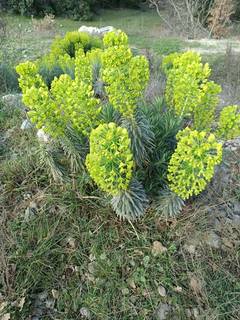
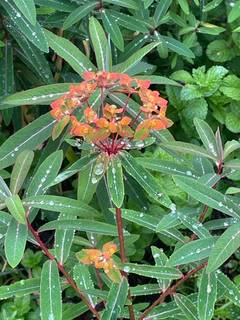
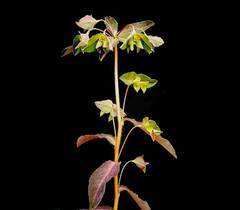
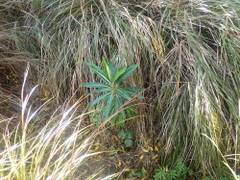
Euphorbia × martini is a compact mounding to upright evergreen sub-shrubby perennial in the spurge family (Euphorbiaceae) reaching 18–24 inches (45–60 cm) tall with a spread of 18–24 inches (45–60 cm). This naturally occurring hybrid (E. amygdaloides × E. characias) combines the compact size and cold hardiness of E. amygdaloides with the evergreen structure and drought tolerance of E. characias, which produces a cross-species perennial that handles broader garden conditions than either parent on its own. Leaves are narrow lance-shaped 2–3 inches (5–8 cm) long, olive-green to dark green, often carrying a reddish-purple tinge on new growth and along the stems — the red-tinted stems and emerging foliage serve as a primary separating feature from the solid-green parent species. Flower heads are terminal clusters of chartreuse-yellow to lime-green cyathia with reddish nectary glands (eyes), which produces a red-eyed bicolor effect during the March–May bloom period. The hybrid runs more compact and cold-hardier than E. characias. Biennial stem cycle: first-year stems carry foliage only; second-year stems flower then die back. All parts of the plant exude a milky white latex that is a skin and eye irritant. Hardy to zone 6.
Native Range
Euphorbia × martini occurs naturally where the ranges of E. amygdaloides (wood spurge, Europe) and E. characias (Mediterranean spurge) overlap in southern France. The hybrid is named after the French botanist Martin.Suggested Uses
Grown in perennial borders, mixed borders, and cottage gardens at 18–24 inch (45–60 cm) spacing. The compact size and greater cold hardiness make this hybrid a working alternative to E. characias for colder gardens (zone 6) and smaller garden spaces where the full-sized E. characias selections run too large or too tender. The plant functions as an evergreen structural accent through the off-season when most perennials have retreated underground. Red-tinted stems and new growth add subtle color year-round as a secondary feature. Pairing with spring bulbs, Helleborus cultivars, and other early-season perennials builds complementary spring color compositions that use the chartreuse flower heads as the dominant note. Wet soils and dense shade are not suitable given the drainage and light requirements.How to Identify
Appearance
Size & Dimensions
Height1'6" - 2'
Width/Spread1'6" - 2'
Bloom Information
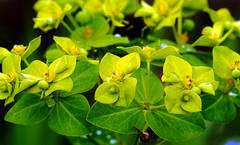
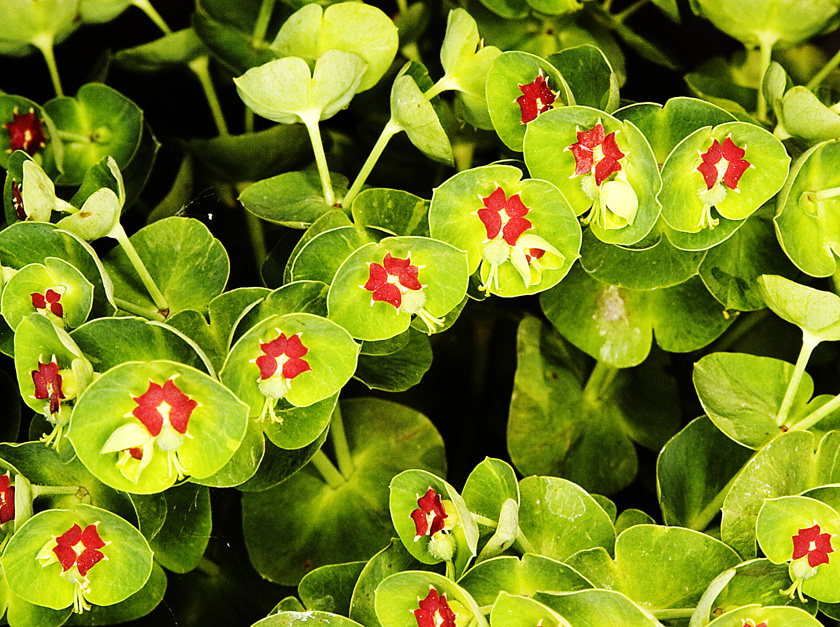
Terminal clusters of chartreuse-yellow to lime-green cyathia with reddish nectary glands open in March–May. The reddish nectary glands produce a subtle bicolor effect within the cluster that separates this hybrid visually from the yellow-green-eyed subsp. wulfenii cultivars and from the dark-maroon-eyed subsp. characias cultivars. Bloom duration is 6–8 weeks.
Detailed Descriptions
Flower Description
Chartreuse-yellow to lime-green cyathia with reddish nectary glands producing bicolor red-eyed effectFoliage Description
Olive-green to dark green with reddish-purple tinge on new growth and stems; narrow lance-shaped 2-3 inches longGrowing Conditions
Sun Requirements
Requires 4-10 hours of direct sunlight daily
• Full Sun: 6+ hours of direct sunlight
• Partial Shade: 3-6 hours of direct sunlight
• Full Shade: Less than 3 hours of direct sunlight
Care & Maintenance
Care Guide
Grows in full sun to partial shade in well-drained soil at pH 6.0–7.5, tolerating loam, sand, and chalk. The hybrid runs more adaptable than E. characias — partial-shade positions and heavier soils that fail E. characias are accepted by this cross-species perennial. Hardy to zone 6, which runs one zone colder than E. characias and matches the cold hardiness of the E. amygdaloides parent. Drought-tolerant once established. The compact habit requires no staking support even at peak bloom when the flower heads carry maximum weight. The milky white latex that exudes from cut stems and broken tissue is a skin and eye irritant; contact during pruning is the primary exposure route, and washing exposed skin with soap promptly reduces irritation risk. No serious pest or disease problems.Pruning
Flowered second-year stems are cut to the base after bloom fades (May–June); the compact habit means the spent stems read less conspicuously than in larger E. characias cultivars during the post-bloom transition. The milky latex sap is a skin and eye irritant during cutting work, so protective gloves and eye protection reduce exposure risk during pruning operations.Pruning Schedule
Prune: May–June
late springsummer
Container Growing
Suitable for container growing
Minimum container size: 3 gallons