Euphorbia, Genus, cornigera, Species,
- Genus & species
horned spurge
Himalayas (Nepal, Bhutan, Sikkim, southeastern Tibet; moist meadows, forest margins, streamside habitats at 6,000-12,000 feet)
Overview
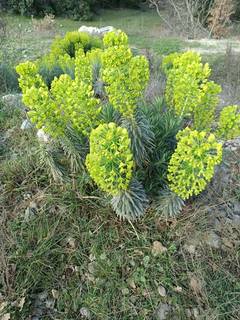
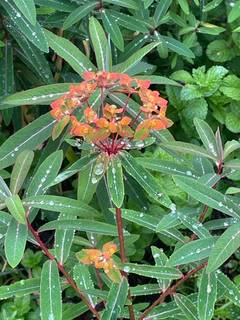
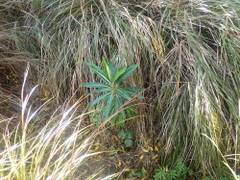
Euphorbia cornigera is an upright clumping herbaceous perennial in the spurge family (Euphorbiaceae) reaching 24–36 inches (60–90 cm) tall with a spread of 18–24 inches (45–60 cm). This Himalayan species breaks from the Mediterranean E. characias group on several fundamentals: the plant is deciduous rather than evergreen, rhizomatous rather than clumping non-spreading, and adapted to moist partially shaded conditions rather than the dry full-sun exposures that the E. characias group requires. Stems are upright and unbranched, carrying whorled dark green leaves 3–5 inches (8–13 cm) long that show a prominent white midrib (central vein) along each leaf, which serves as the primary diagnostic feature for the species. Flower heads are terminal clusters of bright chartreuse-yellow cyathia that open in June–August, smaller and later-blooming than the spring-flowering E. characias group. Fall foliage turns yellow to orange before dying back to the ground for winter dormancy. Growth rate is moderate. The plant spreads slowly by rhizomes to form expanding clumps that fill garden positions over 3–5 seasons. All parts of the plant exude a milky white latex that is a skin and eye irritant. Hardy to zone 6.
Native Range
Euphorbia cornigera is native to the Himalayas (Nepal, Bhutan, Sikkim, and southeastern Tibet), where it occurs in moist meadows, forest margins, and streamside habitats at 6,000–12,000 feet (1,800–3,600 m).Suggested Uses
Grown in woodland gardens, partially shaded borders, and moist garden sites at 18–24 inch (45–60 cm) spacing. The species fills a garden niche that the Mediterranean E. characias group cannot occupy — shade tolerance and moisture acceptance open this euphorbia to woodland-edge and streamside positions where the E. characias cultivars will fail. The white-midrib foliage carries the primary season-long ornamental feature and reads clearly against darker shade-garden companions. The plant functions in the transition zone between sunny perennial borders and woodland shade. Pairing with Hosta cultivars, ferns, and other shade perennials builds a layered composition on matching moisture and light preferences. Dry hot positions and deep-shade sites without some filtered light are not suitable given the Himalayan montane-habitat preferences.How to Identify
Appearance
Size & Dimensions
Height2' - 3'
Width/Spread1'6" - 2'
Bloom Information
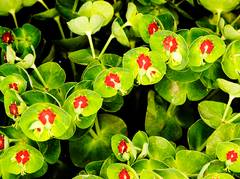
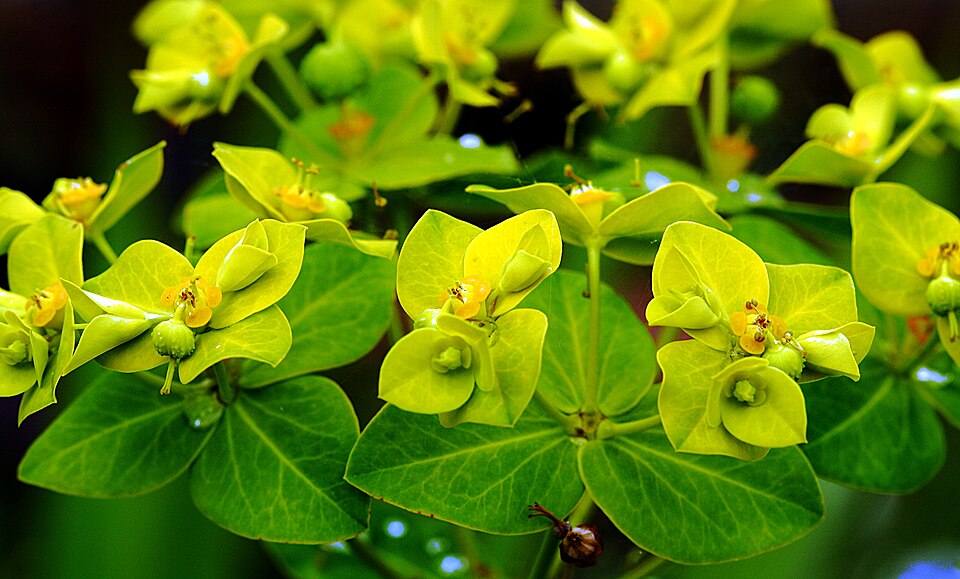
Terminal clusters of bright chartreuse-yellow cyathia open in June–August, which runs later than the spring-flowering E. characias group and extends the euphorbia bloom season into midsummer. Bloom duration is 6–8 weeks. Inflorescences are smaller than E. characias in individual cluster size but are carried over a longer cumulative bloom period.
Detailed Descriptions
Flower Description
Bright chartreuse-yellow terminal clusters; smaller individual cluster size than E. characiasFoliage Description
Dark green with prominent white midrib (central vein) visible along each leaf; yellow to orange fall color before dormancyGrowing Conditions
Sun Requirements
Requires 3-8 hours of direct sunlight daily
• Full Sun: 6+ hours of direct sunlight
• Partial Shade: 3-6 hours of direct sunlight
• Full Shade: Less than 3 hours of direct sunlight
Care & Maintenance
Care Guide
Grows in partial shade to full sun in moist well-drained fertile soil at pH 5.5–7.0, tolerating loam and clay. Hardy to zone 6, which runs cold-hardier than the zone 7 Mediterranean euphorbia species. Moisture tolerance runs opposite to the E. characias group — this species wants consistent moisture through the growing season and does not accept the dry exposures that the Mediterranean spurges need. Rhizome spread is slow rather than aggressive and rarely requires containment in border settings. Winter mulch in zone 6 positions helps protect the rhizomes during cold-snap temperatures. The milky white latex that exudes from cut stems and broken tissue is a skin and eye irritant; contact during pruning is the primary exposure route, and washing exposed skin with soap promptly reduces irritation risk. No serious pest or disease problems.Pruning
All stems are cut back to the ground in late fall or early spring after the deciduous foliage has died back for winter. No other pruning is required through the growing season. The milky latex sap is a skin and eye irritant during cutting work, so protective gloves reduce exposure risk during the dormant-season cleanup.Pruning Schedule
Prune: March
early spring
Container Growing
Suitable for container growing
Minimum container size: 3 gallons