Euphorbia, Genus, characias, Species, ssp., Subspecies, 'Tasmanian Tiger', Cultivar,
- Genus & species
- Subspecies
- Cultivar
Tasmanian tiger spurge
Species native to the Mediterranean (Portugal to Turkey, North Africa); cultivar bred in Tasmania, Australia
Overview
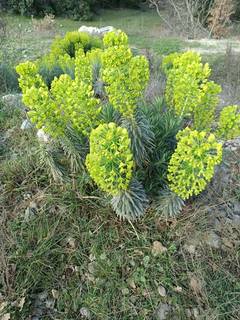
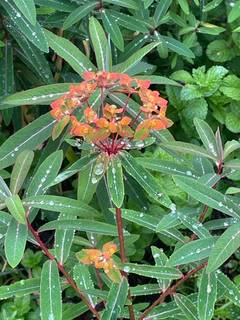
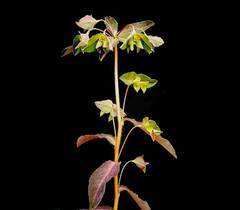
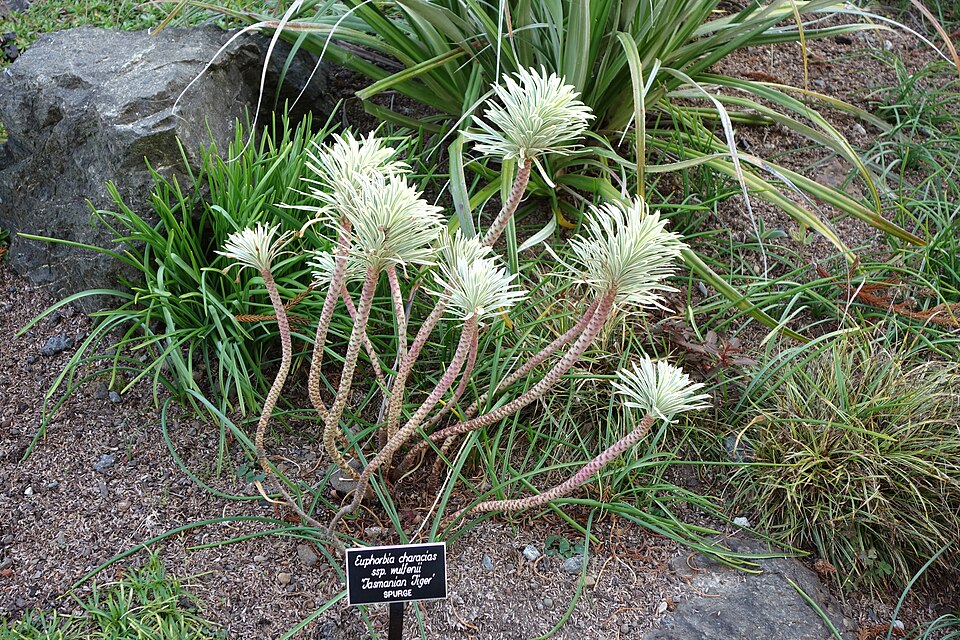
Euphorbia characias ssp. 'Tasmanian Tiger' is an upright clumping evergreen sub-shrubby perennial in the spurge family (Euphorbiaceae) reaching 24–36 inches (60–90 cm) tall with a spread of 24–30 inches (60–75 cm). This Australian-bred cultivar stands as the only variegated E. characias in commercial cultivation — narrow lance-shaped leaves 3–5 inches (8–13 cm) long are blue-green with broad creamy-white margins, producing a bold two-toned foliage effect that persists year-round. Flower heads are carried in cylindrical terminal inflorescences 6–8 inches (15–20 cm) tall in March–May, lime-green to pale chartreuse, which reads lighter and more creamy than the solid-green-leaved cultivars and echoes the foliage variegation. Nectary glands are yellow-green (ssp. wulfenii type). The variegated foliage can revert to solid green over time, and any all-green reverting stems are removed promptly at the base to preserve the variegation, since the more vigorous solid-green growth will overtake the variegated stems if left in place. Biennial stem cycle: first-year stems carry foliage only; second-year stems flower then die back. All parts of the plant exude a milky white latex that is a skin and eye irritant. Hardy to zone 7.
Native Range
Euphorbia characias is native to the Mediterranean region (Portugal to Turkey, North Africa). 'Tasmanian Tiger' was bred in Tasmania, Australia as a variegated sport selection.Suggested Uses
Grown in perennial borders, Mediterranean-style gardens, and containers of at least 5 gallons (19 L) at 24–30 inch (60–75 cm) spacing. The variegated foliage is the primary ornamental feature and carries year-round two-toned interest that sets this cultivar apart from solid-leaved euphorbias in the trade. The plant functions as a bright foliage accent among dark-leaved or solid-green companions. Pairing with dark purple Heuchera, Ophiopogon planiscapus 'Nigrescens', and dark-flowered Tulipa cultivars builds strong contrast compositions that use the creamy-white variegation as the light anchor. Shaded positions reduce the variegation contrast and are not suitable. Wet soils and gardens where children may come into contact with the latex-bearing stems are also not suitable given the cultural preferences and the skin-irritant latex content.How to Identify
Appearance
Size & Dimensions
Height2' - 3'
Width/Spread2' - 2'6"
Bloom Information
Cylindrical terminal inflorescences 6–8 inches (15–20 cm) tall of lime-green to pale chartreuse cyathia with yellow-green nectary glands open in March–May. The flower color reads lighter and more creamy than the solid-leaved cultivars, which reinforces the overall pale color palette of this variegated selection across both foliage and flower displays. Bloom duration is 6–8 weeks.
Detailed Descriptions
Flower Description
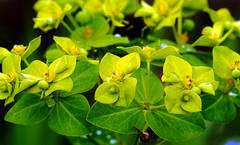
Lime-green to pale chartreuse cyathia with yellow-green nectary glands; cylindrical terminal inflorescences 6-8 inches tallFoliage Description
Blue-green leaf centers with broad creamy-white margins; variegated; lance-shaped 3-5 inches longGrowing Conditions
Sun Requirements
Requires 6-10 hours of direct sunlight daily
• Full Sun: 6+ hours of direct sunlight
• Partial Shade: 3-6 hours of direct sunlight
• Full Shade: Less than 3 hours of direct sunlight
Care & Maintenance
Care Guide
Grows in full sun in well-drained lean soil at pH 6.0–8.0, tolerating sand, chalk, and loam. Full-sun positions intensify the variegation contrast between the blue-green leaf centers and creamy-white margins. Drought-tolerant once established. Hardy to zone 7. Sharp drainage through the dormant season is essential. Reversion to solid-green growth happens periodically in variegated foliage plants, and all-green stems are more vigorous than variegated growth and will overtake the plant over 2–3 seasons if not removed at the base promptly. The variegated foliage can scorch under extreme heat in unusually hot summers; sheltered siting reduces that risk in hot-summer regions. The milky white latex that exudes from cut stems and broken tissue is a skin and eye irritant; contact during pruning is the primary exposure route, and washing exposed skin with soap promptly reduces irritation risk.Pruning
Flowered stems are cut to the base after bloom fades (May–June); these second-year stems die after flowering regardless of intervention. Any all-green reverted stems are cut to the base immediately upon detection to preserve the variegation, since the more vigorous solid-green growth will overtake the variegated portions of the plant if left in place. The milky latex sap is a skin and eye irritant during cutting work, so protective gloves and eye protection reduce exposure risk during pruning operations.Pruning Schedule
Prune: May–June
late springsummer
Container Growing
Suitable for container growing
Minimum container size: 5 gallons