Euphorbia, Genus, mellifera, Species,
- Genus & species
honey spurge
Macaronesian islands (Madeira, Canary Islands; laurel forest margins and moist ravines at 1,000-4,000 feet)
Overview
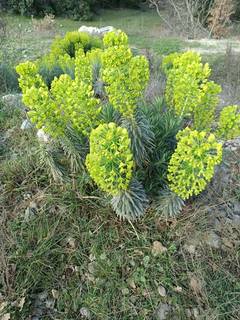
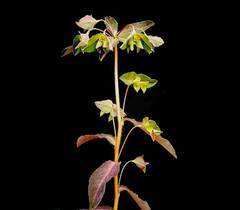
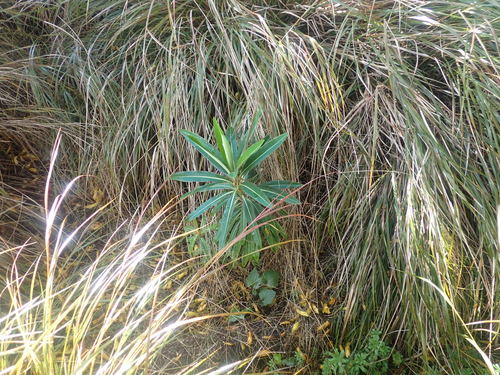
Euphorbia mellifera is a large rounded evergreen shrub in the spurge family (Euphorbiaceae) reaching 5–8 feet (1.5–2.4 m) tall with a spread of 5–8 feet (1.5–2.4 m). This Macaronesian species stands as the largest euphorbia in common cultivation and the only genuinely shrubby woody-habit member of the genus in the horticultural trade. Leaves are bright apple-green to mid-green, lance-shaped, 4–8 inches (10–20 cm) long, with a prominent pale green to white midrib along each leaf, arranged in rosette-like whorls at the stem tips. The rosette arrangement produces a subtropical lush appearance that reads unlike any other euphorbia in cultivation and sets the species apart from the narrow-leaved herbaceous spurges. Flower heads are rounded terminal clusters 3–5 inches (8–13 cm) across of honey-brown to copper-brown cyathia that open in April–May, carrying a strong sweet honey scent detectable at a distance of several meters from the plant. Growth rate is fast at 12–24 inches (30–60 cm) per year through active growing seasons. All parts of the plant exude a milky white latex that is a skin and eye irritant. Hardy to zone 8.
Native Range
Euphorbia mellifera is native to the Macaronesian islands (Madeira and the Canary Islands), where it occurs in laurel forest (laurisilva) margins and moist ravines at 1,000–4,000 feet (300–1,200 m). The species is listed as endangered across its limited native range.Suggested Uses
Grown as a specimen shrub in sheltered positions, courtyard gardens, and mild coastal areas at 5–6 foot (1.5–1.8 m) spacing. The lush subtropical foliage effect and the honey-scented spring flowers serve as the primary ornamental features and make this species a sensory plant that contributes both visual and olfactory value to the garden. Mediterranean-style and subtropical-style garden compositions suit the species profile. The large mature size fills the role of an evergreen background shrub in mild-climate gardens where year-round presence at scale is needed. Zones below 8, exposed inland sites with cold drying winds, small residential gardens where the 5–8 foot spread cannot be accommodated, and very dry conditions without supplemental summer irrigation are not suitable given the cold-tenderness, size, and moisture preferences.How to Identify
Appearance
Size & Dimensions
Height5' - 8'
Width/Spread5' - 8'
Bloom Information
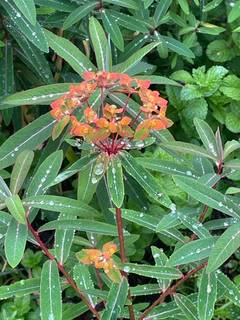
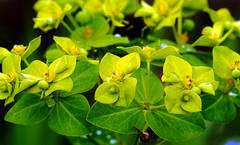
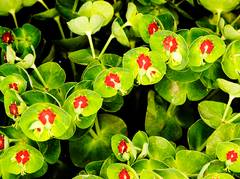
Rounded terminal clusters 3–5 inches (8–13 cm) across of honey-brown to copper-brown cyathia open in April–May. The blooms carry a strong sweet honey scent that reads detectable from several meters away on still spring days, which separates this species functionally from every other cultivated euphorbia as a fragrance plant in addition to its foliage and flower value. Bloom duration is 3–4 weeks.
Detailed Descriptions
Flower Description
Honey-brown to copper-brown cyathia in rounded terminal clusters 3-5 inches across; strongly honey-scentedFoliage Description
Bright apple-green to mid-green with pale green to white midrib; lance-shaped 4-8 inches long in rosette-like whorls at stem tipsGrowing Conditions
Sun Requirements
Requires 4-10 hours of direct sunlight daily
• Full Sun: 6+ hours of direct sunlight
• Partial Shade: 3-6 hours of direct sunlight
• Full Shade: Less than 3 hours of direct sunlight
Care & Maintenance
Care Guide
Grows in full sun to partial shade in well-drained fertile soil at pH 6.0–7.5, tolerating loam and sand. Cultural tolerances run broader than E. characias — more soil moisture and richer soil conditions are accepted. Hardy to zone 8, which runs the least cold-hardy of the cultivated euphorbias. Sheltering the plant from cold drying winds preserves the large rosette-like foliage from desiccation damage. In zone 8 gardens, siting against a warm south- or west-facing wall adds several degrees of winter protection that can mean the difference between full survival and dieback-to-base regrowth. Growth is fast and the shrub may be cut back by hard freezes in marginal zones but typically regenerates from the base without loss of the clump. The milky white latex that exudes from cut stems and broken tissue is a skin and eye irritant; contact during pruning is the primary exposure route, and washing exposed skin with soap promptly reduces irritation risk.Pruning
The shrub is pruned in late spring to shape the plant and control overall size. Hard pruning is tolerated and the plant regenerates from older wood without difficulty. Frost-damaged stems are removed in spring after new growth appears at the base or along intact wood, which allows the gardener to see which stems are viable before cutting. The lush rosette-like foliage recovers quickly from pruning cuts. The milky latex sap is a skin and eye irritant during cutting work, so protective gloves and eye protection reduce exposure risk during pruning operations.Pruning Schedule
Prune: May
late spring