Euphorbia, Genus, dulcis, Species, 'Chameleon', Cultivar,
- Genus & species
- Cultivar
chameleon spurge
Europe (France, Germany, Balkan states, Scandinavia, Mediterranean; deciduous woodlands and forest edges on calcareous to slightly acidic soils)
Overview
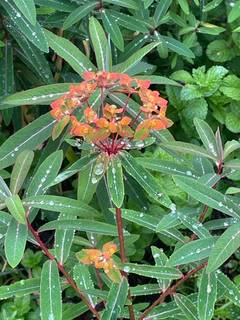
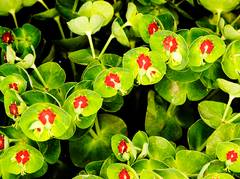
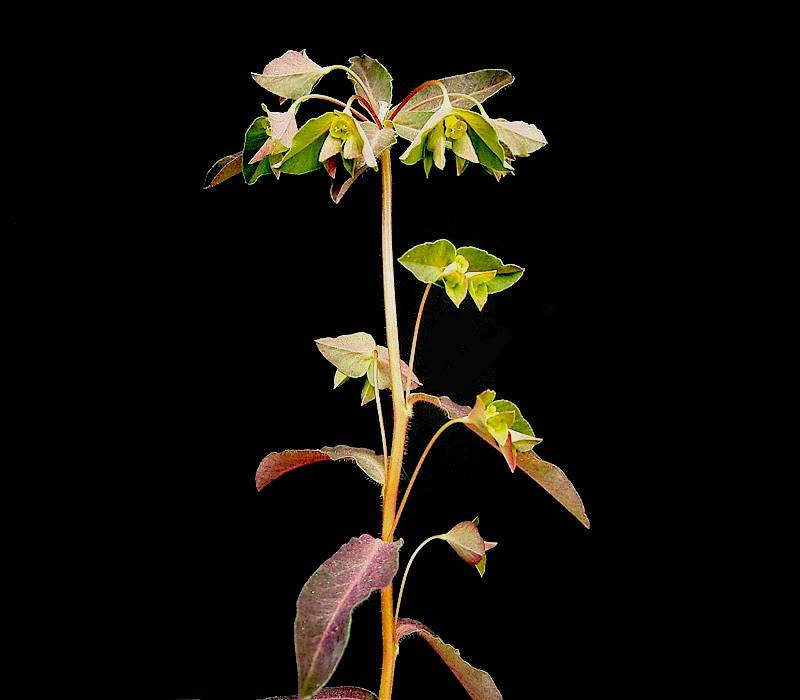
Euphorbia dulcis 'Chameleon' is a compact mounding herbaceous perennial in the spurge family (Euphorbiaceae) reaching 12–18 inches (30–45 cm) tall with a spread of 12–18 inches (30–45 cm). This cultivar is grown for the deep purple to burgundy-purple foliage that persists through the entire growing season, which runs darker than any other euphorbia in common cultivation. Leaves are oblong 1.5–3 inches (4–8 cm) long, emerge rich purple in spring, and hold the color through fall; the pigmentation deepens toward near-black under cold-weather conditions in late fall. Flower heads are small terminal clusters of chartreuse-yellow to lime-green cyathia that open in May–June; the chartreuse-against-purple color contrast between flowers and foliage is the primary visual effect during bloom. Fall foliage intensifies to deep red-purple to orange-red before dying back to the ground for winter dormancy. Deciduous. The plant self-seeds freely and can spread aggressively by both rhizomes and seed, which means siting decisions benefit from consideration of seedling management over the long term. All parts of the plant exude a milky white latex that is a skin and eye irritant. Hardy to zone 4.
Native Range
Euphorbia dulcis is native to Europe (France, Germany, the Balkan states, Scandinavia, and south to the Mediterranean basin), where it occurs in deciduous woodlands and forest edges on calcareous to slightly acidic soils.Suggested Uses
Grown in perennial borders and cottage gardens at 12–15 inch (30–38 cm) spacing. The deep purple foliage carries color-contrast value from spring through fall, which makes this cultivar a foliage-workhorse in mixed borders where most perennials rely on flowers for color. The chartreuse-flowers-against-purple-foliage combination is the primary ornamental effect during bloom. Edging and front-of-border positions suit the compact 12–18 inch mature size. Pairing with silver-foliaged plants, lime-green Hosta cultivars, and yellow-flowering companions builds color-contrast compositions that use the purple foliage as the dark anchor. The aggressive self-seeding tendency means this cultivar is not suitable for naturalized plantings or restoration areas where seedling colonization of adjacent native populations could cause management issues; gardens where children may come into contact with the latex-bearing stems are also not suitable given the skin-irritant latex content.How to Identify
Appearance
Size & Dimensions
Height1' - 1'6"
Width/Spread1' - 1'6"
Bloom Information
Small terminal clusters of chartreuse-yellow to lime-green cyathia open in May–June. Bloom duration is 3–4 weeks. The chartreuse-against-purple contrast between flower color and foliage color is the primary visual effect of the bloom period, which makes the plant read most strongly when the flower color and foliage color register at the same visual distance.
Detailed Descriptions
Flower Description
Chartreuse-yellow to lime-green; small terminal clusters in May-JuneFoliage Description
Deep purple to burgundy-purple through the entire growing season; red-purple to orange-red fall intensification; oblong 1.5-3 inches longGrowing Conditions
Sun Requirements
Requires 4-10 hours of direct sunlight daily
• Full Sun: 6+ hours of direct sunlight
• Partial Shade: 3-6 hours of direct sunlight
• Full Shade: Less than 3 hours of direct sunlight
Care & Maintenance
Care Guide
Grows in full sun to partial shade in moist well-drained soil at pH 6.0–7.5, tolerating loam, clay, and sand. Full-sun positions produce the deepest purple foliage color; partial shade yields lighter purple that shifts toward burgundy-green as chlorophyll develops. Hardy to zone 4, which runs cold-hardier than any other euphorbia in cultivation. The plant self-seeds freely and can spread aggressively through both rhizome expansion and seed dispersal, and deadheading spent flower heads before seed set reduces unwanted seedling colonization of neighboring beds. The milky white latex that exudes from cut stems and broken tissue is a skin and eye irritant; contact during pruning is the primary exposure route, and washing exposed skin with soap promptly reduces irritation risk. The species can become weedy in favorable conditions where the seed-set is not managed.Pruning
All stems are cut back to the ground in late fall or early spring after the deciduous foliage dies back. Deadheading promptly after bloom fades in June prevents the aggressive self-seeding that otherwise colonizes neighboring beds. Unwanted volunteer seedlings are pulled in spring before they root deeply. The milky latex sap is a skin and eye irritant during cutting work, so protective gloves reduce exposure risk during pruning operations.Pruning Schedule
Prune: March & June
summerearly spring
Container Growing
Suitable for container growing
Minimum container size: 2 gallons