Euphorbia, Genus, spp., Multiple species,
- Genus
- Multiple species
spurges
Worldwide, with centers of diversity in Africa and the Americas
Overview
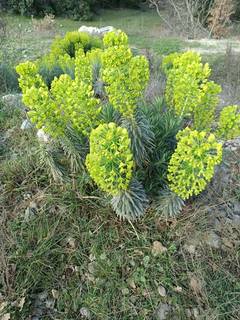
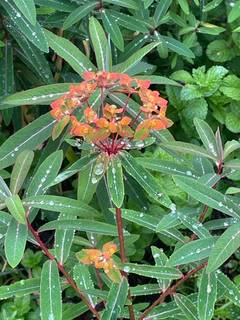
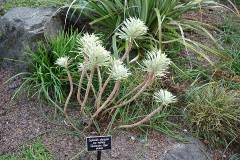
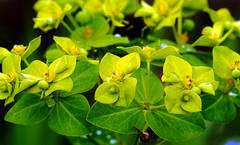
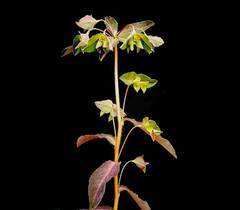
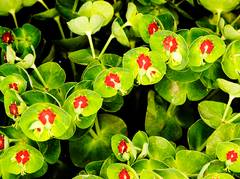
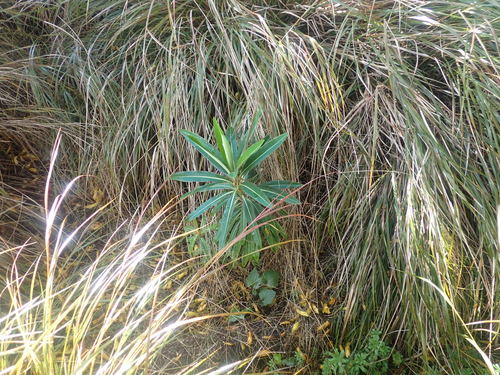
Euphorbia is a very large genus of roughly 2,000 species of annuals, perennials, succulents, shrubs, and small trees in the family Euphorbiaceae, distributed across temperate, subtropical, and tropical regions worldwide. Forms range from low herbaceous clumps a few inches tall to cactus-like succulents and trees reaching 30 feet (9 m). All species share a specialized inflorescence called a cyathium, in which tiny flowers are surrounded by petal-like bracts that carry most of the color, in shades of yellow, chartreuse, green, red, orange, and white. Broken stems and leaves exude a milky white latex. Leaf shape, size, and persistence vary widely, from succulent and nearly leafless stems to broad deciduous foliage. Euphorbia as a genus grows across USDA zones 4 to 11, though each species occupies a much narrower range. The milky latex is toxic and irritating to skin and eyes in all species, which limits handling, and the genus is too varied to share a single set of growing requirements.
Native Range
Native across temperate, subtropical, and tropical regions worldwide, with major centers of diversity in Africa, Madagascar, and the Americas. Habitats range from arid deserts, where succulent species predominate, to woodlands and meadows.Suggested Uses
Used in dry and gravel gardens, mixed borders, rockeries, and containers, with succulent species grown as houseplants and in arid landscapes. The seasonal bract color suits sunny, low-water plantings. The toxic latex limits placement where children and pets are active.How to Identify
Appearance
Size & Dimensions
Height4" - 30'
Width/Spread6" - 10'
Bloom Information
Many hardy herbaceous species flower from spring into early summer, with the colored bracts holding for several weeks, far longer than the tiny true flowers within. Succulent and tropical species bloom at varying times depending on climate. The lasting bracts account for most of the visible display.
Detailed Descriptions
Flower Description
yellow, chartreuse, green, red, orange, or white bractsFoliage Description
green to blue-green, sometimes red-tintedGrowing Conditions
Sun Requirements
Requires 6-8 hours of direct sunlight daily
• Full Sun: 6+ hours of direct sunlight
• Partial Shade: 3-6 hours of direct sunlight
• Full Shade: Less than 3 hours of direct sunlight
Water & Climate
Water Needs
Drought Tolerance
Drought tolerant when established
Care & Maintenance
Care Guide
Most species grow in full sun to partial shade in well-drained soil, and the succulent types require sharp drainage and tolerate prolonged drought. Overwatering and wet winter soil cause rot across the genus. Cold tolerance ranges from USDA zone 4 for the hardiest perennials to zone 11 for tropical succulents, so siting depends on the species. Little feeding is needed in average soil. The milky latex irritates skin and eyes, and contact during cutting or division is the main hazard in handling. Hardy herbaceous types are cut back after flowering, while succulent types need almost no routine care.Pruning
Hardy herbaceous species are cut to the base after flowering or in late winter to remove old stems and shape the clump. Shrubby types are trimmed lightly to maintain form. The latex released during cutting irritates skin and eyes.Container Growing
Suitable for container growing
Minimum container size: 2 gallons