Image 1 of 17
1 / 17
Plant Reference
Euphorbia, Genus, griffithii, Species,
- Genus & species
orange spurge
Himalayan region — Bhutan, Nepal, northeastern India, and adjacent parts of southwestern China; moist mountain meadows, forest clearings, and open woodlands at mid elevations (6,000-10,000 feet / 1,800-3,000 m)
Overview
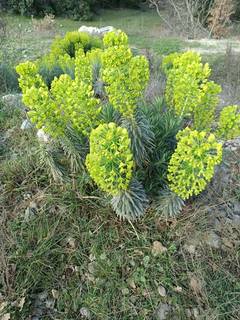
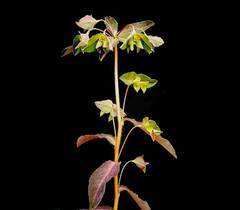
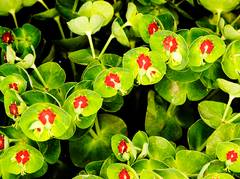
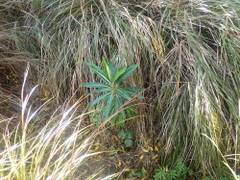
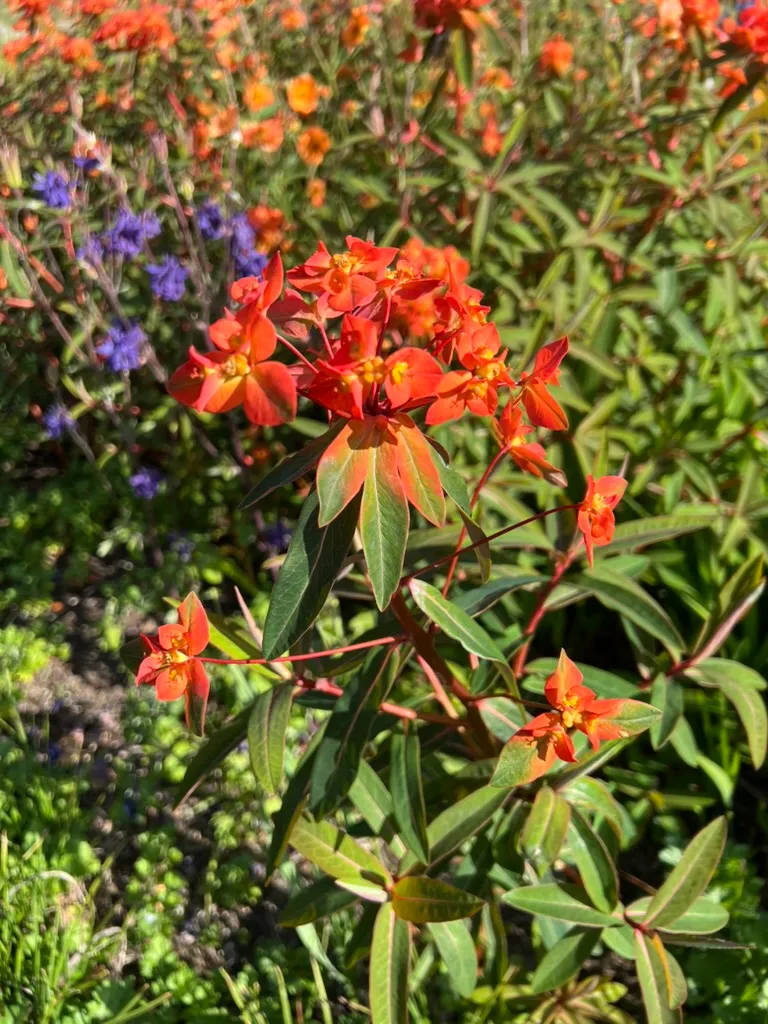
Euphorbia griffithii is a spreading deciduous perennial in the family Euphorbiaceae native to the Himalayan region, growing 24-36 inches (60-90 cm) tall and wide with an upright stem form and a rhizomatous spreading root system. Leaves are dark green, simple, lance-shaped, and 3-5 inches (7-13 cm) long with a prominent red to pink midvein that is visible along the length of each leaf and gives the foliage its diagnostic appearance — the red midvein is the foliage character that separates E. griffithii from most other cultivated Euphorbia species at a glance, even outside the flowering season. Small orange to orange-red floral bracts 0.5 inch (1.3 cm) across open in terminal inflorescences 3-5 inches (7-13 cm) wide atop upright stems during May and June for approximately 5 weeks. As with all Euphorbia species, the colorful parts of the flower cluster are bracts that surround small cup-shaped cyathia containing the tiny true flowers — the orange display is produced by the bract color rather than by petals, and the true flowers within each cyathium are barely visible without magnification. The species is native to moist mountain meadows, forest clearings, and open woodlands of the Himalayan region at 6,000-10,000 feet (1,800-3,000 m) elevation in Bhutan, Nepal, northeastern India, and adjacent southwestern China, where cool summer conditions and high atmospheric moisture align with its cultivation requirements. The named cultivar 'Fireglow' (a more brightly colored selection with redder bracts than the species type) and 'Dixter' (a darker orange-red selection with bronze young foliage, selected at Great Dixter garden in England) are the two forms most often offered through the garden trade, and both inherit the main cultural characteristics of the species. The central cultivation limitation is the aggressive underground rhizomatous spread: new shoots emerge 1-3 feet (0.3-0.9 m) from the parent clump within a single growing season, and the plant colonizes adjacent perennial plantings in mixed borders where the fleshy rhizomes travel freely through loose soil. Containing the colony to a bounded area requires either a physical root barrier sunk 12-18 inches (30-45 cm) into the soil or a willingness to dig out unwanted rhizome extensions each spring before the new shoots emerge, and the species is a questionable choice for tightly-planted small borders where the rhizomes will overrun other perennials within 2-3 growing seasons. All parts of the plant exude a milky white latex sap when any tissue is cut, scraped, or broken, and the latex causes severe skin irritation, blistering, and contact dermatitis on exposed skin and severe eye pain with possible corneal damage if transferred to the eyes — the latex sap is the main safety concern associated with the species and with all Euphorbia plants in general. Deer avoid the foliage because of the sap toxicity. The species is not drought-tolerant and needs consistent soil moisture through the growing season. Fall foliage color is red and yellow before leaf drop.
Native Range
Euphorbia griffithii is native to the Himalayan region, with a range covering Bhutan, Nepal, northeastern India (Sikkim, Arunachal Pradesh, and West Bengal), and adjacent parts of southwestern China (Tibet and Yunnan). The species grows in moist mountain meadows, forest clearings, and open woodlands at 6,000-10,000 feet (1,800-3,000 m) elevation where cool summer conditions, high atmospheric moisture from monsoon rains, and deep humus-rich mountain soils match its cultivation requirements. The species is named for William Griffith, a British botanist who collected in the Himalaya during the 1830s and 1840s as a surgeon with the East India Company, and it was introduced to European gardens during the 19th century through that collecting tradition. The cultivars 'Fireglow' and 'Dixter' are 20th-century British garden selections that have dominated cultivation of the species in Western horticulture since their introduction.Suggested Uses
Planted in mixed borders with aggressive-spreader companions, wild gardens, naturalized woodland edges, and bold-color mixed plantings where the rhizomatous spread is acceptable or contained with root barriers, at 24-36 inch (60-90 cm) spacing in zones 5-9. The orange to orange-red spring bract display, the red-midvein dark green foliage, and the red-and-yellow fall color together give the species a year-round ornamental role in plantings where the bold color is the design intent and the spreading habit is compatible with the other plants. The cultivar 'Fireglow' carries brighter orange-red bracts and is the cultivar most often grown in mixed borders where vivid spring color is the goal, and 'Dixter' (a Great Dixter selection with darker orange-red bracts and bronze young foliage) is grown in more sophisticated color-themed plantings. Combined with Paeonia species, Geranium, Iris, and other strong-growing perennials that can hold their own against the rhizomatous spread in mixed borders. Not suited to tightly-planted small borders where the spreading rhizomes overrun delicate neighbors, dry sunny positions without irrigation where moisture stress kills the plant, cold zones below 5 where winter freeze exceeds the species range, positions along pathways and play areas where children or pets may contact the latex sap during routine garden activity, or households with pets that investigate foliage because the sap causes severe skin and eye irritation on contact.How to Identify
Appearance
Size & Dimensions
Height2' - 3'
Width/Spread2' - 3'
Bloom Information
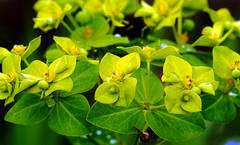
Orange to orange-red floral bracts 0.5 inch (1.3 cm) across open in terminal inflorescences 3-5 inches (7-13 cm) wide during May and June in zones 5-9, lasting approximately 5 weeks. The colorful parts of the display are bracts surrounding small cup-shaped cyathia that contain the tiny true flowers — the orange color is produced by bracts rather than by petals, and the display is more intense in the named cultivars 'Fireglow' (brighter orange-red) and 'Dixter' (darker orange-red with bronze young foliage) than in the species type. Flowers are bee-visited. Fall foliage color is red and yellow before leaf drop.
Detailed Descriptions
Flower Description
orange to orange-red; small floral bracts 0.5 inch (1.3 cm) across clustered in terminal inflorescences 3-5 inches (7-13 cm) wide atop upright stems; the colorful parts are bracts surrounding small cup-shaped cyathia that contain the tiny true flowers withinFoliage Description
dark green with a prominent red to pink midvein visible along the length of each leaf; lance-shaped simple leaves 3-5 inches (7-13 cm) long arranged alternately along upright stems; turns red and yellow in fall before droppingGrowing Conditions
Sun Requirements
Requires 4-8 hours of direct sunlight daily
• Full Sun: 6+ hours of direct sunlight
• Partial Shade: 3-6 hours of direct sunlight
• Full Shade: Less than 3 hours of direct sunlight
Care & Maintenance
Care Guide
Plant in well-drained soil with a pH of 5.5-7.5 in part sun to full sun (4-8 hours); tolerated soil types include loam and clay. The species is not drought-tolerant and needs consistent soil moisture through the growing season — dry summer sites without irrigation produce leaf scorch, early defoliation, and reduced bract color. Water weekly in rainfall-deficit periods. The aggressive underground rhizomatous spread is the central cultivation concern: new shoots emerge 1-3 feet (0.3-0.9 m) from the parent clump within a single growing season, and the plant colonizes adjacent perennial plantings in mixed borders where the fleshy rhizomes travel freely through loose soil. Containment requires either a physical root barrier sunk 12-18 inches (30-45 cm) into the soil around the planting area or annual digging out of unwanted rhizome extensions along the colony margin in early spring before new shoots emerge. Tightly-planted small borders are unsuitable positions because the rhizomes overrun other perennials within 2-3 growing seasons. All parts of the plant exude a milky white latex sap when any tissue is cut, scraped, or broken, and the latex causes severe skin irritation, blistering, and contact dermatitis on exposed skin and severe eye pain with possible corneal damage if transferred to the eyes — pruning, deadheading, and rhizome removal all produce abundant sap flow and sap exposure during these tasks is the main safety incident associated with the species in gardening literature. Deer avoid the foliage because of the sap toxicity. Spent flower stems are cut back after bloom fades in June, and all stems are cut to the ground in late fall (October).Pruning
Spent flower stems are cut back to the base after the bract display fades in June, which tidies the appearance and can produce a secondary flush of foliage growth. All stems are cut to the ground in late fall (October) after the red and yellow fall foliage drops, leaving the dormant rhizomes in place for the following spring's emergence. Unwanted rhizome shoots are dug out along the colony margin during spring or fall to contain the spread within the intended planting area, and this rhizome removal is part of routine cultivation because of the aggressive spreading habit. Pruning and rhizome removal both produce abundant milky latex sap from the cut stem ends and broken rhizome surfaces, and the sap causes severe skin and eye irritation on contact — sap exposure during pruning is the most common safety incident with this species.Pruning Schedule
Prune: June & October
summerfall