Image 1 of 10
1 / 10
© No machine-readable author provided. Bogdan assumed (based on copyright claims)., some rights reserved (CC-BY-SA) · Wikimedia Commons
Euphorbia, Genus, amygdaloides, Species,
- Genus & species
wood spurge
Overview
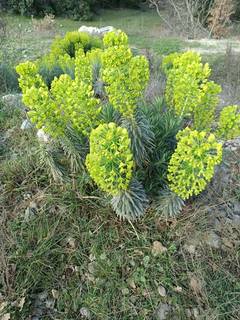
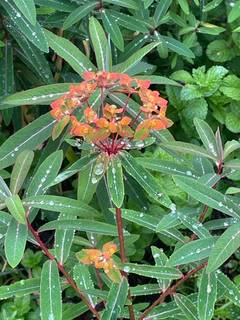
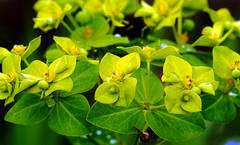
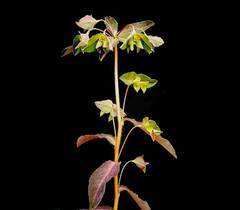
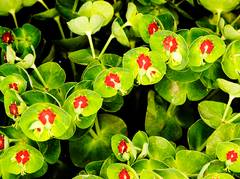
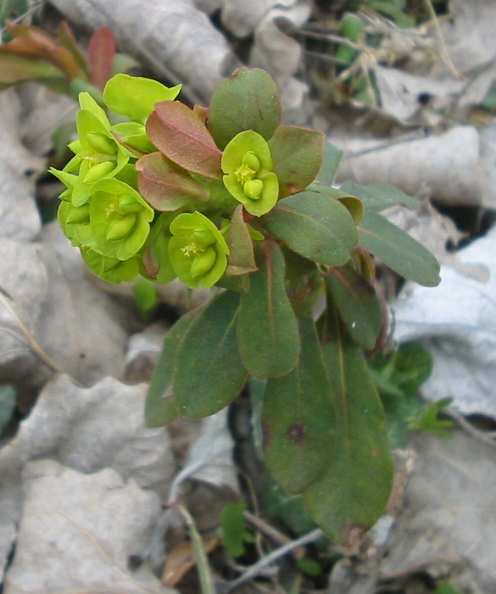
Euphorbia amygdaloides, wood spurge, is an evergreen perennial in the spurge family (Euphorbiaceae), forming upright clumps 12-32 inches (30-80 cm) tall on reddish, often purple-flushed stems. Dark green lance-shaped leaves cluster in spreading rosettes toward the stem tips, frequently tinted bronze or purple, and persist through winter. The stems are biennial: they grow leaves in their first year, then flower and die in the second, replaced by new shoots from the base. In spring the plant carries branched heads of yellow-green flower structures, each a small cup, or cyathium, framed by paired, fused, saucer-shaped bracts that hold the colour for weeks. Every part exudes a milky white latex when cut, and this sap irritates skin and eyes and is poisonous if swallowed. It grows in woodland, scrub, and shaded banks on most well-drained soils, tolerating dry shade once established. The plant self-seeds and can spread into nearby ground, and old flowered stems need removing as they brown. New basal shoots carry the clump forward each year, keeping it evergreen and low through the cold months.
Native Range
Native to Europe, western Asia, and North Africa, where it grows in deciduous woodland, hedge banks, scrub, and shaded rocky ground. It ranges from Britain and the Mediterranean eastward into the Caucasus, mostly in lowland and hill country.Suggested Uses
Grown in shade and woodland gardens, on dry shaded banks, and in mixed borders where its evergreen rosettes and spring flower heads extend the season. Used as groundcover under trees and shrubs in dry shade. Combined with ferns, hellebores, and spring bulbs in low-light plantings.How to Identify
Appearance
Size & Dimensions
Height1' - 2'8"
Width/Spread1' - 2'
Bloom Information
Yellow-green flower heads open from March into May, holding their colour for several weeks as the bracts persist behind the tiny true flowers. Early flies and bees visit the nectar-bearing glands at the rim of each cup. As the heads fade, three-part seed capsules form and eject their seeds when ripe.
Detailed Descriptions
Foliage Description
dark green, often purple-tingedGrowing Conditions
Sun Requirements
Requires 2-6 hours of direct sunlight daily
• Full Sun: 6+ hours of direct sunlight
• Partial Shade: 3-6 hours of direct sunlight
• Full Shade: Less than 3 hours of direct sunlight
Care & Maintenance
Care Guide
Growth is reliable in partial to full shade on well-drained soil of moderate fertility, including dry shade beneath trees once the plant is established. Water through the first season to settle it, after which it tolerates drought and needs no routine irrigation. The milky white sap irritates skin and eyes, and contact with cut stems or broken leaves can cause a burning rash in sensitive people. Flowered stems are cut to the base as they brown in summer, making room for the new basal shoots. The plant needs no feeding on average soils and may self-seed where conditions suit. It holds its leaves through winter and asks little maintenance beyond removing spent stems.Pruning
Cut each flowered stem down to the base in summer once the heads fade, prompting fresh basal growth for the next year. The cut stems release irritant milky sap. No other pruning is needed.Container Growing
Suitable for container growing
Minimum container size: 2 gallons