Euphorbia, Genus, portlandica, Species,
- Genus & species
Portland spurge
Overview
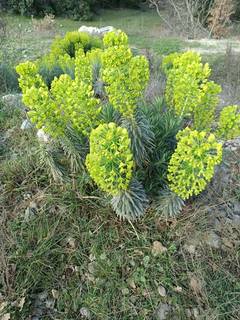
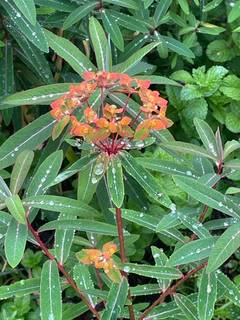
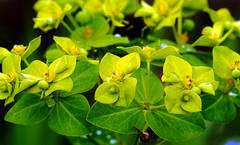
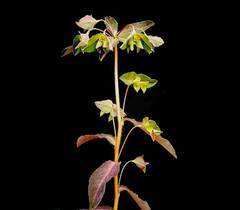
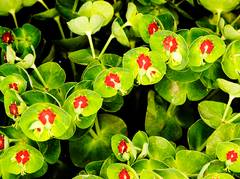
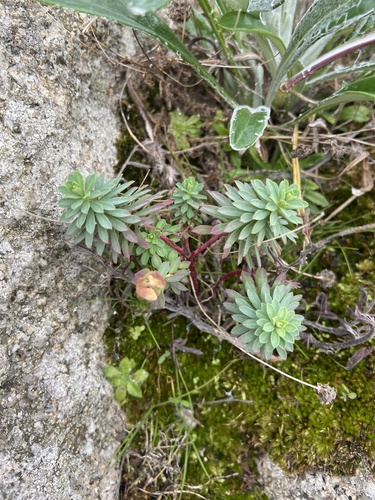
Euphorbia portlandica is a short-lived, often biennial perennial of coastal ground, growing 4-16 inches (10-40 cm) tall with reddish, much-branched stems rising from a woody base. The small grey-green leaves are 0.2-0.6 inch (5-15 mm) long, narrow and fleshy, each tapering to a short point with a pale midrib obvious beneath. From May to September it carries flat-topped clusters of yellow-green flower structures called cyathia, each flanked by paired crescent-shaped glands with long horns. As in all spurges the true flowers are minute and held within these cup-like cyathia. Every part of the plant contains a milky white latex that is irritant to skin and eyes and toxic if eaten. It grows on sea cliffs, dunes, and sandy or rocky coastal grassland around western Europe, from Britain south to Portugal, tolerating salt spray and thin soils. The plant has a deep root that anchors it in shifting sand. It self-seeds freely on bare coastal ground and is short-lived, often dying after setting seed. The reddish stems and glaucous leaves distinguish it from the similar sea spurge E. paralias, which has crowded, blunt leaves.
Native Range
Native to the Atlantic coasts of western Europe, from Britain and Ireland south to Portugal. It grows on sea cliffs, dunes, and sandy coastal grassland.Suggested Uses
Grown in coastal gardens, gravel beds, and dry sunny banks where its salt and drought tolerance suit exposed sites. It is used in seaside and dune-style plantings. It self-sows to maintain a presence on open ground.How to Identify
Appearance
Size & Dimensions
Height4" - 1'4"
Width/Spread8" - 1'4"
Colors
Bloom Information
Detailed Descriptions
Foliage Description
grey-greenGrowing Conditions
Sun Requirements
Requires 6-12 hours of direct sunlight daily
• Full Sun: 6+ hours of direct sunlight
• Partial Shade: 3-6 hours of direct sunlight
• Full Shade: Less than 3 hours of direct sunlight
Care & Maintenance
Care Guide
Euphorbia portlandica grows in free-draining sandy or rocky soils in full sun and tolerates a soil pH from about 6.0 to 8.0. It withstands salt spray, wind, and drought, reflecting its coastal origins, but rots in wet, heavy ground. The plant is hardy to USDA zone 7 and is usually short-lived, often dying after it sets seed. It renews itself by self-sown seedlings on open ground. The milky latex is irritant, and cut stems release a sap that can blister skin and inflame eyes. Spent plants are easily pulled once they have seeded.Pruning
Little pruning is needed. Spent flowering stems can be removed after seeding, when the plant often dies back. The cut stems exude an irritant latex.Container Growing
Suitable for container growing
Minimum container size: 2 gallons