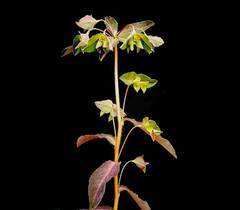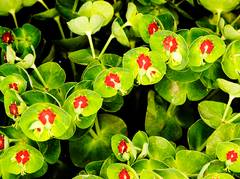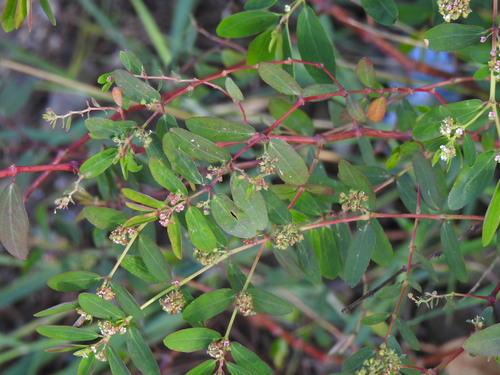
Euphorbia, Genus, hypericifolia, Species,
- Genus & species
diamond frost euphorbia
SunFull Sun – Part Shade
Overview
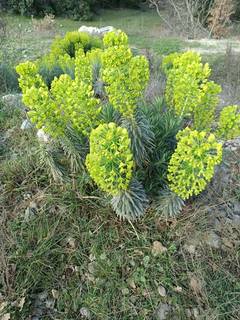
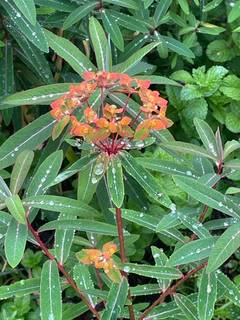
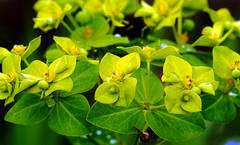
Euphorbia hypericifolia is a tender perennial typically grown as an annual, reaching 12-18 inches (30-45 cm) tall and 12-18 inches (30-45 cm) wide. Foliage small, oblong-elliptic, 0.5-1 inch (1-2.5 cm) long, mid-green with a slightly waxy surface. The visible color comes from masses of small white bracts and yellow nectar glands surrounding minute flowers (called cyathia in Euphorbia); each apparent flower is 0.25-0.5 inch (6-13 mm) across, held in airy clusters that cover the entire plant. Cultivars 'Diamond Frost' (released by Proven Winners in 2003) and 'Stardust White Sparkle' flower continuously from late spring through first hard frost without deadheading. Sap milky and contains diterpene esters that cause skin and eye irritation in many individuals; broken stems should be rinsed off skin promptly. Heat-tolerant and rain-tolerant in summer; flowers do not collapse in 1-2 inches (2.5-5 cm) of rainfall. Tender to frost; collapses at temperatures below 32°F (0°C).
Native Range
Euphorbia hypericifolia is native to the Americas, ranging from the southeastern United States south through Mexico, Central America, and the Caribbean to northern South America, in disturbed open ground, roadsides, and seasonally dry savannas at sea level to 5,000 feet (1,500 m) elevation.Suggested Uses
Used as a filler in mixed container plantings, in hanging baskets, in window boxes, and along front-of-border edges at 12-15 inch (30-38 cm) spacing. Common as the airy white element in 3-tier container designs alongside taller thrillers (Canna, Cordyline) and trailing spillers (Calibrachoa, Ipomoea batatas). Also planted in mass for low summer color in commercial landscape beds.How to Identify
Appearance
Size & Dimensions
Height1' - 1'6"
Width/Spread1' - 1'6"
Bloom Information
Continuous from transplant (late spring) through first hard frost in zones 4-9; nearly year-round in zones 10-11. Individual cyathia last 4-7 days; the plant produces new clusters from leaf axils as older clusters age, so total bloom is uninterrupted.
Detailed Descriptions
Flower Description
white bracts with yellow nectar glandsFoliage Description
mid-greenGrowing Conditions
Sun Requirements
Requires 4-12 hours of direct sunlight daily
• Full Sun: 6+ hours of direct sunlight
• Partial Shade: 3-6 hours of direct sunlight
• Full Shade: Less than 3 hours of direct sunlight
Care & Maintenance
Care Guide
Grown in full sun to part sun in well-drained soil; tolerates poor, sandy, and rocky soils. Soil pH 6.0-7.5 suits the species. Water moderately during establishment; mature plants tolerate 1-2 weeks without rain. Overwatering and rich soil produce leafy growth at the expense of flowering. Cuttings root in 10-14 days in moist medium. The milky sap causes skin and eye irritation; gloves and prompt rinsing reduce the risk of contact dermatitis. Pest pressure is light; whiteflies occur in greenhouse production but rarely in landscape use.Pruning
Pinch growing tips at 6 inches (15 cm) tall after transplant to encourage branching. Cut leggy plants back by one-third in midsummer to refresh the habit; new flowering follows in 2-3 weeks. Take soft tip cuttings in late summer for overwintering in zones 4-9. Wash sap from skin promptly after pruning.Container Growing
Suitable for container growing
Minimum container size: 2 gallons
Toxicity Warning
Toxic to pets and humansPlanting Guide
Planting Methods & Timing
Planting Method
transplant