Euphorbia, Genus, serpens, Species,
- Genus & species
creeping spurge
North America, Central America, South America
Overview
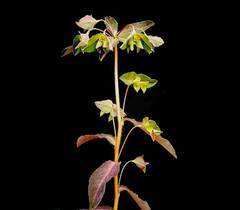
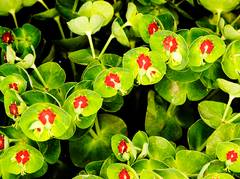
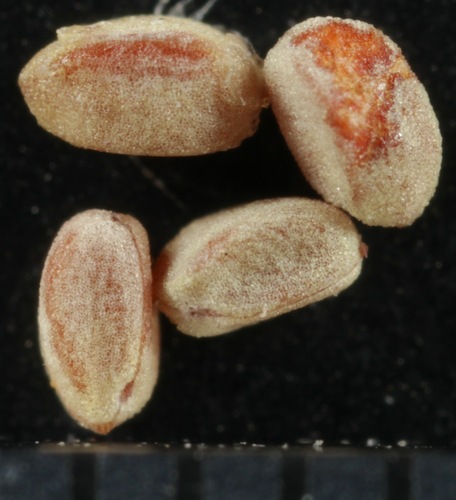
Euphorbia serpens is a prostrate, mat-forming summer annual in the spurge family (Euphorbiaceae) reaching only 1-3 inches (2.5-8 cm) tall but spreading 6-18 inches (15-45 cm) wide. Stems are slender, smooth, freely branching, prostrate, radiating from a central taproot, and exude milky white latex when broken. Leaves are opposite, small, round to broadly oval, 0.1-0.25 inch (3-6 mm) long, smooth, green to gray-green, with entire margins and very short petioles. The cyathia (specialized Euphorbia flower structures) are tiny, solitary in the leaf axils, with four minute white petal-like appendages on the nectar glands. Fruit is a smooth, three-lobed capsule 0.04-0.06 inch (1-1.5 mm) in diameter, containing three smooth seeds. A single plant produces 500-3,000 seeds. Plants form flat, tight mats on sidewalks, driveways, pavement cracks, compacted soils, and gravel surfaces, and tolerate foot traffic and heat-stressed environments. The milky latex causes skin and eye irritation on contact. E. serpens is native to the Americas and functions as a weed in hardscape and container nursery settings.
Native Range
Euphorbia serpens is native to North, Central, and South America, occurring from the southern United States through Mexico and into South America. Found in hot, dry, disturbed sites including sidewalk cracks, driveways, gravel lots, compacted pathways, and container nursery surfaces from sea level to approximately 5,000 feet (1,500 m). Naturalized in parts of southern Europe and Australia.Suggested Uses
Used in weed identification courses for teaching prostrate Euphorbia species differentiation (E. serpens, E. maculata, E. prostrata). Studied in heat-island weed ecology and hardscape vegetation dynamics. Included in Euphorbiaceae cyathium morphology exercises.How to Identify
Appearance
Size & Dimensions
Height1" - 3"
Width/Spread6" - 1'6"
Bloom Information
Flowers appear June through October. Cyathia are produced continuously in the leaf axils as stems elongate. Individual cyathia mature over 3-5 days. Capsules dehisce 2 weeks after pollination. The species is self-pollinating. In the Pacific Northwest, flowering begins when soil temperatures consistently exceed 65°F (18°C) in late spring.
Detailed Descriptions
Flower Description
Green to white cyathia in leaf axils with minute white petal-like appendagesFoliage Description
Green to gray-green, small, round to broadly oval, smooth, opposite, with entire marginsGrowing Conditions
Sun Requirements
Requires 6-12 hours of direct sunlight daily
• Full Sun: 6+ hours of direct sunlight
• Partial Shade: 3-6 hours of direct sunlight
• Full Shade: Less than 3 hours of direct sunlight