Image 1 of 11
1 / 11
Plant Reference
Euphorbia, Genus, milii, Species,
- Genus & species
Crown-of-thorns
Overview
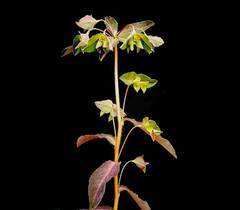
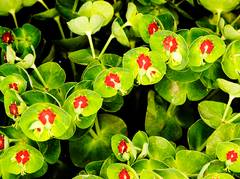
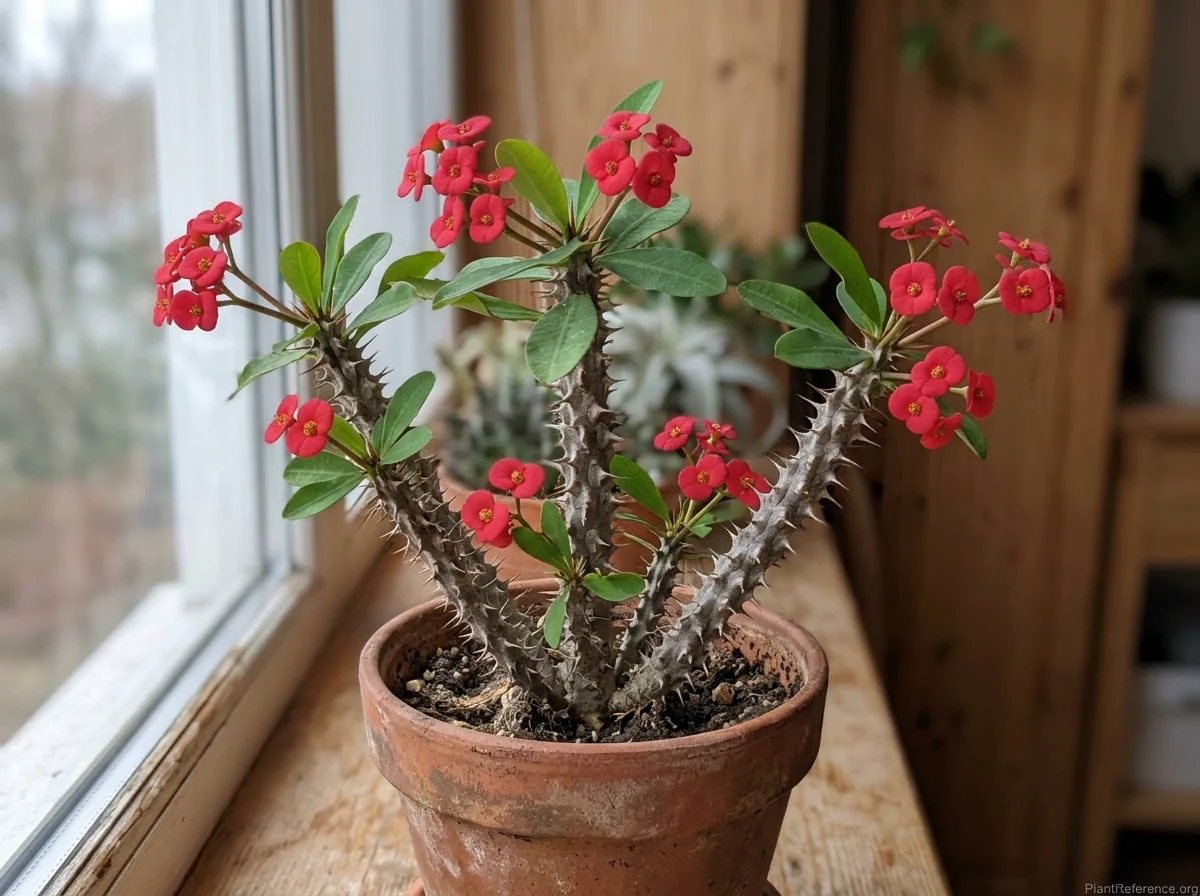
Euphorbia milii is a spiny, succulent shrub in the spurge family, native to Madagascar and grown 1-6 feet (0.3-1.8 m) tall, taller where it scrambles for support. The thick gray-brown stems are densely armed with sharp spines up to 0.5-1 inch (1.2-2.5 cm) long and bear oval green leaves mostly toward the branch tips, where older leaves drop with age. The true flowers are tiny and clustered, but each pair sits within two showy, rounded bracts about 0.5 inch (1.2 cm) across in red, pink, yellow, or white, depending on the form. In warm conditions it flowers almost year-round, slowing in cool or dark periods. Like other spurges, broken stems and leaves bleed a milky white latex that irritates skin and eyes and is poisonous if eaten. The spines and caustic sap make the plant hazardous to handle. Euphorbia milii tolerates heat, drought, and poor soil but needs warmth, bright light, and sharp drainage, and rots in cold, wet conditions. It is grown outdoors in frost-free climates and as a houseplant elsewhere.
Native Range
Euphorbia milii is native to Madagascar, where it grows in dry, rocky scrub. It is widely cultivated in tropical and subtropical regions and as a container plant in cooler climates.Suggested Uses
Grown as a flowering succulent in containers, on sunny patios, and in frost-free rock and desert gardens, and as a low, spiny barrier hedge in warm climates. The long bloom and bright bracts draw bees and other insects. Because of its spines and toxic sap, it is placed away from paths, seating, and areas used by children and pets.How to Identify
Appearance
Size & Dimensions
Height1' - 6'
Width/Spread1' - 3'
Bloom Information
Detailed Descriptions
Flower Description
red, pink, yellow, or white bractsFoliage Description
greenGrowing Conditions
Sun Requirements
Requires 6-12 hours of direct sunlight daily
• Full Sun: 6+ hours of direct sunlight
• Partial Shade: 3-6 hours of direct sunlight
• Full Shade: Less than 3 hours of direct sunlight
Care & Maintenance
Care Guide
Grow in full sun to bright light on sharply drained, sandy, or gritty soil. Established plants are drought tolerant and watered only when the soil has dried, with much less water in winter. Cold, wet soil and deep shade cause stem rot and leaf drop. Indoors it needs the brightest window available and warmth above 55F (13C). The milky sap is a skin and eye irritant and is poisonous if eaten, so cuts and repotting are done with protective gloves. Light feeding in the growing season supports steady bloom.Pruning
Stems can be cut back in spring to shape the plant or limit its size, with the cut ends blotted to stop the sap flow. Leggy or crowded branches are thinned to keep an open form. The spines and caustic sap make pruning a slow, protected task.Container Growing
Suitable for container growing
Minimum container size: 1 gallons