Image 1 of 15
1 / 15
Plant Reference
Cornus, Genus, nuttallii, Species,
- Genus & species
western dogwood, Pacific dogwood
Pacific Coast of North America from southern British Columbia to southern California; coastal and lower montane coniferous forests below 6,000 feet (1,800 m) elevation
Overview
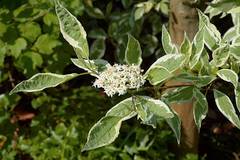
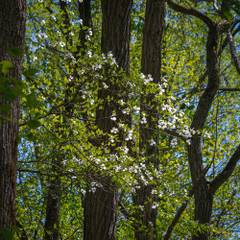
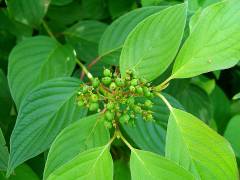
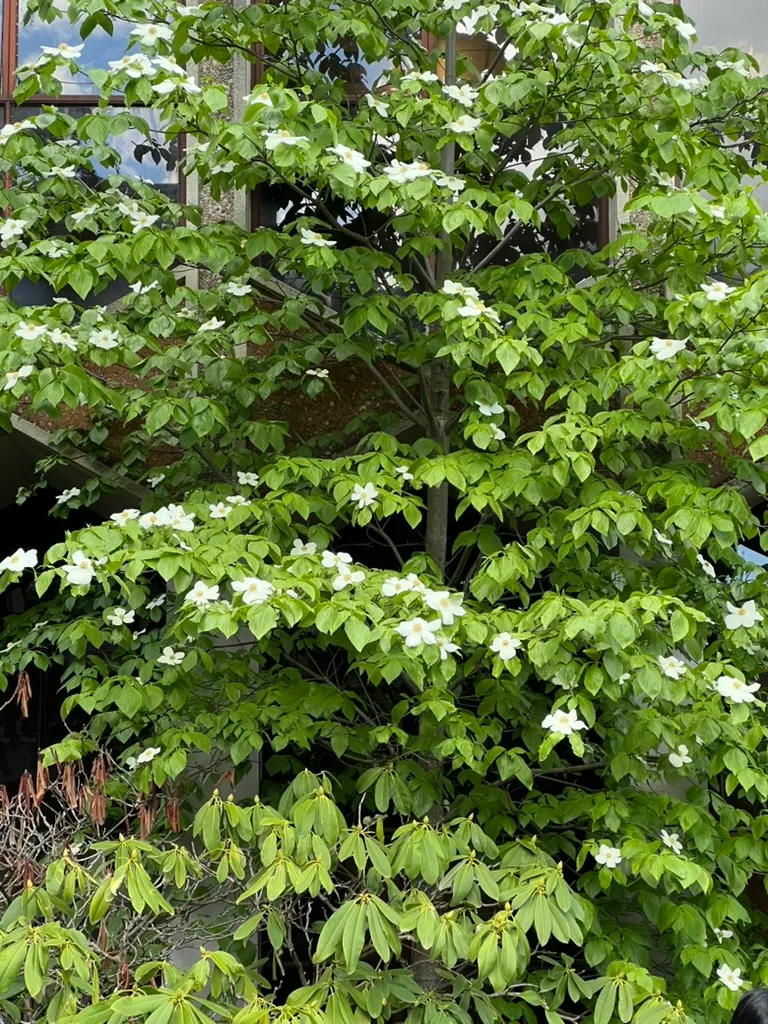
Cornus nuttallii is a deciduous tree reaching 20–50 feet (6–15 m) tall and 15–30 feet (4.5–9 m) wide with an upright pyramidal to broadly oval crown. Leaves are ovate, 3–5 inches (7–13 cm) long, medium to dark green with arcuate (curving) lateral venation, turning yellow, orange, and red in fall. Inflorescences carry a tight central cluster of small green-purple true flowers surrounded by 6 (occasionally 4–7) showy white petal-like bracts 3–5 inches (7–13 cm) across in April and May. A second lighter bloom often occurs in September and October, frequently overlapping the fall foliage display. Clusters of red-orange drupes 0.4 inch (10 mm) across develop from the spring flowers and ripen in fall. The species is the provincial flower of British Columbia. Limitation: dogwood anthracnose (Discula destructiva) has reduced wild populations across the Pacific Northwest since the 1980s and is most severe on trees in dense humid shaded conditions; the species does not tolerate heat, drought, or root disturbance, transplanting is difficult outside a young container-grown stage, and the tree does not perform reliably outside its native Pacific Coast range from coastal British Columbia south to northern California.
Native Range
Native to the Pacific Coast of North America from southern British Columbia south through Washington and Oregon to southern California, growing in coastal and lower montane coniferous forests below 6,000 feet (1,800 m) elevation as an understory or canopy-edge tree.Suggested Uses
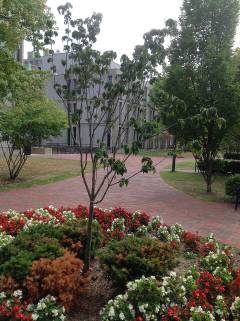
Used as an understory or specimen tree in Pacific Coast woodland gardens, native plant gardens, and dappled shade settings under taller conifers at 15–30 foot (4.5–9 m) spacing from adjacent trees. The April-May spring bloom and the secondary September-October flowering supply two seasons of white-bract display. Sites outside the cool moist Pacific Coast range, hot exposed positions, drought-prone soils, and locations subject to root disturbance are unsuitable.How to Identify
Appearance
Size & Dimensions
Height20' - 50'
Width/Spread15' - 30'
Bloom Information
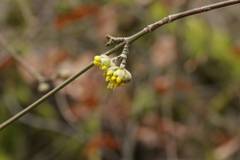
Inflorescences with 6 (sometimes 4–7) white bracts 3–5 inches (7–13 cm) across surrounding a small central cluster of green-purple true flowers open in April and May, lasting about 3 weeks. A second lighter bloom flush often occurs in September and October. Red-orange drupes 0.4 inch (10 mm) across develop from the spring flowers and ripen in fall.
Detailed Descriptions
Flower Description
white bracts (typically 6, sometimes 4-7) 3-5 inches (7-13 cm) across surrounding a tight cluster of small green-purple true flowersFoliage Description
medium to dark green; ovate, 3-5 inches (7-13 cm) long, with arcuate venation; turns yellow, orange, and red in fallGrowing Conditions
Sun Requirements
Requires 3-6 hours of direct sunlight daily
• Full Sun: 6+ hours of direct sunlight
• Partial Shade: 3-6 hours of direct sunlight
• Full Shade: Less than 3 hours of direct sunlight
Care & Maintenance
Care Guide
Site in part shade with 3–6 hours of direct sun per day, ideally as dappled shade under taller conifers matching the natural understory habitat, in well-drained acidic soil with a pH of 5.5–6.5. The species does not tolerate heat or drought and performs reliably only in cool moist Pacific Coast climates. Air circulation should be unrestricted to limit dogwood anthracnose, and overhead irrigation that wets the foliage encourages disease development. Transplanting succeeds only with small container-grown stock, and root disturbance on established trees causes decline. Hardy in USDA zones 6–9.Pruning
Pruning is done in summer (June through August) when the risk of disease entry through cuts is lower than in spring. Dead, crossing, or anthracnose-affected branches can be removed at that time, and tools are disinfected between cuts to limit pathogen spread. The naturally upright pyramidal form develops without shaping in healthy trees.Pruning Schedule
Prune: June–August
summer