Cornus, Genus, amomum, Species,
- Genus & species
silky dogwood
Overview
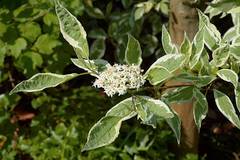
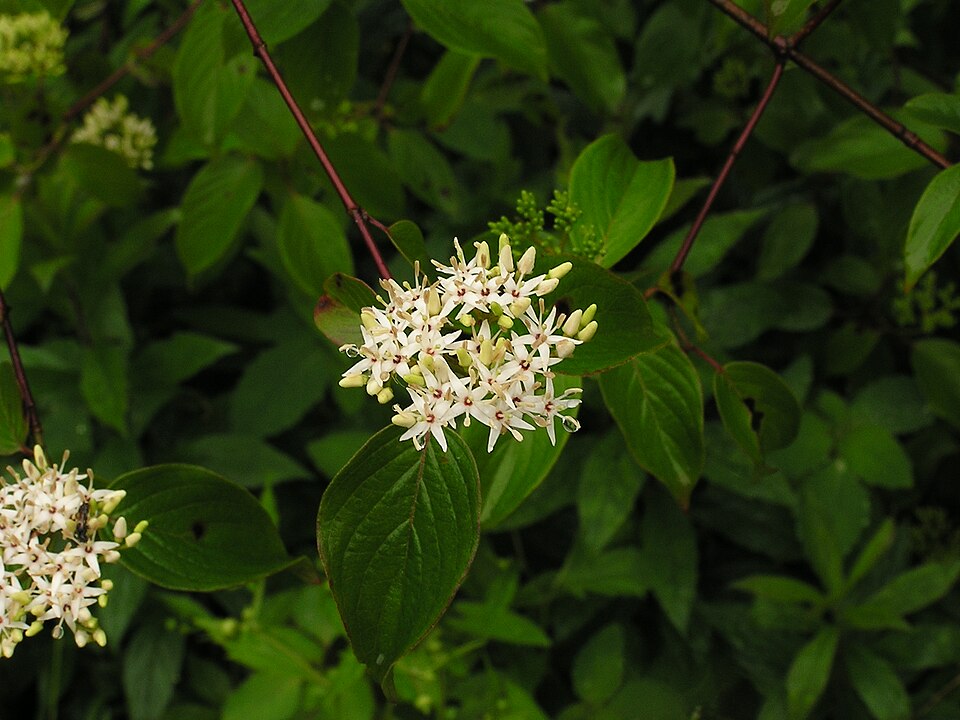
Cornus amomum is a deciduous shrub of the eastern United States, growing 6-12 feet (1.8-3.7 m) tall and wide with a rounded, multi-stemmed form. Young stems are reddish to purplish, brightening in winter sun, while older bark turns gray. The opposite leaves are oval, 2-4 inches (5-10 cm) long, dark green above with rust-colored silky hairs on the underside and veins. Flat clusters of small white to yellowish flowers 2-3 inches (5-8 cm) across open in late spring and early summer. Pale blue, sometimes white-blotched berries 0.25 inch (6 mm) wide follow in late summer on red stalks. The shrub grows in wet soils along streams, ponds, and swamp edges, tolerating periodic flooding and heavy clay. It spreads by suckers and layering branches to form thickets, which can crowd small plantings. The fruit feeds many birds, and the dense growth shelters birds and small wildlife.
Native Range
Native to the eastern United States, from Maine and New York south to Georgia and west to the Mississippi valley, in wet woods and along watercourses.Suggested Uses
Used in rain gardens, streambank and pond plantings, and wildlife borders on wet ground. The winter stem color adds interest in mixed shrub plantings. The thicket habit suits naturalized and erosion-control settings.How to Identify
Appearance
Size & Dimensions
Height6' - 12'
Width/Spread6' - 12'
Bloom Information
Detailed Descriptions
Flower Description
white to creamy yellowFoliage Description
dark green, rust-hairy beneathGrowing Conditions
Sun Requirements
Requires 4-12 hours of direct sunlight daily
• Full Sun: 6+ hours of direct sunlight
• Partial Shade: 3-6 hours of direct sunlight
• Full Shade: Less than 3 hours of direct sunlight
Care & Maintenance
Care Guide
Grows in full sun to part shade in moist to wet soils, including clay and periodically flooded ground, with a pH of 5.0-7.0. Established plants tolerate standing water for short periods and need watering only on dry sites. Suckers and rooting branches form thickets that can be dug out to limit spread. Stems color most strongly in full sun on younger wood. Hardy in USDA zones 5-8. Leaf spot and dogwood borer occur but rarely cause lasting harm.Pruning
Cutting a third of the oldest stems to the base each late winter keeps young, well-colored wood coming. Hard renewal pruning to near ground level every few years restores bright stem color on old plants. Suckers are removed to control thicket spread.Pruning Schedule
Prune: February
winter