Image 1 of 4
1 / 4
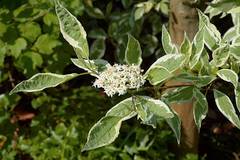
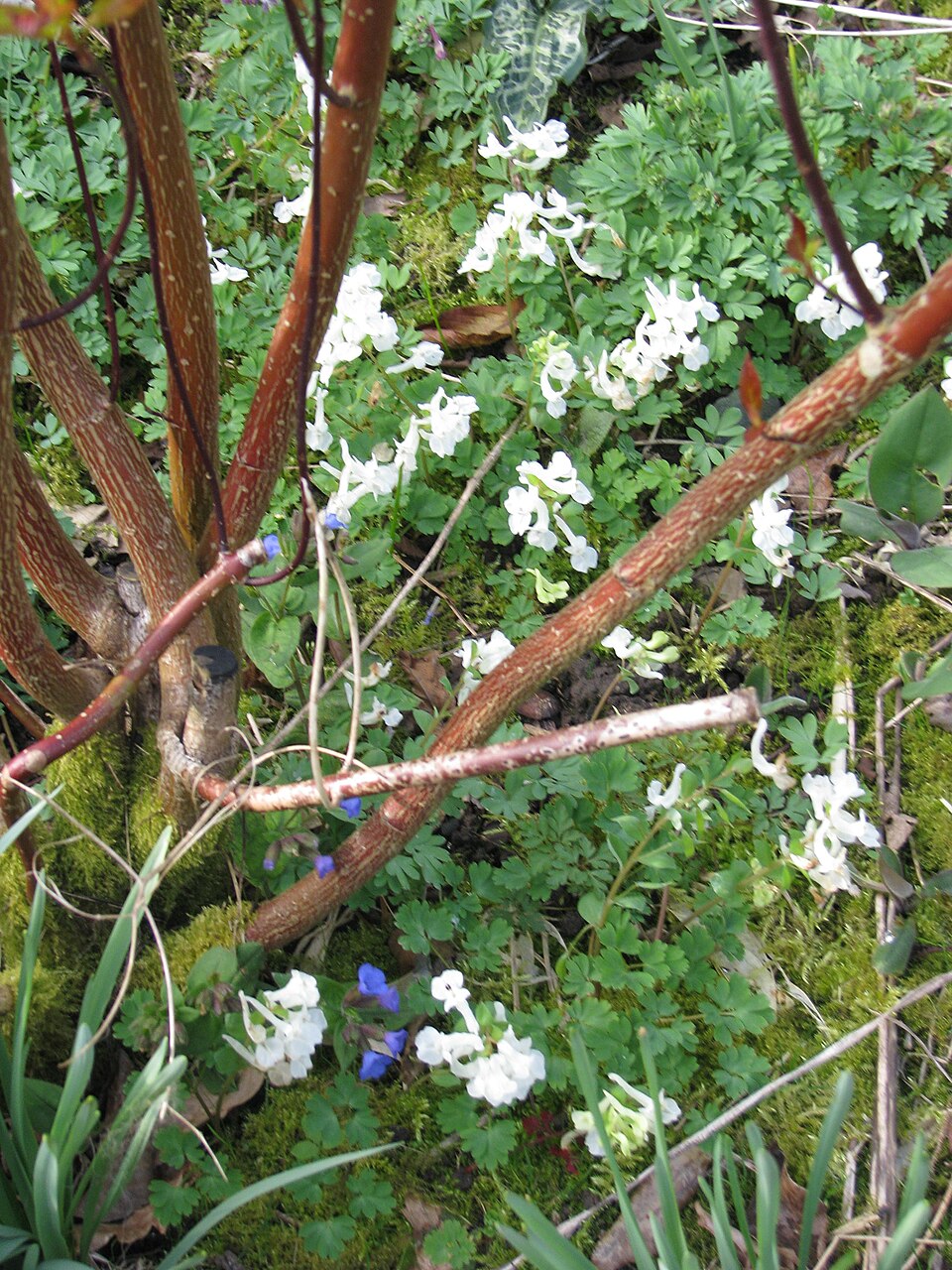
© peganum from Henfield, England, some rights reserved (CC-BY-SA) · Wikimedia Commons
Cornus, Genus, alba, Species, 'Kesselringii', Cultivar,
- Genus & species
- Cultivar
Kesselring's dogwood
Species native to Siberia, northern China, Korea, and Manchuria; cultivar selected in Europe
Overview
Cornus alba 'Kesselringii' is a vigorous, upright to vase-shaped deciduous shrub reaching 6–8 feet (1.8–2.4 m) tall with a spread of 5–7 feet (1.5–2.1 m). The cultivar is grown for its dark purplish-black to near-black winter stem color — a darker stem hue than the red-stemmed C. alba 'Sibirica' and 'Elegantissima' or the orange-to-red gradient of C. sanguinea 'Midwinter Fire'. Young stems emerge greenish-brown and darken through fall and winter to a deep blackish-purple. Leaves are ovate, 2–5 inches (5–13 cm) long, dark green with a slight purplish tinge, turning reddish-purple in fall. Flat-topped cymes 1.5–2 inches (4–5 cm) across of small creamy-white flowers open in May–June, followed by white to bluish-white berries in late summer. The plant suckers from the base to form a multi-stemmed thicket. Growth rate is fast. The darkest stem color develops on first- and second-year wood; older stems fade to grayish-brown. A hard cutback every 1–2 years in early spring keeps a supply of young stems and maintains the dark winter color.
Native Range
The species Cornus alba is native to Siberia, northern China, Korea, and Manchuria, growing in moist woodlands and along stream margins. 'Kesselringii' was selected in cultivation in Europe.Suggested Uses
Used in mass groupings, winter gardens, and mixed borders at 4–6 foot (1.2–1.8 m) spacing. The dark stems contrast with red-stemmed dogwoods (C. alba 'Sibirica', C. sericea 'Flaviramea') and white birch bark in winter compositions. The shrub works in wet sites, rain gardens, and stream banks; the thicket-forming habit supports erosion control. The cultivar can be grown as an informal hedge where its 5–7 foot (1.5–2.1 m) spread fits. Not suited to small formal gardens or containers because of the suckering habit.How to Identify
Appearance
Size & Dimensions
Height6' - 8'
Width/Spread5' - 7'
Bloom Information
Flat-topped cymes 1.5–2 inches (4–5 cm) across of small creamy-white flowers open in May–June. White to bluish-white berries follow in late summer. Bloom duration is 2–3 weeks. The flowers and fruit are secondary to the dark winter stem display.
Detailed Descriptions
Flower Description
Creamy-white in flat-topped cymesFoliage Description
Dark green with slight purplish tinge, ovate, 2-5 inches (5-13 cm) longGrowing Conditions
Sun Requirements
Requires 4-10 hours of direct sunlight daily
• Full Sun: 6+ hours of direct sunlight
• Partial Shade: 3-6 hours of direct sunlight
• Full Shade: Less than 3 hours of direct sunlight
Care & Maintenance
Care Guide
Plant in full sun to partial shade in moist, well-drained to average soil. Tolerates wet soils and clay. Full sun deepens the stem color. The suckering habit forms a thicket; leaving space or removing outer suckers each year contains the clump. A hard cutback of all stems to 6–12 inches (15–30 cm) above ground in early March every 1–2 years maintains a supply of young stems with the darkest color; older stems fade to grayish. No serious pest or disease problems.Pruning
The shrub is coppiced in early March every 1–2 years by cutting all stems to 6–12 inches (15–30 cm) above ground. This removes faded older stems and promotes vigorous new growth with the darkest winter color. A less drastic alternative removes one-third of the oldest stems annually. Perimeter suckers are removed to control spread.Pruning Schedule
Prune: March
early spring