Cornus, Genus, alternifolia, Species,
- Genus & species
pagoda dogwood
Eastern North America (New Brunswick to Minnesota, south to Georgia, Alabama, and Missouri)
Overview
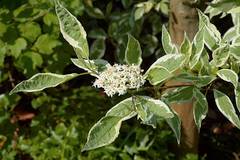
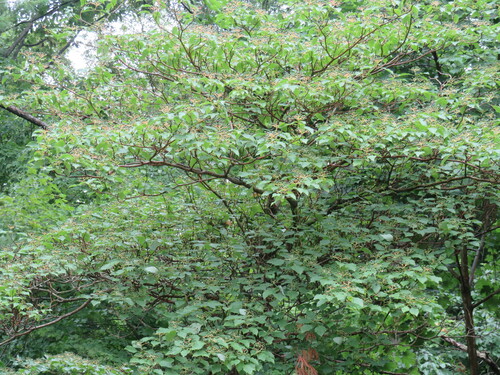
Cornus alternifolia is a small deciduous tree or large shrub reaching 15–25 feet (4.5–7.5 m) tall with a spread of 15–25 feet (4.5–7.5 m). The plant develops a tiered horizontal branching pattern — branches spread in flat table-like layers, creating a pagoda silhouette. This is one of only two Cornus species with alternate (rather than opposite) leaves, the other being C. controversa. Leaves are elliptic to ovate, 2–5 inches (5–13 cm) long, medium green above and slightly whitish beneath, clustered at the branch tips. Flat-topped cymes 1.5–2.5 inches (4–6 cm) across of small creamy-white flowers open in May–June. Blue-black drupes 0.25 inch (6 mm) across on red pedicels ripen in July–August and are rapidly eaten by birds. Fall color is variable from reddish-purple to brownish. The layered silhouette carries the winter display. Growth rate is slow to moderate at 8–12 inches (20–30 cm) per year. The species is susceptible to golden canker (Cryptodiaporthe corni), which can kill branches; no cure exists and infected branches are pruned out. Typical lifespan is 25–50 years, shorter than most shade trees.
Native Range
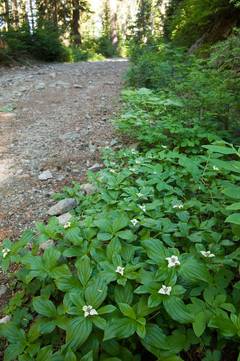
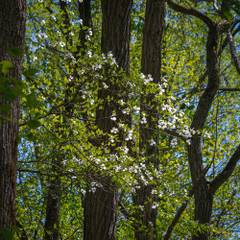
Cornus alternifolia is native to eastern North America, from New Brunswick west to Minnesota and south to Georgia, Alabama, and Missouri. It occurs as an understory tree in moist deciduous forests, along woodland margins, and on stream banks.Suggested Uses
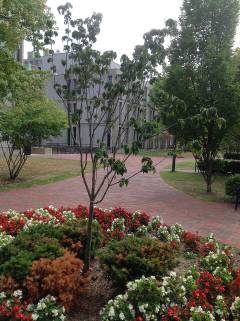
Used as a specimen understory tree in woodland gardens, shaded borders, and naturalistic plantings at 10–15 foot (3–4.5 m) spacing. The layered silhouette supplies architectural year-round interest and works at woodland edges as a transition tree between open areas and forest. Blue-black fruit on red pedicels feeds birds. The pagoda form is visible in winter. Not suited to hot dry exposed sites, formal hedging, or street plantings.How to Identify
Appearance
Size & Dimensions
Height15' - 25'
Width/Spread15' - 25'
Bloom Information
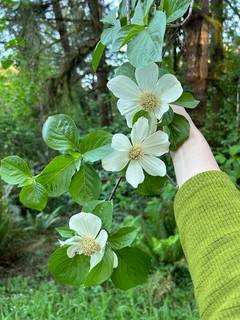
Flat-topped cymes 1.5–2.5 inches (4–6 cm) across of small creamy-white flowers open in May–June. Blue-black drupes 0.25 inch (6 mm) across on red pedicels ripen in July–August. Bloom duration is 2–3 weeks. The fruit is rapidly eaten by birds.
Detailed Descriptions
Flower Description
Creamy-white in flat-topped cymesFoliage Description
Medium green above, whitish beneath, elliptic to ovate, 2-5 inches (5-13 cm) long, clustered at branch tipsGrowing Conditions
Sun Requirements
Requires 3-8 hours of direct sunlight daily
• Full Sun: 6+ hours of direct sunlight
• Partial Shade: 3-6 hours of direct sunlight
• Full Shade: Less than 3 hours of direct sunlight
Care & Maintenance
Care Guide
Plant in partial shade to full sun in moist, well-drained, acidic soil enriched with organic matter. The species performs as an understory tree in open woodland settings; full sun is tolerated in cool climates with consistent moisture, and afternoon shade is helpful in zones 7–8. The tree is sensitive to drought and needs consistent moisture especially when young. Golden canker is the main disease concern, and infected branches are pruned out 6–12 inches (15–30 cm) below visible symptomatic tissue. Leaf scorch develops on hot dry sites. Root-zone mulch keeps soil cool and moist.Pruning
Minimal pruning is required. Dead, crossing, or damaged branches are removed in late winter. The natural layered branching is preserved — shearing or heading back destroys the pagoda silhouette. Golden canker–infected branches are cut 6–12 inches (15–30 cm) below the symptomatic tissue.Pruning Schedule
Prune: February–March
winter