Cornus, Genus, 'Eddie's White Wonder', Cultivar,
- Genus
- Cultivar
Eddie's white wonder
Hybrid of garden origin (C. florida × C. nuttallii); bred Vancouver, BC
Overview
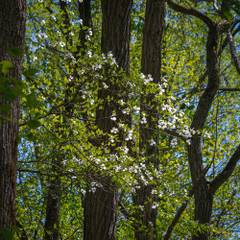
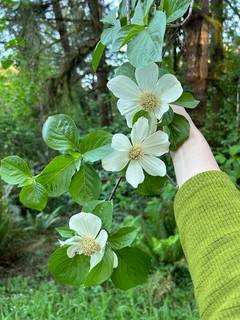
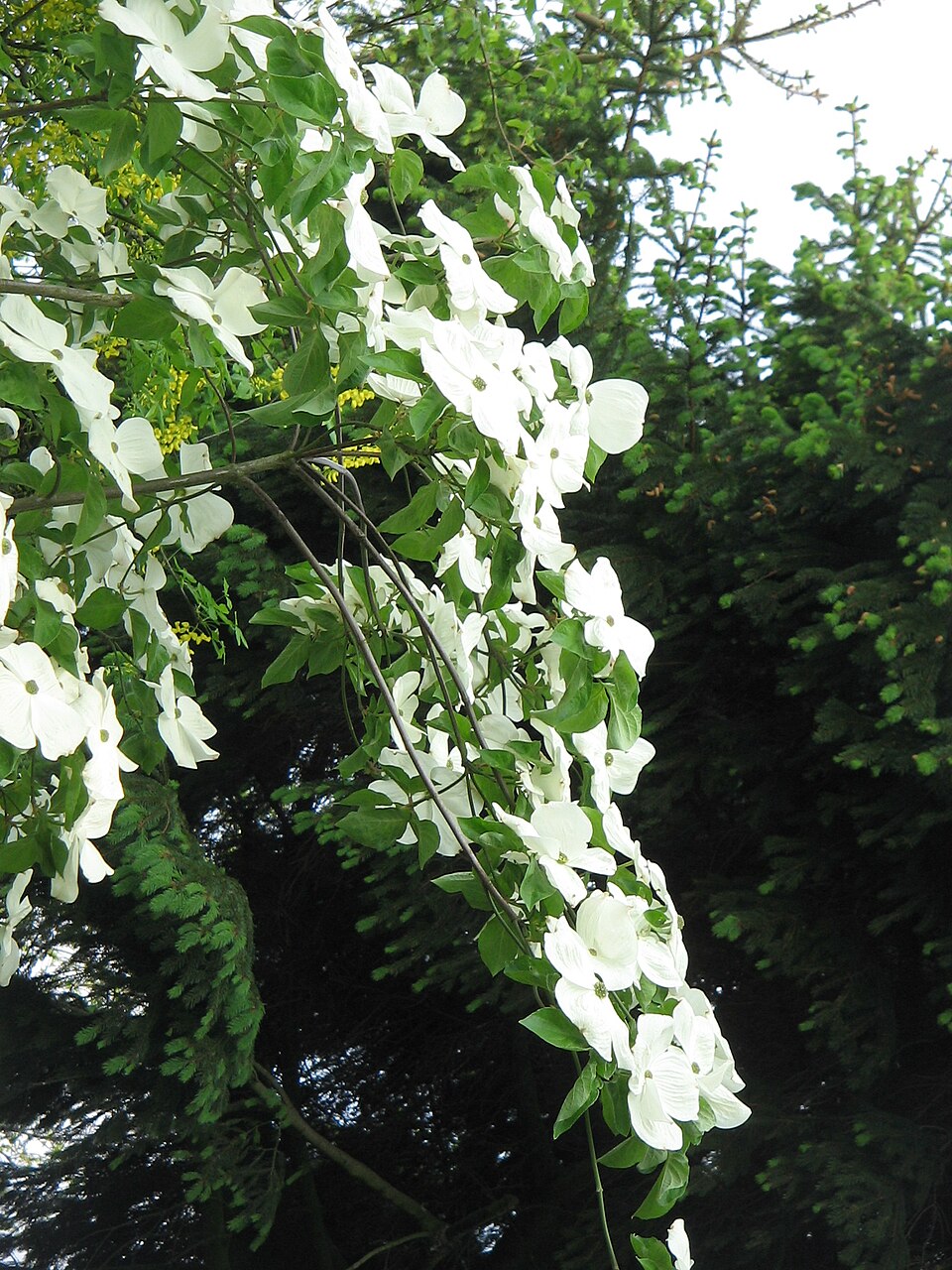
Cornus × Eddie's White is a small to medium, upright to pyramidal, deciduous tree reaching 20–35 feet (6–10.5 m) tall with a spread of 15–25 feet (4.5–7.5 m). This interspecific hybrid (C. florida × C. nuttallii) carries large, showy, four-bracted flower heads 4–5 inches (10–13 cm) across with overlapping, rounded, pure white bracts in May. The overlapping bracts produce a fuller, more rounded appearance than C. nuttallii alone, whose bracts are typically pointed and non-overlapping. Leaves are ovate, 3–5 inches (8–13 cm) long, dark green, turning brilliant orange-red to scarlet in fall. Red-orange compound fruit clusters ripen in September–October. The tree carries a more upright, compact form than either parent, with dense branching. Growth rate is moderate at 10–14 inches (25–36 cm) per year. The cultivar combines the large bract size of C. nuttallii with the anthracnose tolerance and broader climatic adaptability of C. florida. Resistance to dogwood anthracnose (Discula destructiva) is stronger than in C. florida alone but not complete. Bred by Henry Eddie, Vancouver, British Columbia, in the 1940s, and introduced to commerce in the 1960s after Eddie's nursery was rebuilt following a 1947 flood that destroyed the original breeding stock.
Native Range
Cornus × Eddie's White is a hybrid of garden origin (C. florida × C. nuttallii). C. florida is native to eastern North America; C. nuttallii is native to western North America. Bred by Henry Eddie at Eddie's Nursery, Vancouver, British Columbia.Suggested Uses
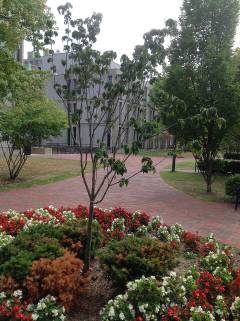
Planted as a specimen tree in front yards, mixed borders, and woodland edges at 12–18 foot (3.6–5.5 m) spacing. The upright form fits smaller residential lots where a spreading dogwood would outgrow the space. The large white bracts in May, brilliant fall color, and red-orange fruit carry multi-season interest. Functions as a street tree in Pacific Northwest communities where anthracnose pressure makes C. florida unreliable. Paired with spring-flowering understory shrubs such as Rhododendron and bulbs such as Narcissus, the May bract display coincides with a layered spring display.How to Identify
Appearance
Size & Dimensions
Height20' - 35'
Width/Spread15' - 25'
Bloom Information
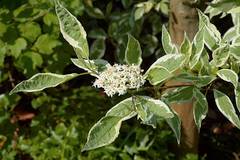
Large, showy, four-bracted flower heads 4–5 inches (10–13 cm) across with pure white, overlapping, rounded bracts open in May, before the leaves are fully expanded. The true flowers are the small, greenish cluster at the bract center. Red-orange compound fruit clusters ripen September–October. Bloom duration is 2–3 weeks.
Detailed Descriptions
Flower Description
Pure white bracts, 4-5 inches acrossFoliage Description
Dark green, ovate, 3-5 inches longGrowing Conditions
Sun Requirements
Requires 4-10 hours of direct sunlight daily
• Full Sun: 6+ hours of direct sunlight
• Partial Shade: 3-6 hours of direct sunlight
• Full Shade: Less than 3 hours of direct sunlight
Care & Maintenance
Care Guide
Plant in full sun to partial shade in moist, well-drained, slightly acidic soil. Full sun produces heavier flowering and more saturated fall color. Consistent moisture during establishment and through dry periods supports long-term vigor. The cultivar carries stronger tolerance to dogwood anthracnose (Discula destructiva) than C. florida alone but is not immune. Mulch to a depth of 2–3 inches (5–8 cm) around the root zone maintains cool, moist conditions and reduces summer stress. Mower and string-trimmer wounds on the trunk are primary entry points for anthracnose and borers, and siting the tree in a mulched bed rather than turf eliminates the problem. No other serious pest or disease problems in Pacific Northwest climates.Pruning
Minimal pruning. Dead, crossing, or damaged branches are removed in late winter. The natural upright to pyramidal form develops on its own; heavy pruning damages the shape and exposes cut surfaces to anthracnose infection.Pruning Schedule
Prune: February–March
winter