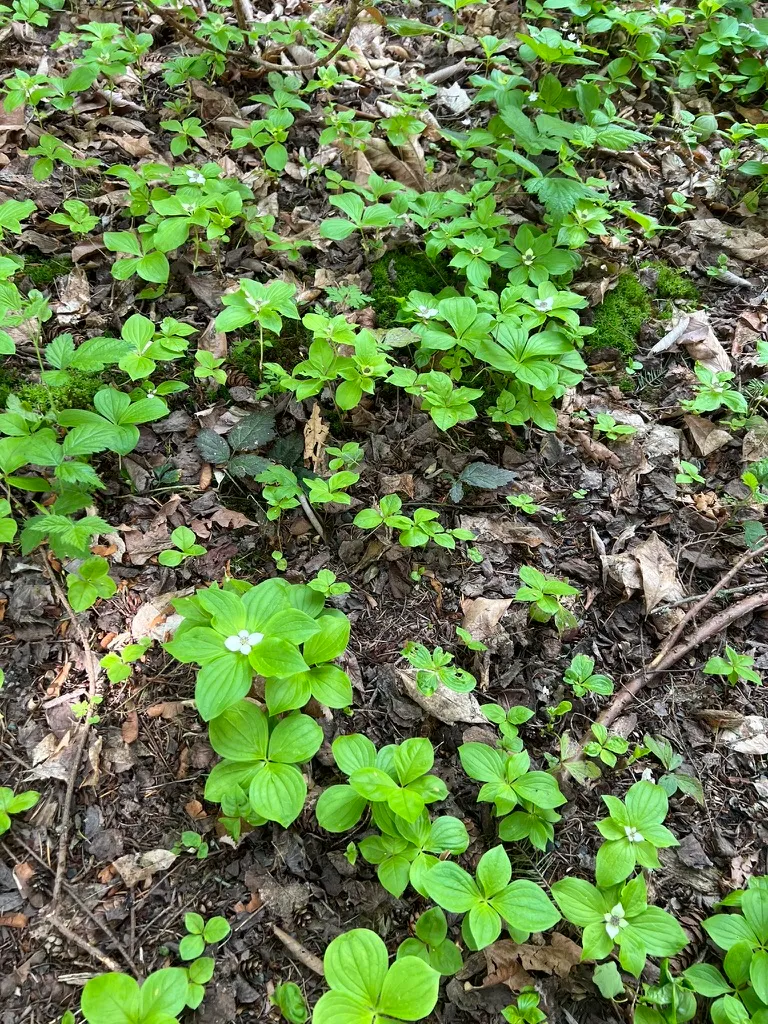
Cornus  canadensis, bunchberry
1 / 3
Vines & Groundcovers

Cornus canadensis

bunchberry

Cornaceae

Boreal and cool-temperate North America from Alaska to the Atlantic coast; Pacific Northwest coast ranges from Alaska to northern California

At a Glance

TypePerennial
HabitSpreading
FoliageDeciduous
Height4-6 inches (10-15 cm)
Width12-24 inches (30-60 cm)
Maturity4 years

Growing Zones

USDA Hardiness Zones

2 - 7
Zone 2
Zone 3
Zone 4
Zone 5
Zone 6
Zone 7
These zones indicate the coldest temperatures this plant can typically survive.
Frost Tolerancehardy

Key Features

Attracts Pollinators
Native to North America
Maintenancevery low

Overview

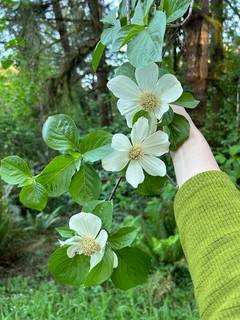
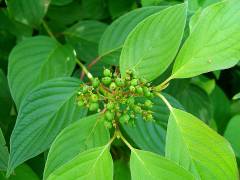
Cornus canadensis (bunchberry, Canadian dwarf cornel) is a native woodland groundcover reaching just 4–6 inches (10–15 cm) tall, spreading gradually by underground rhizomes to form a colony. It is the smallest member of the dogwood family grown in Pacific Northwest gardens and one of the finest native groundcovers for cool, moist, shaded woodland conditions. In May through June, each short stem is topped by a whorl of 4–6 oval leaves surrounding four showy white bracts 0.5–1 inch (13–25 mm) long that resemble the flower of a large dogwood tree — the actual flowers are tiny, clustered in the center of the bracts. The flower display is followed by clusters of 4–15 bright scarlet berries 0.3 inch (8 mm) in diameter that ripen in August through September, persisting into fall. A remarkable botanical feature: the flowers of Cornus canadensis open explosively in approximately 0.5 milliseconds, launching pollen at an estimated 2,400 times the force of gravity — one of the fastest movements recorded in the plant kingdom, an adaptation for catapulting pollen onto visiting insects. The plant spreads slowly from creeping rhizomes; in favorable conditions it forms a refined dense mat. Native throughout the Pacific Northwest at low to subalpine elevations in cool, moist conifer forest understory — precisely the conditions replicated in woodland PNW gardens. Great Plant Picks endorsed.

Native Range

Native to boreal and cool-temperate North America from Alaska south through the Pacific Coast ranges to northern California, east across Canada and the northern United States to the Atlantic coast, and south in the Appalachians. In the Pacific Northwest, it grows naturally in the understory of moist coniferous and mixed forests from sea level to subalpine zones.

Suggested Uses

Outstanding native groundcover for cool, moist, shaded Pacific Northwest woodland gardens — one of the best choices for replacing lawn or bare ground under conifers and in forest understory conditions. Naturalizes beautifully under western red cedar, Douglas fir, and western hemlock where few other plants thrive. Great Plant Picks endorsed. The combination of white dogwood-like flowers in spring and bright scarlet berries in fall provides two seasons of striking display at groundcover scale. Ecologically valuable as a native plant supporting local invertebrates, birds, and small mammals. Combine with other native woodland species — Trillium, Oxalis oregana, Polystichum munitum — for a naturalistic understory planting.

How to Identify

Identified by the combination of very low stature (4–6 inches / 10–15 cm), whorled leaves (4–6 oval to elliptic leaves clustered near the top of each stem with characteristic dogwood parallel curved venation), and four white bracts 0.5–1 inch (13–25 mm) long surrounding a central cluster of tiny true flowers — identical in form to a large dogwood flower but at groundcover scale. Bright scarlet berry clusters at the stem tip in late summer and fall are distinctive. The rhizomatous spreading habit forms a low, even mat. Distinguished from mosses and other low groundcovers by the whorled leaf arrangement and dogwood-type venation.

Appearance

Size & Dimensions

Height4" - 6"
Width/Spread1' - 2'

Reaches mature size in approximately 4 years

Colors

Flower Colors

white

Foliage Colors

green

Fall Foliage Colors

red
purple

Bloom Information

Bloom Period

~3 weeks
J
F
M
A
M
J
J
A
S
O
N
D
Spring
Blooms May through June with four white bracts 0.5–1 inch (13–25 mm) long surrounding a central cluster of tiny true flowers at the tip of each stem. The flower display lasts 2–3 weeks. Bright scarlet berry clusters develop and ripen in August through September, persisting until consumed by birds or mammals. Both the flowers and the berries are ornamentally effective for their scale.

Detailed Descriptions

Flower Description

white bracts with tiny green-yellow true flowers

Foliage Description

medium green in summer; reddish to purple in fall

Growing Conditions

Sun Requirements

Partial Shade
Full Shade
Tolerates up to 3 hours of direct sunlight daily
• Full Sun: 6+ hours of direct sunlight
• Partial Shade: 3-6 hours of direct sunlight
• Full Shade: Less than 3 hours of direct sunlight
Soil Requirements

pH Range4.5 - 6.0(Acidic)
357912
Soil Types
loampeatsilt
Drainage
moist

Water & Climate

Water Needs

High

Frost Tolerance

hardy

Time to Maturity

3-5 years

Care & Maintenance

Care Guide

Bunchberry requires cool, consistently moist, acidic, humus-rich soil — essentially the conditions of a Pacific Northwest conifer forest floor. This is not a plant for hot, dry, or alkaline sites; it will not tolerate drought, compacted soil, or alkaline pH. Plant in full to deep shade, or at most dappled light under high open canopy. Mulch with 1–2 inches (2.5–5 cm) of coarse organic material (composted bark, leaf mold) to maintain moisture and cool soil temperature. Establish with regular irrigation through the first two seasons. Once established in appropriate conditions, it spreads slowly without intervention and requires no fertilization or supplemental care. Avoid disturbing the rhizome mat. In favorable sites it is very long-lived and essentially maintenance-free.

Pruning

No pruning is required or appropriate. Remove any dead or damaged stems by hand if needed. Allow the colony to expand naturally. If spread needs to be contained, edge the planting by lifting sections of rhizome mat at the perimeter.

Maintenance Level

very low

⚠️ Toxicity Warning

Non-toxic