Prunus, Genus, laurocerasus, Species, 'Schipkaensis', Cultivar,
- Genus & species
- Cultivar
skip laurel
Southeastern Europe and southwestern Asia (species)
Overview
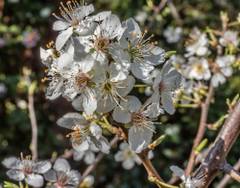
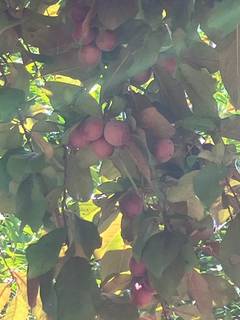
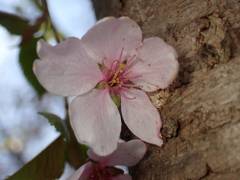
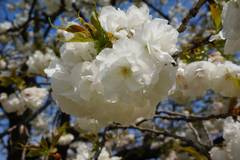
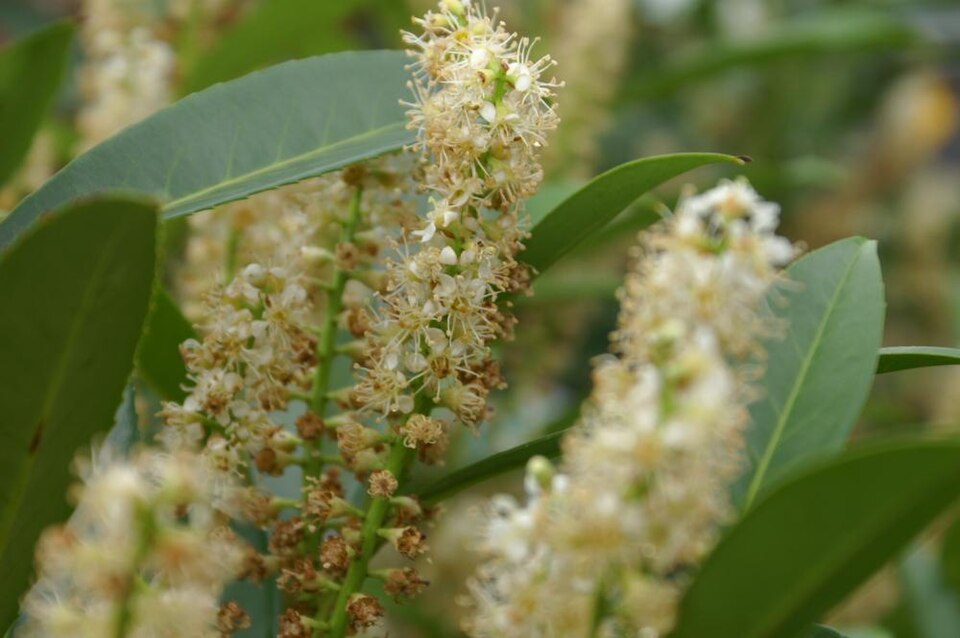
Prunus laurocerasus 'Schipkaensis' is a broadleaf evergreen shrub reaching 8-10 feet (2.4-3 m) tall and 5-7 feet (1.5-2.1 m) wide on an upright spreading framework with horizontal lower branching that becomes more vertical with age. Leaves are alternate, narrow elliptic, 4-6 inches (10-15 cm) long and 1-1.5 inches (2.5-4 cm) wide, glossy dark green above with paler undersides, leathery in texture and held year-round. Crushed leaves release a bitter almond scent due to cyanogenic glycosides. Small white five-petaled flowers measure 0.4-0.5 inch (1-1.3 cm) across, carried in upright cylindrical racemes 4-5 inches (10-13 cm) long at branch tips in April-May. Sweet honey-like fragrance carries 6-10 feet (1.8-3 m) from the plant in still air during peak bloom. Flowers develop into 0.4-0.5 inch (1-1.3 cm) cherry-like drupes ripening from green to red to black-purple by mid-summer; drupes contain a single hard pit. All parts of the plant including leaves, seeds, bark, and unripe drupes contain cyanogenic glycosides toxic to humans, dogs, cats, livestock, and wildlife if chewed and swallowed. Lifespan in landscape settings runs 25-50 years on well-drained sites; the 'Schipkaensis' selection tolerates cold to -15°F (-26°C), one zone hardier than typical cherry laurel cultivars.
Native Range
Prunus laurocerasus is native to southwestern Asia and southeastern Europe, including the Balkans, Turkey, Caucasus, and northern Iran, growing in moist deciduous forest understories from sea level to 6,000 feet (1,800 m) elevation. The 'Schipkaensis' cultivar was selected from the Shipka Pass region of the Balkan Mountains in Bulgaria for cold hardiness and introduced to North American horticulture in the late 19th century.Suggested Uses
Planted in evergreen hedges and screening at 4-5 foot (1.2-1.5 m) spacing for a continuous 8-10 foot (2.4-3 m) wall, in mixed shrub borders, and as a specimen in larger landscapes. Used as a foundation planting at 6-8 foot (1.8-2.4 m) spacing where evergreen mass and white spring flowers are wanted. Container plantings require pots of at least 15 gallons (57 L) with daily summer watering and winter protection in zones 5-6; container specimens are shorter-lived than in-ground plants by 5-10 years.How to Identify
Appearance
Size & Dimensions
Height8' - 10'
Width/Spread5' - 7'
Bloom Information
Bloom from mid-April through early May in zones 5-7 and from late March through April in zones 7b-8. Peak display lasts 2-3 weeks; individual racemes hold flowers for 7-10 days. Honey-like fragrance is most pronounced on warm sunny days. Bloom is reduced in heavily sheared hedges where flower buds on outer branch tips are removed; renewal pruning preserves bloom on a 2-3 year cycle.
Detailed Descriptions
Foliage Description
glossy dark green with paler undersidesGrowing Conditions
Sun Requirements
Requires 3-8 hours of direct sunlight daily
• Full Sun: 6+ hours of direct sunlight
• Partial Shade: 3-6 hours of direct sunlight
• Full Shade: Less than 3 hours of direct sunlight
Care & Maintenance
Care Guide
Water deeply weekly during establishment for the first two growing seasons, applying about 1 inch (2.5 cm) at the root zone per session. Mature plants tolerate 3-4 weeks without rain in zones 5-7 once established. Shot hole disease (Wilsonomyces carpophilus) develops in cool wet spring weather, causing tan circular leaf spots that drop out leaving holes; defoliation is rarely severe. Vine weevils notch leaf margins in summer in eastern North America and the Pacific Northwest. All parts contain cyanogenic glycosides; ingestion of leaves, seeds, or unripe drupes causes nausea, headache, and breathing distress in humans and can be fatal to dogs, cats, and livestock. Fertilize once in early spring with a balanced slow-release formula at the rate listed on the label.Pruning
Light shearing for hedge form is done in early summer (June) and again in late summer (August), with hand pruning of larger leaves replacing power shears to prevent unsightly leaf damage. Renewal pruning to reduce overall size is done in late winter or early spring before bud break, removing up to one-third of the canopy in a single season. Hard pruning to ground level is tolerated and produces vigorous regrowth from the root crown over 2-3 seasons.Pruning Schedule
Prune: June & August
summer
Container Growing
Suitable for container growing
Minimum container size: 15 gallons