Centaurea, Genus, stoebe, Species,
- Genus & species
spotted knapweed
Central and eastern Europe, western Asia
Overview
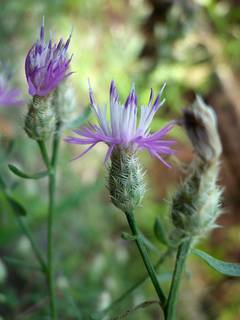
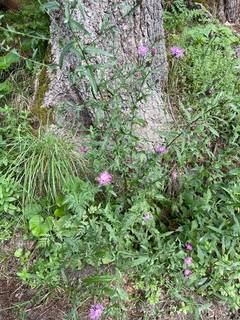
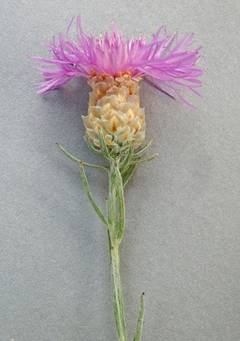
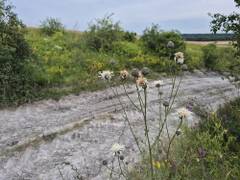
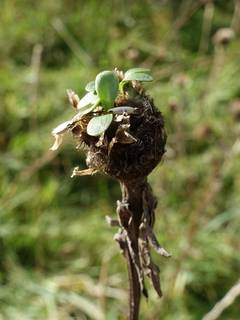
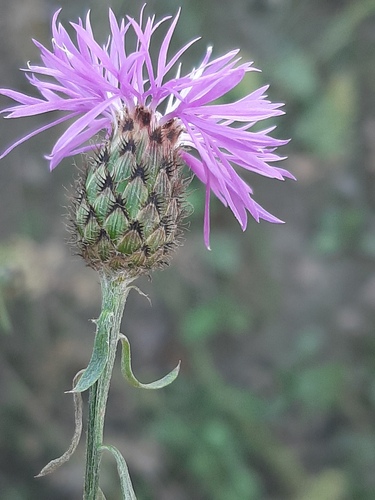
Centaurea stoebe is a biennial or short-lived perennial in the daisy family (Asteraceae) reaching 12-48 inches (30-120 cm) tall with a 12-24 inch (30-60 cm) spread. The species was widely treated as C. maculosa or C. biebersteinii in older literature; the accepted name for the invasive tetraploid form in North America is C. stoebe ssp. micranthos. First-year plants form a basal rosette of finely pinnately divided, gray-green leaves 2-6 inches (5-15 cm) long. Second-year stems are erect, branching, and wiry. Flower heads are solitary at branch tips, 0.5-0.8 inch (12-20 mm) in diameter, with pink to purple florets. Involucral bracts carry dark, comb-like (pectinate) tips that give the flower head a spotted appearance at the base. Each plant produces 400-25,000 seeds depending on site conditions, and seeds remain viable in soil for 5-8 years. Roots release the allelopathic compound (±)-catechin, which inhibits germination and growth of native grasses. C. stoebe is listed as a Class B noxious weed in Washington and is regulated across all western states and provinces. Infestations in the western United States and Canada cover millions of acres of rangeland and open forest.
Native Range
Centaurea stoebe is native to central and eastern Europe and western Asia, occurring in dry grasslands, steppe, and open woodland habitats from sea level to approximately 6,500 feet (2,000 m). The invasive tetraploid subspecies (C. stoebe ssp. micranthos) was introduced to North America in the late 1800s, likely in contaminated alfalfa seed or ship ballast. The species is now established across most of the western United States and southern Canada.Suggested Uses
Used extensively in noxious weed management training, rangeland restoration coursework, and biological control research. The species ranks among the more heavily studied invasive plants in North America. Included in weed identification curricula at county, state, and federal levels. Flowers are visited by honeybees, and beekeepers in Montana and British Columbia have reported knapweed as a nectar source. C. stoebe is a regulated Class B noxious weed and is not planted horticulturally.How to Identify
Appearance
Size & Dimensions
Height1' - 4'
Width/Spread1' - 2'
Bloom Information
Flowers appear June through September. Individual flower heads bloom for 5-7 days. The branching structure carries 10-50 or more flower heads per plant, with flowering progressing from the terminal heads downward over 6-8 weeks. In the Pacific Northwest, peak flowering occurs in July through August. Seeds mature 2-3 weeks after pollination. Flowers are pollinated by bees, butterflies, and other generalist insects.
Detailed Descriptions
Flower Description
Pink to purple flower heads 0.5-0.8 inch (12-20 mm), involucral bracts with dark comb-like pectinate tipsFoliage Description
Gray-green, finely pinnately divided with narrow lobes; lower leaves more deeply cut than upperGrowing Conditions
Sun Requirements
Requires 6-12 hours of direct sunlight daily
• Full Sun: 6+ hours of direct sunlight
• Partial Shade: 3-6 hours of direct sunlight
• Full Shade: Less than 3 hours of direct sunlight