Centaurea, Genus, spp., Multiple species,
- Genus
- Multiple species
knapweeds
Mediterranean, Eurasia, and North Africa
Overview
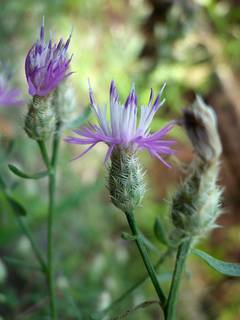
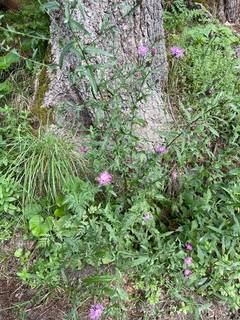
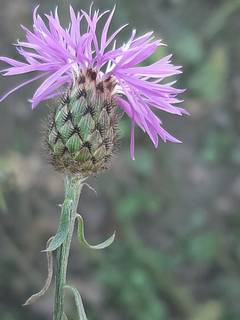
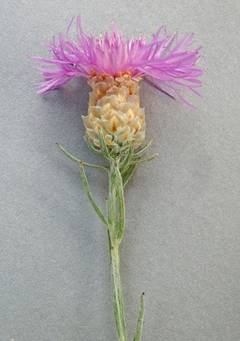
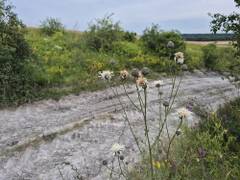
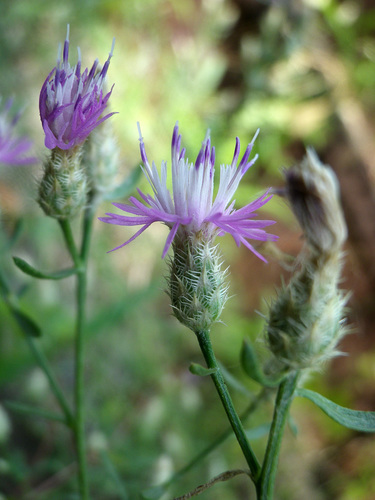
Centaurea is a genus of roughly 350 to 500 species of annual, biennial, and perennial herbs in the family Asteraceae, collectively called knapweeds, star-thistles, and cornflowers. Plants range from 8 inches to 6 feet (20 to 180 cm) tall, forming upright, branched stems from a taproot or rhizome. Leaves are alternate, gray-green, and variable, entire to deeply pinnately lobed, often with a coating of short hairs. The flower heads are thistle-like but spineless in most species, 0.5 to 2.5 inches (1 to 6 cm) wide, composed of tubular disc florets and frequently surrounded by enlarged, ray-like marginal florets that flare outward. Blooms appear in blue, purple, pink, magenta, yellow, or white from late spring through autumn. A defining feature is the involucre of overlapping bracts, each tipped with a fringed, comb-like, or spine-like appendage whose form distinguishes the species. Native mainly to the Mediterranean, Eurasia, and North Africa, Centaurea has spread worldwide. Several species, including C. stoebe and C. solstitialis, are listed as noxious weeds across multiple western United States and Canadian provinces, where they invade rangeland and displace native vegetation. Seeds are wind-borne on a short pappus, and many species self-sow freely.
Native Range
Centaurea is native chiefly to the Mediterranean Basin, southwestern and central Asia, and North Africa, with a center of diversity in the eastern Mediterranean and Caucasus. A small number of species reach the high mountains of eastern Africa. Many species are now naturalized far beyond this range, including across North America and Australia.Suggested Uses
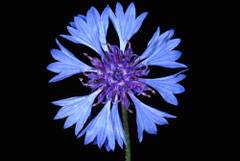
Ornamental Centaurea such as cornflower and perennial mountain bluet are planted in cottage gardens, cutting beds, meadows, and pollinator borders, spaced 12 to 18 inches (30 to 45 cm) apart. The cut flowers hold up in arrangements and the seeds feed finches. Weedy species are not planted and are managed where they invade pasture and roadside.How to Identify
Appearance
Size & Dimensions
Height8" - 6'
Width/Spread8" - 2'
Bloom Information
Centaurea blooms from late spring into autumn, with most species flowering June through September and annual cornflower types starting in May. Individual heads measure 0.5 to 2.5 inches (1 to 6 cm) across in blue, purple, pink, yellow, or white. Perennial knapweeds rebloom over many weeks when old heads are cut, while annuals flower in a single extended flush. Pollen and nectar draw bees and butterflies through the season.
Detailed Descriptions
Flower Description
blue, purple, pink, magenta, yellow, or whiteFoliage Description
gray-greenGrowing Conditions
Sun Requirements
Requires 6-12 hours of direct sunlight daily
• Full Sun: 6+ hours of direct sunlight
• Partial Shade: 3-6 hours of direct sunlight
• Full Shade: Less than 3 hours of direct sunlight
Care & Maintenance
Care Guide
Centaurea grows in full sun and average to lean, well-drained soil across a wide pH range of 6.0 to 8.0, tolerating drought, poor fertility, and exposed sites once established. Rich soil and shade produce floppy, sparse-flowering growth. Perennial species are cold hardy to USDA zone 3 or 4, while annuals are grown from spring-sown seed and complete their cycle in one season. Plants need little water after establishment and no supplemental feeding. Powdery mildew and aphids occur in crowded, humid conditions. Because several species self-sow heavily and some are regulated as invasive, spent heads are often removed before seed sets.Pruning
Deadheading spent flower heads extends bloom on perennial Centaurea and limits self-seeding. Perennial clumps are cut back by half after the first flush to prompt fresh growth and a second round of bloom, then taken to the ground in late autumn or early spring. Annual types are pulled once flowering ends.Pruning Schedule
Prune: June–July & November
summerfall
Container Growing
Suitable for container growing
Minimum container size: 2 gallons