Centaurea, Genus, jacea, Species,
- Genus & species
brown knapweed
Overview
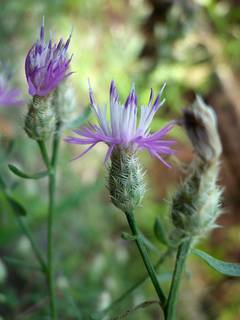
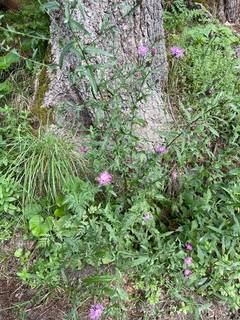
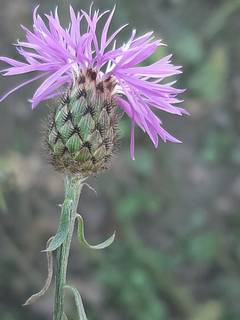
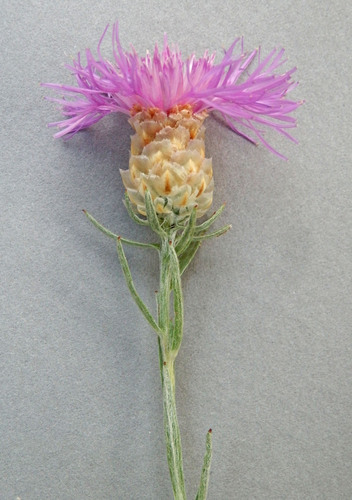
Centaurea jacea is an upright perennial growing 12-40 inches (30-100 cm) tall on branching, slightly rough stems from a woody base. The lance-shaped leaves are 2-6 inches (5-15 cm) long, mostly entire or slightly toothed, the lower ones stalked and the upper ones stalkless. Thistle-like flower heads 0.6-1.5 inches (1.5-4 cm) across appear from June to September, with rose-purple florets surrounding a button-like center, set above a rounded base of papery brown bracts that give the plant its common name. Unlike true thistles, the plant has no spines. The fruit is a small seed with little or no tuft of bristles. Plants grow from a deep root and self-seed, forming clumps in grassland and along verges. It is one of several knapweeds naturalized in North America, where some are treated as invasive rangeland weeds. Foliage dies back in winter and regrows from the crown. The flowers draw bees and butterflies through summer.
Native Range
Native to Europe and western Asia, in meadows, pastures, grassy banks, and woodland edges. Naturalized in North America and elsewhere, where it grows on roadsides, fields, and disturbed grassland.Suggested Uses
Used in wildflower meadows, naturalistic grassland, and pollinator plantings, spaced 12-18 inches (30-45 cm) apart. Suits meadow seed mixes where its self-seeding is acceptable. Several knapweeds are regulated as invasive in parts of North America, where planting is restricted.How to Identify
Appearance
Size & Dimensions
Height1' - 3'4"
Width/Spread1' - 1'6"
Bloom Information
Detailed Descriptions
Foliage Description
greenGrowing Conditions
Sun Requirements
Requires 4-9 hours of direct sunlight daily
• Full Sun: 6+ hours of direct sunlight
• Partial Shade: 3-6 hours of direct sunlight
• Full Shade: Less than 3 hours of direct sunlight