Centaurea, Genus, nigra, Species,
- Genus & species
black knapweed
Overview
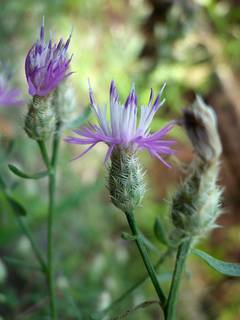
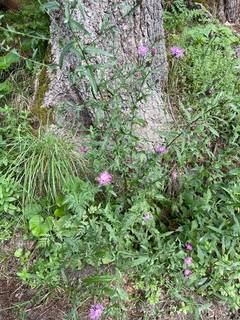
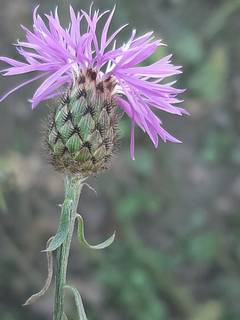
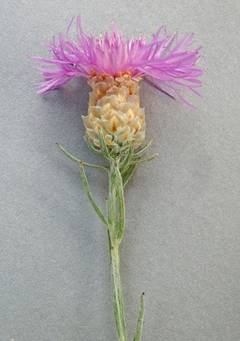
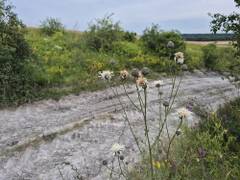
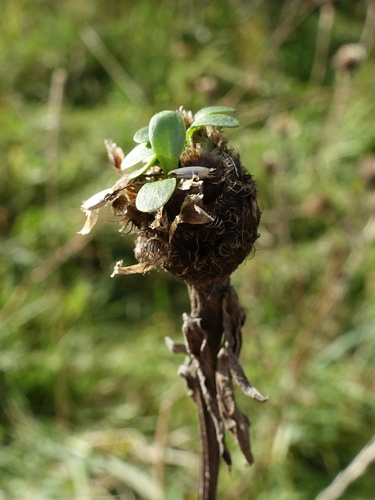
Centaurea nigra is a clump-forming herbaceous perennial 12-36 in (30-90 cm) tall, with stiff, grooved, branching stems rising from a woody rootstock. The lance-shaped to oblong leaves are 2-10 in (5-25 cm) long, roughly hairy, and slightly toothed, the lower ones stalked and the upper stalkless. From early summer into autumn the plant carries solitary thistle-like flower heads 0.6-1.6 in (1.5-4 cm) across, each a brush of red-purple florets above a hard, rounded base covered in dark brown to black, fringed bracts that give the plant its name. The heads draw bees, butterflies, and other insects in large numbers, and the seeds feed finches and other birds. It dies back to the rootstock each winter and regrows in spring. It self-seeds freely and can spread into a weed of pasture and disturbed grassland, and in parts of North America it is treated as an invasive species. It grows in meadows, roadsides, and rough grassland across Europe on a wide range of soils.
Native Range
Native to western and central Europe, from Britain and Scandinavia south to the Mediterranean, where it grows in meadows, pastures, roadsides, and rough grassland. It has naturalised in North America, parts of which list it as invasive.Suggested Uses
Grown in wildflower meadows, prairie-style plantings, and pollinator and cottage gardens. The summer flowers support bees and butterflies and the seed heads feed birds, while the plant suits naturalistic schemes and rough grassland rather than formal borders.How to Identify
Appearance
Size & Dimensions
Height1' - 3'
Width/Spread1' - 2'
Bloom Information
Detailed Descriptions
Foliage Description
greenGrowing Conditions
Sun Requirements
Requires 4-12 hours of direct sunlight daily
• Full Sun: 6+ hours of direct sunlight
• Partial Shade: 3-6 hours of direct sunlight
• Full Shade: Less than 3 hours of direct sunlight
Care & Maintenance
Care Guide
Centaurea nigra grows in full sun to light shade on most soils, including poor, dry, clay, and chalky ground, and tolerates drought once established. It needs no feeding and grows readily from seed or division. The plant self-seeds freely, so removing seed heads limits its spread into borders and grassland. It is rarely troubled by pests, though powdery mildew can mark the foliage late in the season. In meadows it competes well with grasses and persists for many years.Pruning
Cutting plants back after the first flush of flowers can prompt a second flush and limits self-seeding. Faded stems are removed at ground level in late autumn or left standing to feed seed-eating birds. Removing seed heads before they ripen reduces unwanted spread.Container Growing
Suitable for container growing
Minimum container size: 2 gallons