Overview
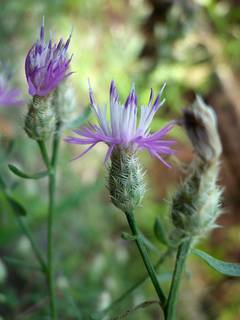
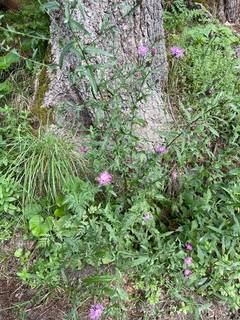
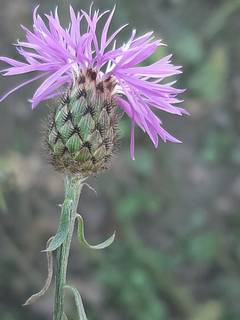
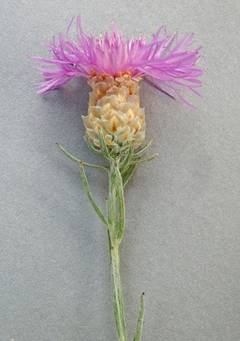
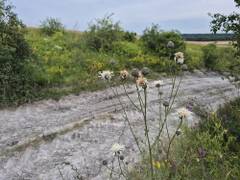
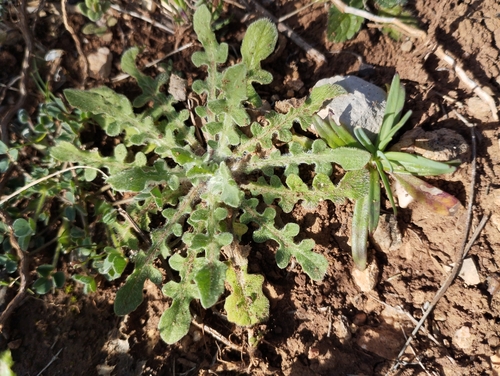
Centaurea melitensis, Maltese star-thistle, is a winter annual in the aster family growing 6-40 inches (15-100 cm) tall on rigid, winged, branching stems. It forms a basal rosette of lobed gray-green leaves in winter, then bolts in spring to produce solitary flower heads ringed by stiff, straw-colored spines 0.4-0.6 inch (10-15 mm) long. Each head holds yellow disc florets about 0.3-0.5 inch (8-12 mm) across that mature into wind- and animal-dispersed seed. The taproot lets the plant exploit dry, disturbed ground, and a single plant can set hundreds of seeds. Native to the Mediterranean Basin, it has naturalized widely in California and the western United States, where it colonizes rangeland, roadsides, and open fields. C. melitensis is listed as a noxious or invasive weed in California and several other western states, and dense stands crowd out forage and native annuals. The foliage and seed are linked to a neurological disorder in horses that consume large amounts over time. It completes its life cycle in a single season and dies after seeding, persisting in an area through its long-lived seed bank.
Native Range
Centaurea melitensis is native to the Mediterranean region of southern Europe, North Africa, and the Middle East. It has become naturalized across California, the southwestern United States, South America, and Australia. In North America it is most abundant in California grasslands and foothills.Suggested Uses
Centaurea melitensis has no horticultural use and is treated as an invasive weed across its naturalized range. In its native Mediterranean habitats it grows among other annuals on open, rocky ground. Land managers target it for control on rangeland and in natural areas.How to Identify
Appearance
Size & Dimensions
Height6" - 3'4"
Width/Spread6" - 1'6"
Colors
Bloom Information
Detailed Descriptions
Foliage Description
Gray-greenGrowing Conditions
Sun Requirements
Requires 6-12 hours of direct sunlight daily
• Full Sun: 6+ hours of direct sunlight
• Partial Shade: 3-6 hours of direct sunlight
• Full Shade: Less than 3 hours of direct sunlight
Water & Climate
Water Needs
Drought Tolerance
Drought tolerant when established