Centaurea, Genus, solstitialis, Species,
- Genus & species
yellow star-thistle
Overview
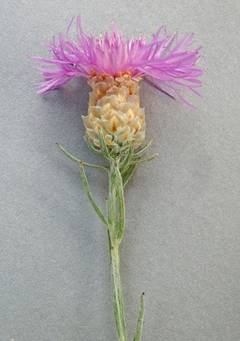
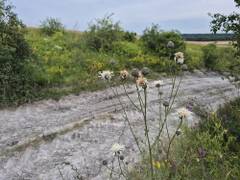
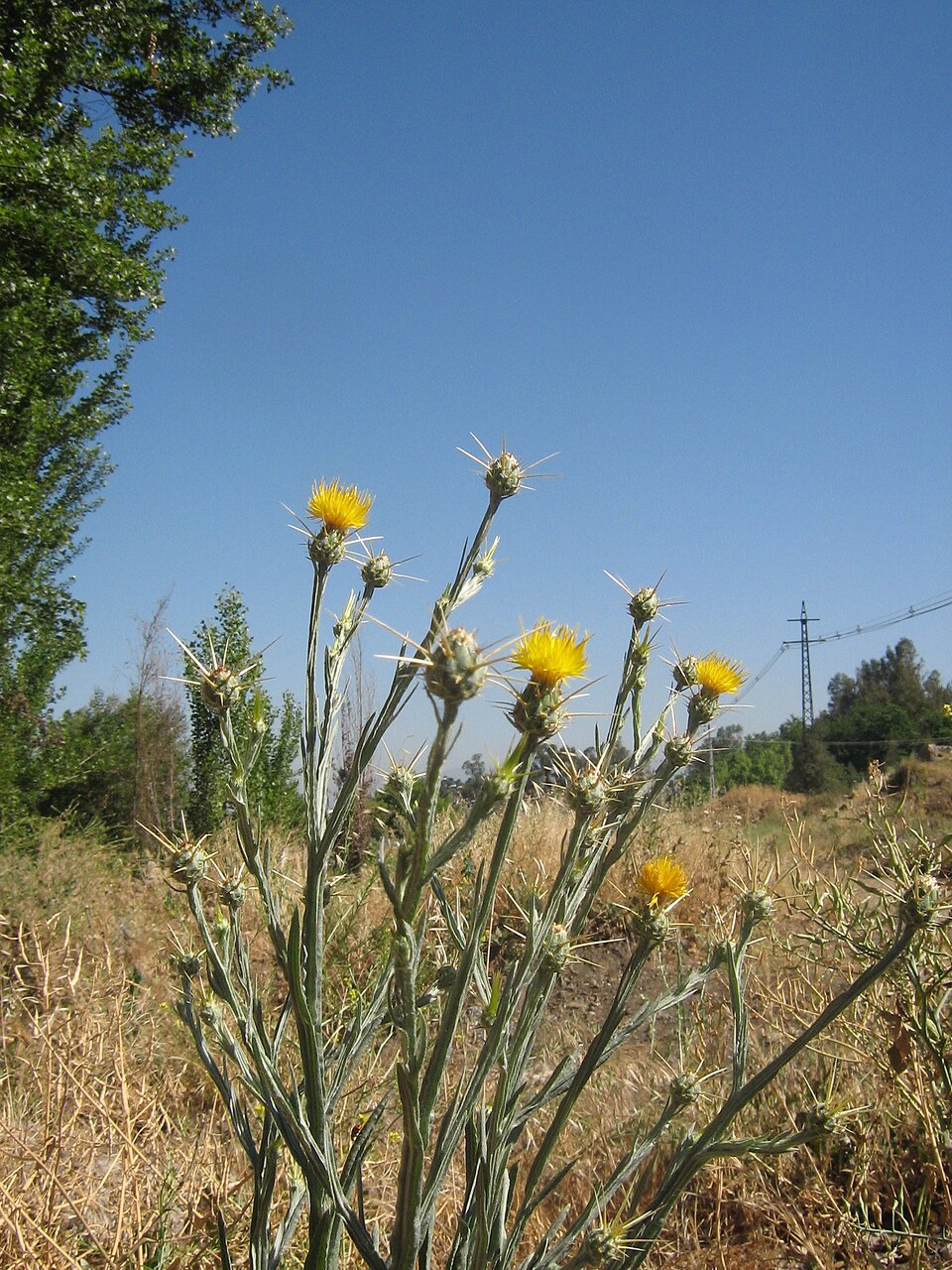
Centaurea solstitialis, yellow star-thistle, is an annual or winter-annual herb in the daisy family, growing 1-3 feet (0.3-0.9 m) tall, sometimes taller, with rigid, branching, winged stems covered in cottony gray hairs. The plant begins as a basal rosette of deeply lobed leaves, then bolts into a much-branched, stiff form. Yellow flower heads about 0.5-1 inch (1.3-2.5 cm) across sit at the branch tips, ringed at the base by sharp, straw-colored spines 0.5-1 inch (1.3-2.5 cm) long that radiate in a star. Flowering runs through summer, and a single plant can set thousands of seeds. A deep taproot lets it draw moisture late into the dry season, outlasting many native annuals. Native to the Mediterranean, it is a designated noxious weed across the western United States and forms dense, spiny stands on rangeland, roadsides, and disturbed ground. The foliage causes a fatal neurological disorder in horses that graze it over time, and the spines deter livestock and limit access.
Native Range
Centaurea solstitialis is native to the Mediterranean region of southern Europe and western Asia. It has spread as an invasive weed across the western United States, especially California, and into Argentina, Chile, and Australia, colonizing grasslands, rangeland, and roadsides in regions with dry summers.Suggested Uses
Centaurea solstitialis is managed as an invasive weed rather than grown as a garden plant. Where established, it gives summer nectar for honeybees but displaces native vegetation and injures grazing animals.How to Identify
Appearance
Size & Dimensions
Height1' - 3'
Width/Spread1' - 2'
Bloom Information
Flowering runs from June through September, peaking in midsummer. Yellow heads open at the branch tips and set large amounts of seed. Bees work the flowers, and the species is a summer nectar source where it has naturalized.
Detailed Descriptions
Foliage Description
gray-greenGrowing Conditions
Sun Requirements
Requires 6-12 hours of direct sunlight daily
• Full Sun: 6+ hours of direct sunlight
• Partial Shade: 3-6 hours of direct sunlight
• Full Shade: Less than 3 hours of direct sunlight
Water & Climate
Water Needs
Drought Tolerance
Drought tolerant when established