Centaurea, Genus, scabiosa, Species,
- Genus & species
greater knapweed
Overview
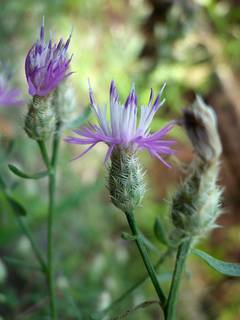
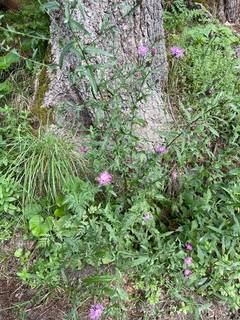
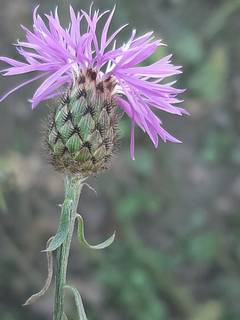
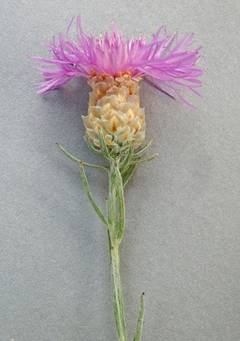
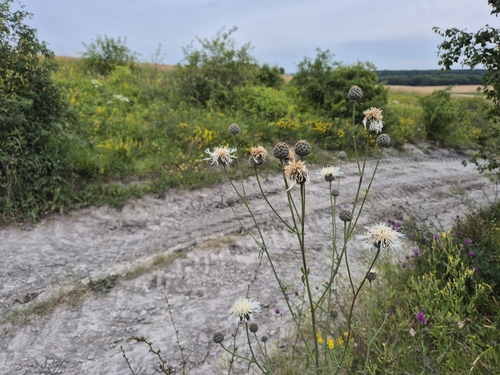
Centaurea scabiosa is an upright herbaceous perennial in the daisy family, growing 12–35 inches (30–90 cm) tall on stiff, grooved, branching stems from a stout taproot. The deeply pinnately lobed, dark green leaves are 4–10 inches (10–25 cm) long and slightly rough to the touch. From June to September it bears solitary flower heads 1.2–2 inches (3–5 cm) across, each a domed knot of purple disc florets surrounded by larger, deeply cut outer florets that spread like rays. The bracts beneath the head are green with a dark, comb-fringed edge. The flowers are followed by seeds tipped with a short bristly pappus. It grows on dry, lime-rich grassland, chalk downs, road verges, and cliff tops. The taproot reaches deep for moisture, supporting drought tolerance. It dies back to a basal rosette over winter. The nectar-rich heads draw large numbers of bees, butterflies, and other long-tongued insects.
Native Range
Native to Europe and western Asia, and naturalized in parts of North America. It grows on calcareous grassland, chalk and limestone downs, road verges, railway banks, and coastal cliffs.Suggested Uses
Used in wildflower meadows, chalk and gravel gardens, and naturalized grassland. Suited to dry, sunny banks and the middle of informal borders. Grown as a nectar plant in pollinator and conservation plantings.How to Identify
Appearance
Size & Dimensions
Height1' - 2'11"
Width/Spread1' - 2'
Bloom Information
Blooms from June to September, with peak flowering in July and August. Each head lasts one to two weeks, and a plant opens heads in succession. Seed heads ripen from late summer and feed finches and other seed-eaters.
Detailed Descriptions
Foliage Description
dark greenGrowing Conditions
Sun Requirements
Requires 6-10 hours of direct sunlight daily
• Full Sun: 6+ hours of direct sunlight
• Partial Shade: 3-6 hours of direct sunlight
• Full Shade: Less than 3 hours of direct sunlight
Care & Maintenance
Care Guide
Grows in full sun on well-drained, neutral to alkaline soils with a pH of 6.5–8.0, including thin chalk and limestone soils. It tolerates drought once the deep taproot is set and does not tolerate heavy, wet ground. No feeding is needed, as lean soil keeps the stems upright and self-supporting. Plants are grown from seed sown in autumn or spring and are slow to recover from transplanting once the taproot forms. Hardy in USDA zones 4 to 8. Spent plants are cut back to limit self-seeding, which can be prolific.Pruning
Faded heads are cut back through the season to extend flowering and reduce self-sown seedlings. The whole plant is cut to the basal rosette in late autumn. Division is difficult because of the taproot, so plants are renewed from seed.Pruning Schedule
Prune: October–November
fall