Centaurea, Genus, debeauxii, Species,
- Genus & species
chalk knapweed
Overview
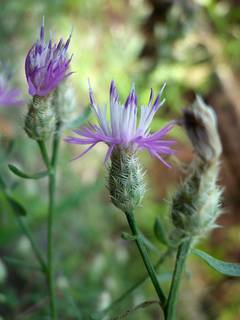
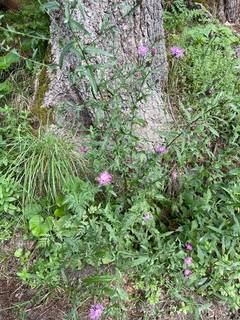
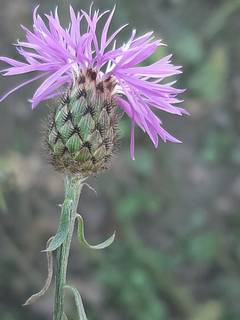
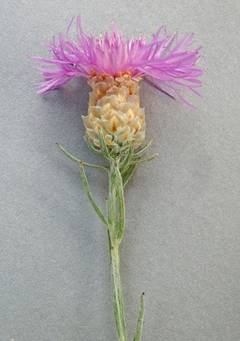
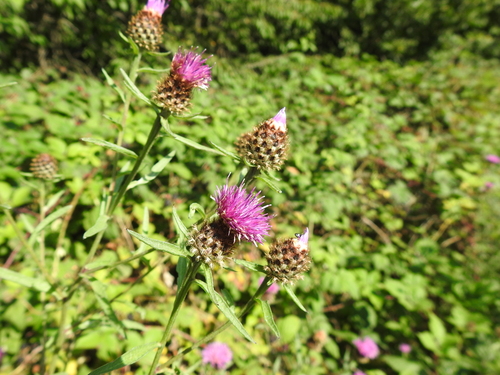
Centaurea debeauxii is a clump-forming perennial 12-32 inches (30-80 cm) tall, with wiry, branching, grooved stems rising from a basal rosette. Lower leaves are lance-shaped, 4-10 inches (10-25 cm) long, sometimes lobed at the base, becoming narrower and unstalked up the stem. From summer into early autumn the stems carry hard, rounded flower heads 0.6-1 inch (1.5-2.5 cm) across, each enclosed in overlapping bracts with brown, fringed margins. The florets are red-purple, with the outer ones sometimes enlarged and spreading. After flowering the heads ripen pale, bristly seeds. The plant dies back to the rosette in winter and regrows in spring. It grows on dry, calcareous and neutral grassland, banks, and roadsides, and tolerates poor, thin soils. Its tough, persistent flower stems and rosettes let it hold ground in established grassland.
Native Range
Native to western and central Europe, where it grows on chalk and limestone grassland, neutral meadows, banks, and roadsides. Found mostly on dry to moderately moist, low-nutrient soils at low to moderate elevations. Closely related to common knapweed (Centaurea nigra), with which it overlaps and intergrades in parts of its range.Suggested Uses
Grown in wildflower meadows, prairie-style plantings, and on banks for nectar and seed, spaced 12-18 inches (30-45 cm) apart. Used in chalk and neutral grassland restoration. Its seeding habit can spread it into mown lawns and tidy borders.How to Identify
Appearance
Size & Dimensions
Height1' - 2'8"
Width/Spread1' - 1'8"
Bloom Information
Flowers from June to September, with a peak in midsummer. The red-purple heads are visited by bees, butterflies, and hoverflies, which feed on nectar and pollen. Seed ripens from late summer and is shed through autumn, with some taken by seed-eating birds such as goldfinches.
Detailed Descriptions
Foliage Description
greenGrowing Conditions
Sun Requirements
Requires 6-12 hours of direct sunlight daily
• Full Sun: 6+ hours of direct sunlight
• Partial Shade: 3-6 hours of direct sunlight
• Full Shade: Less than 3 hours of direct sunlight
Care & Maintenance
Care Guide
Grows in full sun on dry to moderately moist, well-drained, low-nutrient soils, including chalk and limestone, and tolerates wind and poor, thin ground. Establishes from seed sown in autumn or spring and forms a deep root that anchors it in grassland. Tolerates drought once established and grows more openly on rich soils. In meadows it is cut once flowering finishes, and seed is allowed to set first where it is grown for wildlife. Few pests trouble it. It can spread by seed into managed grassland and lawns.Pruning
Cut flowering stems back after seed has set in late summer, as part of an annual meadow cut, or earlier to limit self-seeding. The rosette regrows from the base for the following year. Stems left standing hold seed heads into winter for birds.Pruning Schedule
Prune: August–September
summerfall