Ceanothus, Genus, leucodermis, Species,
- Genus & species
chaparral whitethorn
California and northern Baja California
Overview
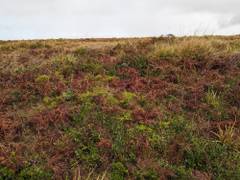
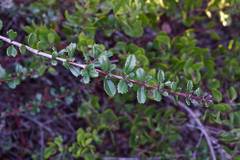
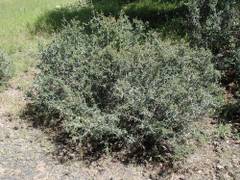
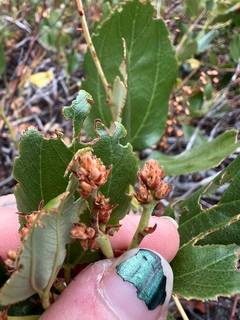
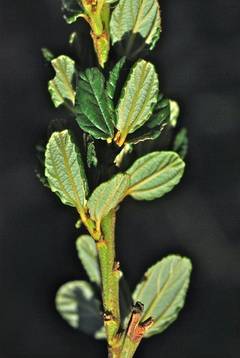
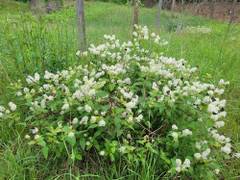
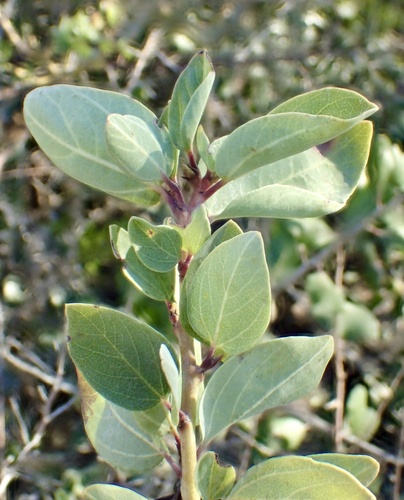
Ceanothus leucodermis, chaparral whitethorn, is a rigid, evergreen shrub in the Rhamnaceae, growing 6-12 ft (1.8-3.7 m) tall and wide with stiff, spreading branches armed with stout spines. The young stems are smooth and coated with a pale, whitish, waxy bloom, the source of both its common and scientific names. Small alternate leaves about 0.5-1 in (1.5-2.5 cm) long are blue-green, leathery, and finely toothed or smooth. In spring it produces dense, branched clusters 2-4 in (5-10 cm) long of tiny pale blue to nearly white flowers that carry a light scent and draw many bees. The flowers give way to small three-lobed capsules that eject their seeds. Ceanothus leucodermis is native to dry chaparral slopes and open woodland of California and northern Baja California, often appearing after fire from soil-stored seed. Like other Ceanothus it fixes nitrogen through root nodules and grows on poor, rocky soils with little water. The spiny branches form an impenetrable thicket, useful as a barrier but hazardous to handle. It is relatively short-lived, needs sharp drainage, and rots in summer-irrigated garden soil.
Native Range
Native to California and northern Baja California, Mexico, mainly in the foothills and mountains of the Coast Ranges, Sierra Nevada, and southern California. It grows on dry chaparral slopes, ridges, and open woodland, often after fire.Suggested Uses
Used as a barrier or screen, in dry native and habitat gardens, and in post-fire and slope restoration. Suited to unwatered, rocky banks and chaparral plantings. Combines with manzanita, sages, and other California natives.How to Identify
Appearance
Size & Dimensions
Height6' - 12'
Width/Spread6' - 12'
Bloom Information
Blooms in spring, from April through June depending on elevation, in dense clusters of pale blue to white flowers. The display lasts about four to five weeks and is followed by hard seed capsules. Heaviest flowering follows wet winters and the first years after fire.
Detailed Descriptions
Flower Description
pale blue to whiteFoliage Description
blue-greenGrowing Conditions
Sun Requirements
Requires 6-12 hours of direct sunlight daily
• Full Sun: 6+ hours of direct sunlight
• Partial Shade: 3-6 hours of direct sunlight
• Full Shade: Less than 3 hours of direct sunlight
Care & Maintenance
Care Guide
Grows in full sun to light shade in sharply drained rocky, sandy, or loam soil with pH 6.0 to 8.0. It needs little to no summer water once established and rots if irrigated in warm soil. As a nitrogen fixer it grows on poor ground and needs no fertilizer. It tolerates heat and drought but only light frost. The plant is short-lived, often 10 to 20 years, and regrows poorly when cut into old wood.Pruning
Prune lightly after flowering, cutting only into young growth, since the shrub regrows poorly from old bare wood. Remove dead or crossing spiny branches as needed. Hard renewal cuts into old wood rarely produce new growth.Pruning Schedule
Prune: June
late spring