Ceanothus, Genus, cuneatus, Species,
- Genus & species
buckbrush
California, southern Oregon, northern Baja California
Overview
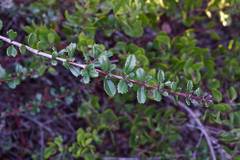
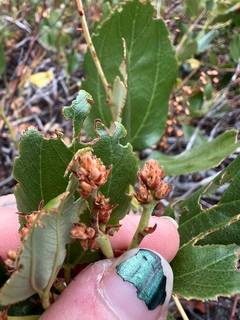
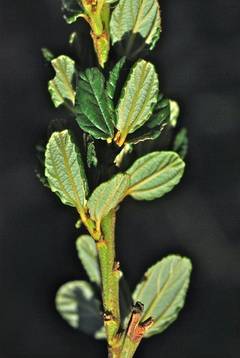
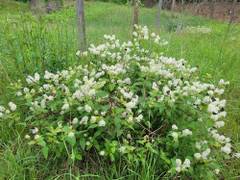
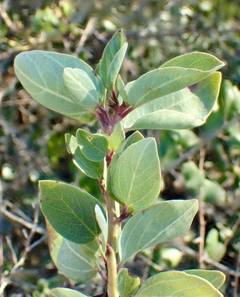
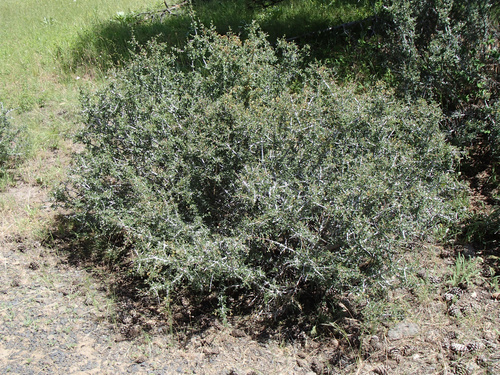
Ceanothus cuneatus is an evergreen chaparral shrub reaching 4-10 feet (1.2-3 m) tall and 5-8 feet (1.5-2.4 m) wide, with stiffly held divaricately branched stems. Bark is smooth gray-brown on young stems, weathering to fissured gray on mature trunks. Leaves are obovate to spatulate, 0.3-0.8 inch (8-20 mm) long, leathery, dark green and glossy above with paler undersides; arrangement is opposite or in fascicles on short shoots. Small white to pale lavender flowers, 0.1 inch (2.5 mm) across, are borne in tight umbel-like clusters of 5-25 from late February through April; the cumulative effect is a cloud of bloom over the entire canopy. Fruit is a three-lobed dry capsule 0.15-0.2 inch (4-5 mm) wide that ejects seeds explosively in summer. Growth rate is slow to moderate; plants reach 5-6 feet (1.5-1.8 m) tall within 5-7 years from a 1-gallon (3.8 L) container. Lifespan is typically 15-25 years; the species is intolerant of summer irrigation in heavy soils, the principal cause of decline.
Native Range
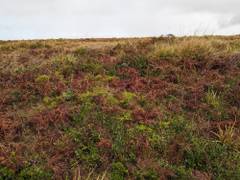
Native to California, southern Oregon, and northern Baja California. Grows in dry chaparral, oak woodland edges, and pinyon-juniper transition zones at elevations from 100 to 6,000 feet (30-1,800 m) on rocky, well-drained slopes. Often co-occurs with Adenostoma fasciculatum, Quercus berberidifolia, and Arctostaphylos species.Suggested Uses
Used in California native gardens, slope plantings, and dry-shrub borders, spaced 6-8 feet (1.8-2.4 m) apart. Plantings combine with Arctostaphylos densiflora, Heteromeles arbutifolia, and bunchgrasses Festuca californica and Stipa pulchra on dry rocky slopes. Used as a fire-resistance or hedgerow shrub on un-irrigated borders of rural properties.How to Identify
Appearance
Size & Dimensions
Height4' - 10'
Width/Spread5' - 8'
Bloom Information
Blooms late February through April in California, with peak bloom mid-March at low elevations and early April in foothill populations. Total bloom period extends 4-6 weeks. Drought during the previous fall reduces bloom count by 30-50%; wet spring weather extends bloom to 6-8 weeks.
Detailed Descriptions
Flower Description
white to pale lavenderFoliage Description
dark green and glossy above; paler beneathGrowing Conditions
Sun Requirements
Requires 6-9 hours of direct sunlight daily
• Full Sun: 6+ hours of direct sunlight
• Partial Shade: 3-6 hours of direct sunlight
• Full Shade: Less than 3 hours of direct sunlight
Care & Maintenance
Care Guide
Plantings establish on well-drained dry slopes; heavy clay soils with summer irrigation lead to root rot and short lifespan. Water deeply at planting, then taper to monthly summer water for the first growing season. Established plants in zones 8-10 receive no summer water; inland plantings in zones 7 may receive one deep soak per month from June through August. Few pest or disease problems occur. Branch dieback can follow severe pruning; cuts heal slowly. Fertilization is not required in unamended California soils.Pruning
Light tip pruning to shape young plants is done after bloom in May; major structural cuts are not feasible because branches do not regenerate well from old wood. Dead branches can be removed in any season. Heavy pruning typically shortens the plant's lifespan.Pruning Schedule
Prune: May
late spring