Ceanothus, Genus, prostratus, Species,
- Genus & species
Mahala mat
Overview
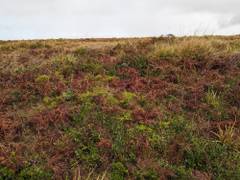
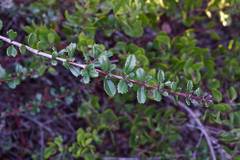
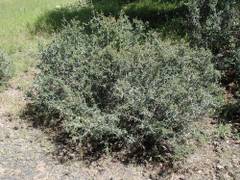
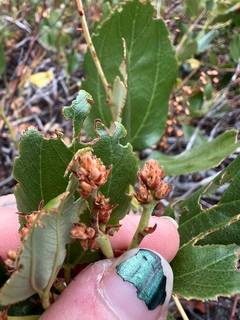
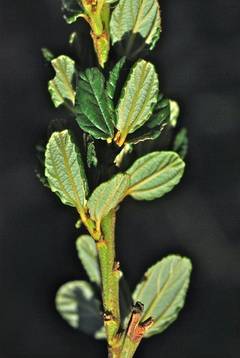
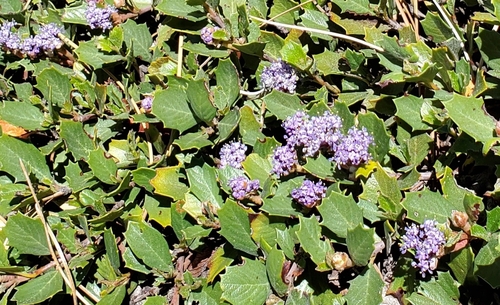
Ceanothus prostratus is a prostrate evergreen shrub that forms dense, ground-hugging mats only 2-4 inches (5-10 cm) high but spreading 3-8 feet (0.9-2.4 m) wide, rooting where the trailing stems touch soil. The small leathery leaves are 0.3-1 inch (8-25 mm) long, dark green, wedge-shaped, and edged with a few stiff teeth, set in opposite pairs. In spring the mats are covered with small rounded clusters of tiny flowers in shades of blue to lavender, each cluster about 0.5-1 inch (1.5-2.5 cm) across. The flowers give way to three-horned reddish seed capsules that dry and split to release seeds. The plant grows on well-drained, gravelly or volcanic soils in open coniferous forests and mountain slopes of the western United States, from moderate to high elevations. It tolerates cold, snow, drought, and poor soils, and forms nitrogen-fixing root nodules that enrich the ground. It is slow to establish and tolerates disturbance poorly once rooted. It does not tolerate heavy, wet soils, deep shade, or lowland heat.
Native Range
Ceanothus prostratus is native to the western United States, in the mountains of California, Oregon, Washington, Nevada, and adjacent areas, including the Sierra Nevada, Cascades, and Klamath ranges. It grows in open coniferous forests and on dry, gravelly mountain slopes from moderate to high elevations.Suggested Uses
Used as an evergreen groundcover on dry banks, rock gardens, and slopes in cool, well-drained sites within its range. Planted for erosion control and for the spring flowers, which feed bees. Suited to mountain and native plantings rather than hot lowland gardens.How to Identify
Appearance
Size & Dimensions
Height2" - 4"
Width/Spread3' - 8'
Bloom Information
Small rounded clusters of tiny blue to lavender flowers cover the mats in spring, mainly from April to June depending on elevation. Bees and other insects pollinate the flowers. Three-horned reddish capsules follow and split open to release the seeds.
Detailed Descriptions
Flower Description
blue to lavenderFoliage Description
dark greenGrowing Conditions
Sun Requirements
Requires 6-12 hours of direct sunlight daily
• Full Sun: 6+ hours of direct sunlight
• Partial Shade: 3-6 hours of direct sunlight
• Full Shade: Less than 3 hours of direct sunlight
Care & Maintenance
Care Guide
Ceanothus prostratus grows in full sun to light shade on sharply drained, gravelly, or volcanic soils of low fertility, and it fixes its own nitrogen. It tolerates cold, snow cover, and summer drought once established and needs no fertilizer. Propagation is from seed treated with heat and cold or from cuttings, both slow and uneven. It establishes slowly and tolerates disturbance poorly once rooted. Excess water, rich soil, and lowland heat shorten its life. It is hardy in USDA zones 5-8 in well-drained mountain conditions.Pruning
Little pruning is needed for this flat, spreading plant. Stray or damaged stems can be trimmed back lightly after flowering. Hard cutting into old wood recovers slowly and is avoided.Pruning Schedule
Prune: June–July
summer