Campanula, Genus, trachelium, Species,
- Genus & species
nettle-leaved bellflower
Europe, North Africa, and western Asia
Overview
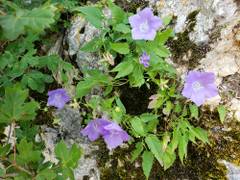
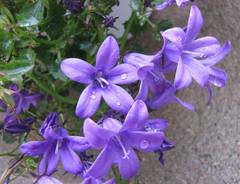
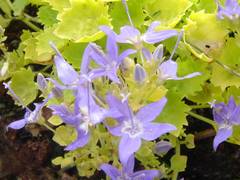
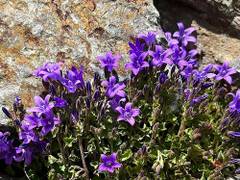
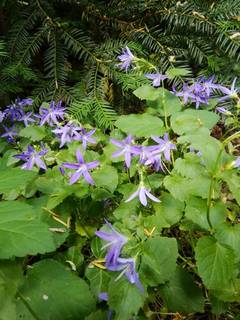
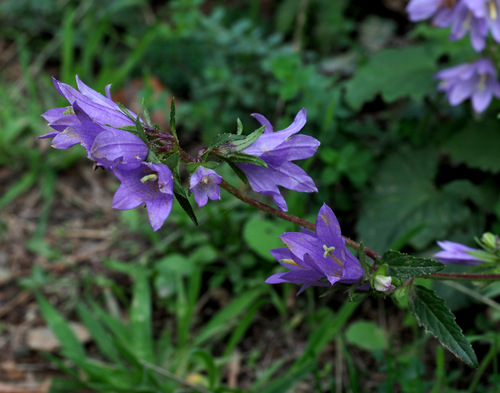
Campanula trachelium is an erect, clump-forming herbaceous perennial 20-40 in (50-100 cm) tall, with stiff, bristly, sharply angled stems rising from a short rootstock. The coarsely toothed, nettle-like leaves are 2-4 in (5-10 cm) long, rough and hairy, and can irritate skin on contact, the lower ones long-stalked and the upper nearly stalkless. From midsummer to early autumn, deep blue to violet bell-shaped flowers 1-1.5 in (2.5-3.8 cm) long open in clusters in the upper leaf axils and at the stem tips, each lobed flower fringed with short hairs inside. The flowers are followed by nodding seed capsules that release many tiny seeds. Top growth dies back to the rootstock in autumn. It spreads slowly and self-seeds where conditions suit, and the bristly foliage can cause minor skin irritation when handled. It grows in woodland edges, hedge banks, and scrub on lime-rich soils across Europe, North Africa, and western Asia.
Native Range
Native to Europe, North Africa, and western Asia, where it grows in deciduous woodland, hedgerows, and scrub, usually on calcareous soils. It ranges from Britain and Scandinavia south to the Mediterranean and east to Iran.Suggested Uses
Grown in cottage gardens, mixed and herbaceous borders, woodland edges, and wildlife plantings. The summer flowers draw bees and other pollinators, and the plant suits naturalistic schemes on chalky soils.How to Identify
Appearance
Size & Dimensions
Height1'8" - 3'4"
Width/Spread1' - 1'6"
Bloom Information
Detailed Descriptions
Foliage Description
greenGrowing Conditions
Sun Requirements
Requires 3-8 hours of direct sunlight daily
• Full Sun: 6+ hours of direct sunlight
• Partial Shade: 3-6 hours of direct sunlight
• Full Shade: Less than 3 hours of direct sunlight
Care & Maintenance
Care Guide
Campanula trachelium grows in full sun to part shade on moist, fertile, well-drained soil, and tolerates the dry shade beneath trees and along hedges. It performs steadily on neutral to alkaline ground and copes with heavier clay soils. The plant self-seeds freely and can spread into surrounding borders if the seed heads are left in place. Slugs and snails graze the young spring shoots, and powdery mildew can affect the foliage in dry summers. It needs little feeding and establishes readily from seed or division.Pruning
Cutting the stems back after the first flush of flowers can encourage a second, lighter flowering. Faded stems are removed at ground level in late autumn once growth dies down. Removing seed heads before they ripen limits self-seeding.Container Growing
Suitable for container growing
Minimum container size: 3 gallons