Campanula, Genus, poscharskyana, Species,
- Genus & species
Serbian bellflower
Dinaric Alps of western Balkans (Bosnia, Croatia, Montenegro)
Overview
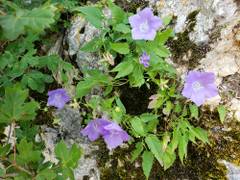
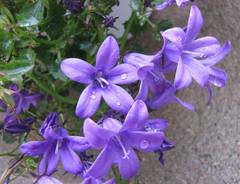
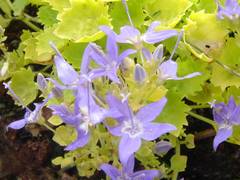
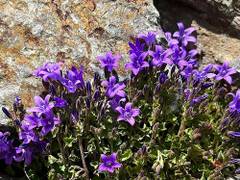
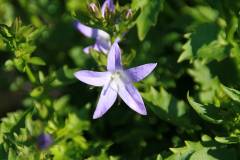
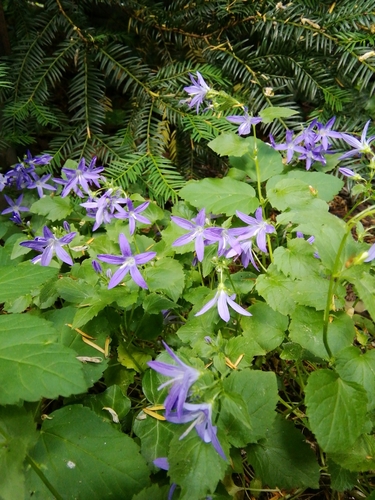
Campanula poscharskyana is a vigorous, trailing, semi-evergreen perennial reaching 6–12 inches (15–30 cm) tall with a spread of 24–36 inches (60–90 cm) or more. The species spreads rapidly by long trailing stems that root at the nodes and by underground runners, forming an extensive, loose groundcover. Leaves are heart-shaped to rounded, 1–2 inches (2.5–5 cm) across, medium green, with scalloped margins and long petioles. Star-shaped open flowers 0.7–1 inch (1.8–2.5 cm) across in lavender-blue with a pale center appear in dense clusters along the trailing stems from June through September. Blooms 10–14 weeks, which is at the long end of the range for hardy bellflowers. The open star-shaped flower form with widely separated petals separates this species from the bell-shaped flowers of C. portenschlagiana. Growth is fast; trailing stems extend 12–18 inches (30–45 cm) per season. The aggressive spread can overwhelm smaller neighbors and colonize paving cracks, walls, and adjacent beds. Foliage is semi-evergreen, with some winter dieback in zones 3–5. Controlling spread requires regular edging and removal of runners. Slugs cause minor damage.
Native Range
Campanula poscharskyana is native to the Dinaric Alps of the western Balkans, in parts of Bosnia, Croatia, and Montenegro. It occurs on limestone rock faces, scree, and cliff ledges from 1,500 to 5,000 feet (450–1,500 m). The species is named after Gustav Poscharsky, a German botanist.Suggested Uses
Used as a vigorous groundcover on slopes, banks, and large rock gardens at 18–24 inch (45–60 cm) spacing. Stems cascade over walls, raised beds, and retaining walls where they can hang freely. Fills larger areas quickly, but the aggressive spread makes it unsuitable next to small alpines or slow-growing perennials. Grows in containers of at least 2 gallons (8 L) as a spiller, and naturalizes in stone walls and paving.How to Identify
Appearance
Size & Dimensions
Height6" - 1'
Width/Spread2' - 3'
Bloom Information
Star-shaped lavender-blue flowers 0.7–1 inch (1.8–2.5 cm) across with a pale center open in dense clusters along the trailing stems from June through September. Bloom duration is 10–14 weeks with peak in June–July and scattered flowering through fall. Flowers are visited by bees and small butterflies.
Detailed Descriptions
Flower Description
Lavender-blue with pale centerFoliage Description
Medium green, heart-shaped to rounded, 1-2 inches (2.5-5 cm) across, with scalloped (crenate) margins, long-petioledGrowing Conditions
Sun Requirements
Requires 4-10 hours of direct sunlight daily
• Full Sun: 6+ hours of direct sunlight
• Partial Shade: 3-6 hours of direct sunlight
• Full Shade: Less than 3 hours of direct sunlight
Care & Maintenance
Care Guide
Plant in well-drained, average soil in full sun to partial shade. Tolerates alkaline soils, reflecting the limestone origin of the species. Drought-tolerant once established. The species is vigorous and adaptable, handling lean dry soils through moderately fertile garden soil. Aggressive spread requires regular management: edging, removal of runners from unwanted areas, and placement away from slow-growing alpines. Rich moist soils accelerate the spread. Division every 2–3 years controls size. No serious pest or disease problems.Pruning
The mat is sheared back by one-half after the main bloom flush in July to promote compact regrowth and a second flush of flowers. Hard cutback in early spring removes winter-damaged foliage and rejuvenates the mat. Vigorous growth recovers quickly from hard shearing.Pruning Schedule
Prune: March & July
early springsummer
Container Growing
Suitable for container growing
Minimum container size: 2 gallons